Aave's main Ethereum market can now support $4 billion in USDC borrowing, up from $2.7 billion, after risk manager LlamaRisk lifted the ceiling on Friday. The change took effect at 11:15 UTC, minutes after the recommendation appeared on the protocol's governance forum.
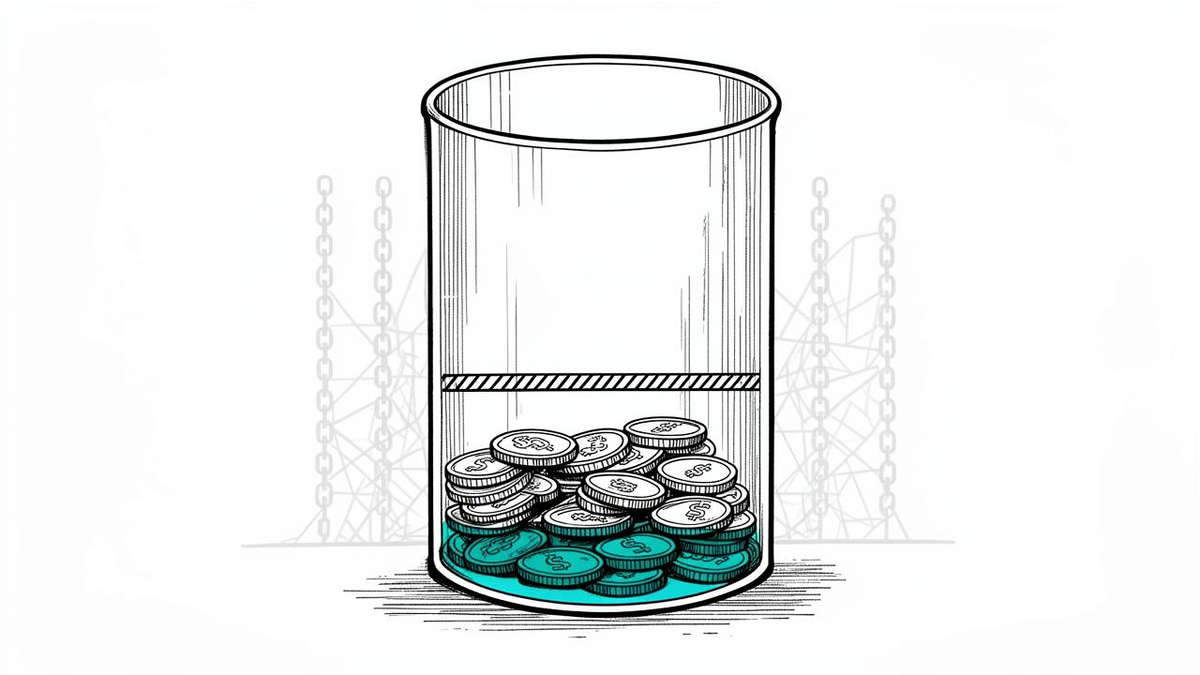
The higher cap buys borrowers room, but it narrows the buffer available to depositors who want their money back. Aave's own data showed roughly 4.17 billion USDC supplied and 3.11 billion borrowed on Saturday. If borrowing ran all the way to the new limit against that supply, only about $167 million of USDC would remain available for withdrawals, compared with roughly $1.06 billion at current levels.
That works out to a reserve utilization rate of 94.8%, just above the 94% optimal ratio the market targets. LlamaRisk said utilization would fall to 80% if deposits grew to the $5 billion supply cap.
USDC loans had reached 98.5% of the previous $2.7 billion borrowing limit, with reserve utilization at 63.1%. The new ceiling puts borrow-cap utilization at about 66.5%.
The adjustment caps a volatile stretch for the stablecoin reserve. On Nov. 18, LlamaRisk cut the USDC borrow cap to $2.7 billion from $2.95 billion as reserve utilization sat at 95.8%, above the 94% mark. Deposits climbed to 99.6% of the old limit a day later, prompting the risk team to raise the USDC supply cap to $5 billion from $3.5 billion. At that point the largest single supplier held 21.7% of the reserve.
The same Nov. 20 package raised the USDT borrowing limit on Core to $2.8 billion from $2.7 billion, which LlamaRisk calculated would put USDT reserve utilization at 94.6%. It also cut supply caps for rsETH and wrsETH to 1 across Core, Prime, Arbitrum, Base and several other Aave V3 markets, and reduced tBTC on Core to 1.
Concentration among large borrowers is another factor in the risk picture. The 20 biggest USDC borrowers carry health factors between 1.02 and 2.59, with a median of 1.42, and the largest owes 14.4% of all USDC debt. Their collateral is mostly cbBTC, WETH, weETH, wstETH and USDe, leaving much of the debt exposed to Bitcoin and Ether prices through safety margins.
Note: Supply cap was raised to $5 billion on Nov. 19. Figures reflect Aave data as of Saturday, Nov. 22, 2026.
Aave has already been through two liquidity squeezes this year. In April, a $292 million exploit of the KelpDAO bridge triggered a run that pulled more than $6 billion out of the protocol in 24 hours, cutting its value to about $17.5 billion from $25 billion. USDC liquidity locked at 99% utilization, leaving many depositors unable to withdraw. Circle chief economist Gordon Liao responded by proposing to raise the maximum rate USDC lenders could earn on Aave to 48% from about 12.6%, arguing that higher yields would draw stablecoins back within hours.
More recently, after a $6.3 billion hack at Binance, Aave froze its V3 and V4 markets on Oct. 29. Suppliers could still exit, but new deposits stayed locked out. Utilization in the largest stablecoin pools climbed to between 92% and 100%, and LlamaRisk removed $3.7 billion of idle V3 borrowing power before markets reopened in four waves.
The cap increase lands alongside a separate governance effort aimed at putting idle stablecoins to work. TokenLogic, working with Aave Labs, filed an ARFC on Nov. 20 that would route surplus USDC in the Aave V4 Ethereum Core Hub into Circle Gateway through a contract called LiquidityBufferController. The mechanism would sweep excess balances daily and check every five minutes whether to pull funds back.
The proposal would keep a liquid reserve equal to 9% of total USDC supply, with a 5% floor that triggers an automatic recall from Gateway. Swept funds would still count toward the utilization denominator, so reported borrow rates would not be distorted. Exposure would be capped at the lower of 10 million USDC or 25% of total supply.
Revenue projections in the ARFC show how much the economics depend on scale: about $14,000 a year at roughly $59 million in V4 USDC supply and 91% utilization, rising to between $401,000 and $792,000 annually if supply reaches $500 million. The document also discloses that if Circle's attestation service went dark, the on-chain withdrawal path would take about seven days, or 50,400 blocks, to complete. The plan remains at the community feedback stage and has not been put to a vote.
For lenders, the immediate takeaway is that the cushion between supplied and borrowed USDC is now thin enough that a rush to the exit could meet the same 94% ceiling that has constrained withdrawals twice this year. For borrowers, the higher cap removes a near-term constraint that had pushed USDC loans to almost the full previous limit. AAVE traded at $97.46 at the time of writing, up 2.6% over 24 hours.
Once added, BigGo Finance appears first in Google Search Top Stories, so you get the broadest, most up-to-the-minute, and most comprehensive global financial news first.