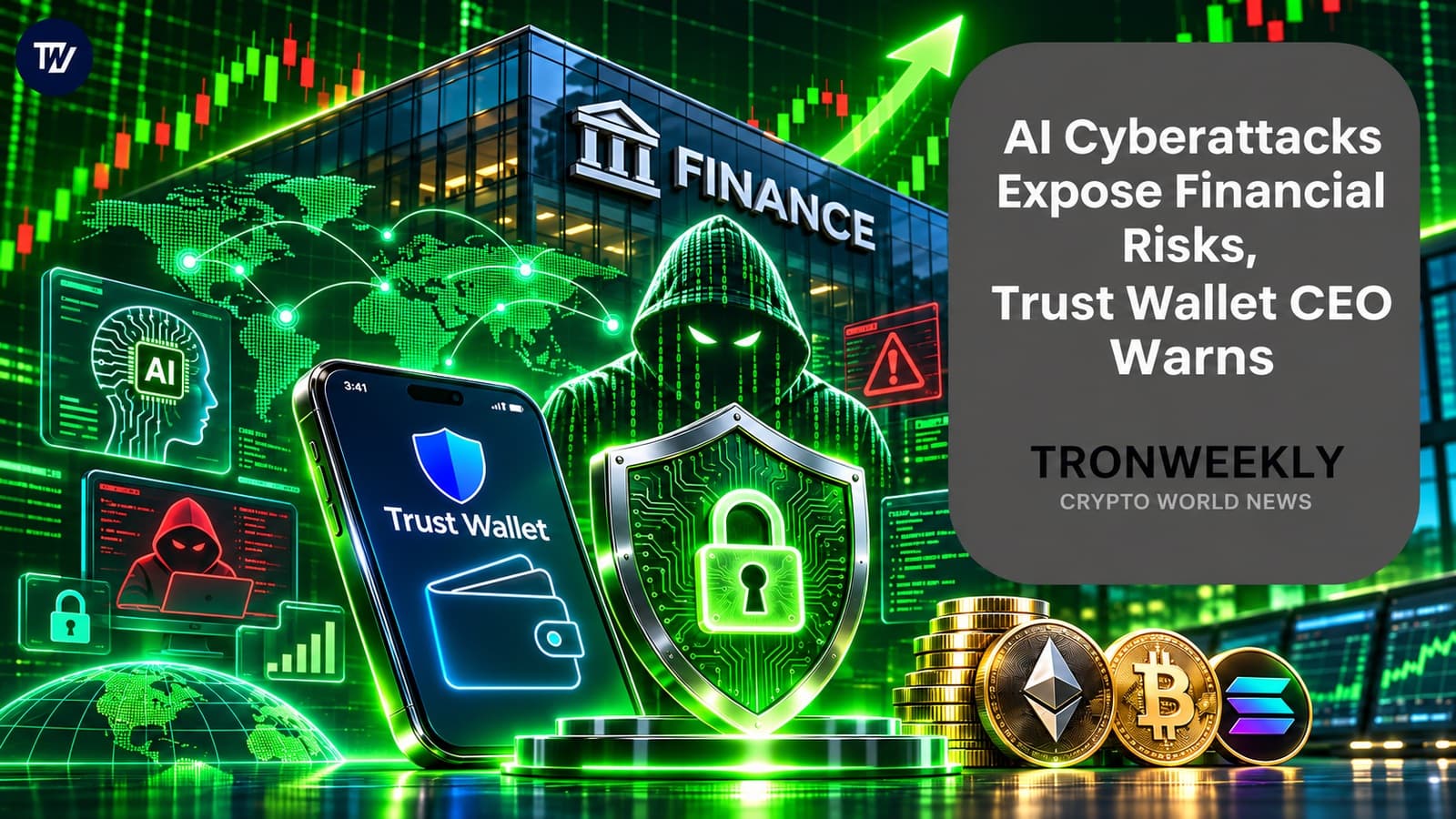
AI cyberattacks pose a growing risk to banks that rely on staff working regular hours, Trust Wallet CEO Felix Fan warned on November 18. He said autonomous hacking tools could leave financial firms exposed when security teams are off duty.
Table of Contents
In an X post, Fan questioned how banks could protect customer funds from automated threats. He also said he preferred holding his own crypto through Trust Wallet instead of relying on banks.
Google Documents Faster AI Cyberattacks
The comment came after a report released by the Google Threat Intelligence Group and Mandiant on November 16. The report explained how AI cyberattacks work and how they use automated means to identify software vulnerabilities and exploits.
The Google researchers discovered a framework called exploit_agent, which was running on an exposed staging server. The framework compared software code before and after applying security patches, identified potential vulnerabilities, and created exploits.
Also Read: US Treasury Bond Buyback Misses $6 Billion Target Amid Liquidity Concerns
Such AI cyberattacks may focus on exploiting known vulnerabilities immediately after developers create patches, leaving companies vulnerable until then as the attackers analyze the changes.
In addition, Google followed a PentAGI-based system used by an attacker between late August and early October. The attacker scanned organizations across Asia for vulnerabilities using this modified PentAGI system. Other similar systems identified by the company included CAIRN and CyberStrikeAI.
Such automated means also leave traces. As mentioned by Google, their high network traffic and distinctive code make them easier to detect for the defenders. However, automation makes intrusions faster and more efficient.
Indian Agency Links AI Cyberattacks to Fund Theft
On November 4, India’s Computer Emergency Response Team gave a critical advisory regarding attacks on financial organizations in the country. CERT-In stated that the attacks target financial institutions, including lenders, payment solutions, fintechs, and cryptocurrency exchanges.
CRAFTY FALCON is how researchers named the threat actor. The actors reportedly used advanced AI-assisted tools in their attacks. The victims are targeted via their payment and disbursement systems to conduct fraudulent transactions.
As mentioned in the advisory, some of the targeted companies reported new security incidents following previous mitigation efforts made. CERT-In revealed that most of the attacks involving AI happened during the weekends, holidays, or times when there was less monitoring of systems.
As per the report, attackers gain access to the network by breaching exposed testing environments or cloud systems. They used shared credentials or connection points to access the live environment. Attacks include the alteration of the application to generate unauthorized payment requests.
CERT-In added that the hackers stole the crypto wallet keys and transferred the digital assets. Hackers tried the transaction using just one rupee amount for testing the payment access.
CERT-In said the attacks may involve using the following tools: ARTEX, PentAGI, CAIRN, and CyberStrikeAI. Automated scripts can be altered based on the responses received from the target organization. It helps in explaining the multiple phases of AI cyberattacks.
Trust Wallet’s Past Breach Raises Self-Custody Questions
Comments from Fan highlighted how bank deposits differ from self-custodied crypto. Trust Wallet customers have access to their own private keys, yet they need to secure access through hardware and recovery phrases.
In December 2025, the company faced another security issue. The compromised 2.68 version of the Chrome extension put users at risk of theft. Trust Wallet estimated losses from affected funds at about $7 million and promised compensations.
This event was not included in the list of ongoing AI cyberattacks. It illustrated, however, that having crypto out of a bank does not exclude software vulnerabilities. Malicious software can endanger users’ private keys and balances.
Later, Trust Wallet advised iPhone owners to update their systems amid the malware threat affecting older versions. This recommendation from November 6 was about software safety only; it was not related to AI attacks.
Recent AI cyberattack news covered banks, payment operators, and crypto companies. Google found increasingly automated hacking tools, while India issued warnings about funds’ thefts. No evidence has been provided to prove self-custody is more secure than any bank.
Also Read: CoinDCX Warns of Plotline Data Breach, Says User Funds Are Safe
Arslan Tabish is a Technical Reporter and Market Analyst at Tron Weekly with over five years of experience covering cryptocurrency markets and blockchain developments. His reporting focuses on Bitcoin, Ethereum, altcoins, and decentralized finance, alongside NFTs, crypto regulation, policy, and Web3 innovations.
Arslan covers blockchain technology, Layer 2 scaling solutions, and emerging use cases, including AI-driven crypto applications, while delivering clear market analysis on how technical and regulatory developments impact digital asset markets. His work is designed for both beginners and experienced readers, offering accurate, easy-to-understand reporting without speculation or investment guidance.