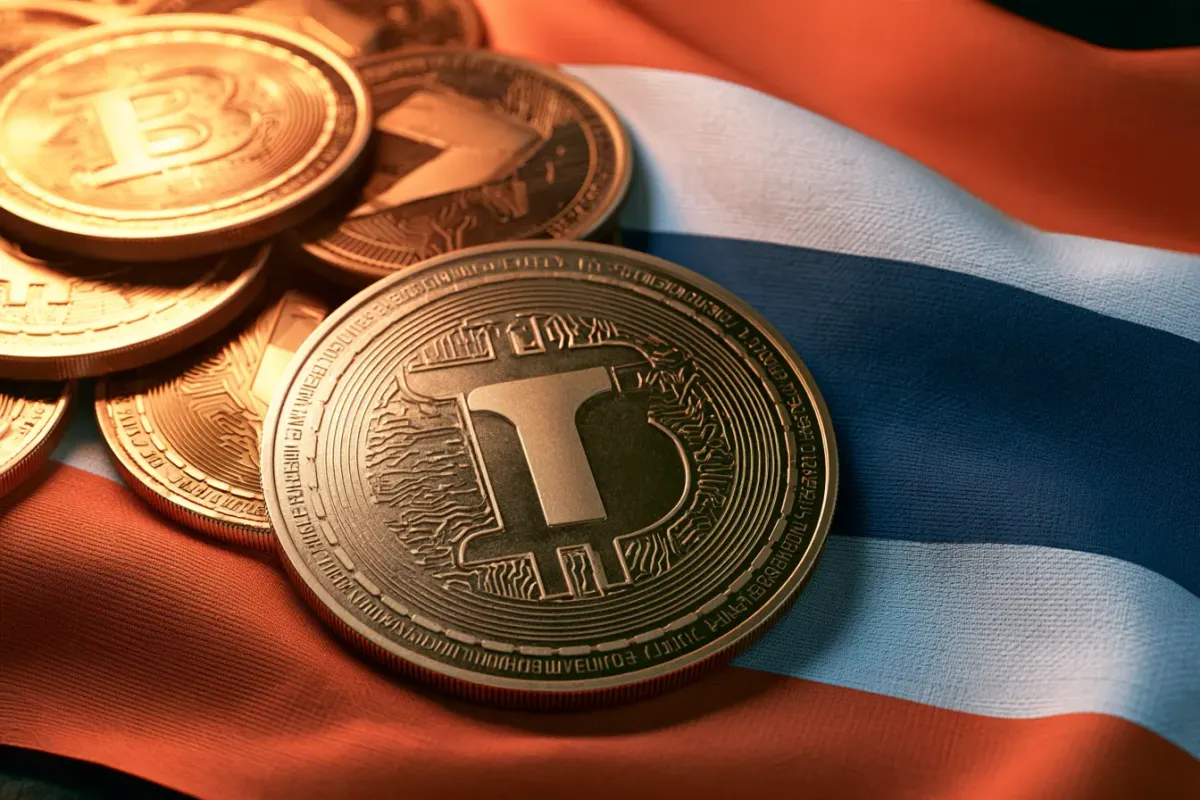
Anchorage Digital Bank review for startups: Learn about its institutional crypto custody, stablecoin settlement with Visa, and why most businesses need alternatives like neo-banking platforms.
Table of Contents
- Executive Summary
- Plain‑Language Definition and Scope
- Core Concepts: Digital Asset Banking vs. Crypto-Friendly Neo‑Banks
- How Anchorage Digital Bank Actually Works
- Fresh Moves: Stablecoin Settlement, Swap Dealer Registration, and What They Mean
- The Hidden Gap: Who Really Gets Left Out?
- Options and Tradeoffs: Institutional Bank or a Neo‑Banking Platform?
- A Practical Framework for Choosing Your Business Banking Partner
- Myths, Mistakes, and Limitations Founders Should Avoid
- Next Steps: From Institutional‑Only to Business‑Ready Banking
- Key Takeaways
Executive Summary
 Anchorage Digital Bank is the first and only federally chartered digital asset bank in the United States, purpose‑built for institutional investors, funds, and large corporations. It delivers custody, settlement, staking, and lending entirely around digital assets. However, it is not a general‑purpose business bank—it offers no fiat‑currency accounts, multi‑currency operations, corporate cards, or the integrated fiat‑crypto workflows that startups, DAOs, and global businesses need. This guide breaks down what Anchorage actually provides, explains who gets locked out, and offers a practical framework for choosing between an institutional digital asset bank and a neo‑banking platform that bridges fiat and crypto without institutional overhead.
Plain‑Language Definition and Scope
Anchorage Digital Bank, N.A. received a national trust bank charter from the Office of the Comptroller of the Currency (OCC) in January 2021 (see the OCC’s conditional approval), making it the first federally chartered digital asset bank. As a qualified custodian, it holds digital assets for institutional clients under regulatory supervision. Anchorage Digital services include custody for hundreds of tokens, staking, governance participation, lending, and, more recently, derivatives and settlement rails for stablecoin payments—all geared toward large institutions, not small businesses.
What exactly is Anchorage Digital Bank, and how does it differ from a traditional bank?
A traditional bank accepts deposits, offers checking and savings accounts, and provides fiat payment rails. Anchorage Digital Bank does none of that. It is a federally chartered trust bank that holds digital assets under supervision, settles crypto‑native obligations, and lets institutions participate in on‑chain finance. It does not take customer deposits in the traditional sense, does not issue debit or credit cards, and does not handle payroll, bill payments, or multi‑currency fiat accounts. Its entire product is built around institutional crypto banking, not the day‑to‑day operating finances of a business.
Core Concepts: Digital Asset Banking vs. Crypto-Friendly Neo‑Banks
Commonly Confused Terms
- Digital asset custody for institutions: Qualified safekeeping of private keys, often with on‑chain governance controls, insurance, and regulatory oversight—Anchorage’s core offering.
- Crypto bank vs neo‑bank: A crypto bank like Anchorage holds digital assets under a banking charter. A crypto‑friendly neo‑bank (like OneSafe) is a technology platform that, through partner banks, provides fiat accounts, cards, wires, and FX alongside crypto on/off‑ramps—it is not itself a bank, but it bundles the financial services a modern business needs.
- Stablecoin settlement: Using a dollar‑pegged token to settle obligations on a payment network (e.g., VisaNet). Only certain institutional‑grade tokens are eligible, and the settlement rail typically connects to a chartered custodian.
How Anchorage Digital Bank Actually Works
The Federally Chartered Custody Model
Anchorage operates as a qualified custodian under OCC regulation. Assets are held in segregated on‑chain accounts using multi‑party computation and hardware security modules. Institutions deposit digital assets, which are never commingled with bank proprietary assets. The bank provides a permissioned interface to trade, stake, and lend directly from custody, reducing settlement risk.
Settlement, Lending, and Staking — Institutional‑Only
Anchorage settles digital asset trades off‑chain through its own internal ledger, avoiding blockchain latency. It offers collateralized lending against crypto holdings and staking for supported proof‑of‑stake assets. Everything requires an institutional onboarding process with substantial minimums; no retail or small business accounts exist.
Custody means Anchorage holds your startup’s private keys under regulatory‑grade security; settlement means that when you trade or transfer, asset movement happens inside the bank, minimizing on‑chain fees and delays. For a small team, this only matters if you hold millions in digital assets and need the regulatory certainty of an OCC‑chartered custodian. Most startups need to pay vendors in fiat, process payroll, or convert between currencies seamlessly—none of which Anchorage supports.
Fresh Moves: Stablecoin Settlement, Swap Dealer Registration, and What They Mean
Visa Network Settlement via USDPT
Western Union’s USDPT—a dollar‑pegged stablecoin issued and custodied by Anchorage Digital Bank—can now settle payments on Visa’s network. This stablecoin settlement Visa integration marks the first Anchorage‑issued stablecoin to achieve that status. While a major step for institutional rails, it does not open the bank to non‑institutional merchants or startups. (Read how stablecoin payments face a liquidity test as supply dynamics shift.)
Lydian Merchant Stablecoin Acceptance
Lydian, a digital payment infrastructure provider, onboarded with Anchorage Digital Bank for stablecoin minting and redemption, allowing merchants to accept stablecoins at checkout and receive local fiat. Again, the beneficiary is the enterprise acquirer, not the small business owner. Anchorage remains the behind‑the‑scenes institutional vault.
Derivatives and Gold‑Backed Lending
Anchorage Digital applied for swap dealer registration with the CFTC, deepening its institutional derivatives offering. Separately, institutional clients can now hold, trade, and borrow against Tether Gold (XAU₮). These moves reinforce Anchorage’s focus: every new product is for regulated financial institutions and large holders.
The Hidden Gap: Who Really Gets Left Out?
Startup and DAO Onboarding Requirements
The digital asset bank onboarding process is built for funds, family offices, and enterprises with dedicated legal and compliance teams. Practitioners consistently report that clients must hold seven‑ to eight‑figure digital asset portfolios to justify the relationship. A Delaware C‑Corp startup or a DAO with a $500,000 treasury does not meet that bar.
In practice, no. Anchorage does not market to startups or DAOs, and its onboarding team screens out non‑institutional applicants.
Fiat Operations and Multi‑Currency Realities
Anchorage provides no fiat checking accounts, ACH transfers, wires in multiple currencies, corporate cards, or FX. A global business that pays contributors in EUR, receives revenue in USD, and holds a treasury in stablecoins simply cannot operate through Anchorage alone. The actual fiat‑conversion layer is always handled by a third party.
None. Every Anchorage Digital service is available exclusively to institutional clients.
Options and Tradeoffs: Institutional Bank or a Neo‑Banking Platform?
When Anchorage Makes Sense (and When It Doesn’t)
Anchorage Digital Bank is the right choice when you manage a regulated fund or corporate treasury with over $10 million in digital assets and need an OCC‑qualified custodian.
It is the wrong choice when you need multi‑currency fiat accounts, corporate cards, rapid onboarding, or your treasury is under $1 million (where Anchorage Digital fees—negotiated per relationship—start at mid‑seven figures in assets under custody).
How a Neo‑Banking Platform Fills the Void
For most startups and DAOs, a neo‑banking platform that bundles fiat accounts with crypto capabilities offers the unified financial layer Anchorage lacks. OneSafe, for example, provides US, EUR, and CAD accounts, corporate cards with spend limits, domestic and international wires, ACH, and instant crypto‑to‑fiat conversions—all from a single interface. Digital asset custody is secured through Fireblocks, and onboarding is fully digital, typically within a week. This operational bridge between crypto treasuries and real‑world expenses is what an institutional custody bank cannot provide.
A crypto‑friendly neo‑banking platform that, through partner banks, delivers fiat accounts, FX, and cards while supporting crypto on‑ramps and off‑ramps. OneSafe replaces fragmented banking relationships with a single dashboard, offering ACH, wires, bill payments, invoicing in fiat and stablecoins, and corporate cards that can be topped up in over 8 tokens—without institutional gatekeeping.
Anchorage Digital fees are not public; pricing involves basis‑point custody fees, transaction fees, and minimum annual commitments, with relationships typically starting in the mid‑seven figures. By contrast, a neo‑banking platform like OneSafe offers a free account tier with transparent fees: 0.15% on fiat deposits/withdrawals, $25 wire withdrawal, free USDC crypto transfers, and a paid plan at $29/month.
A Practical Framework for Choosing Your Business Banking Partner

Step 1: Audit Your Fiat + Crypto Workflow
List every payment flow. If more than 20% of your outflows require fiat, an institutional‑only custody bank will leave you scrambling for a second provider. A unified neo‑banking platform eliminates that split.
Step 2: Vet Account Access, Currencies, and Spend Controls
Confirm which fiat currencies you can hold, send, and receive. Check whether you can issue virtual or physical cards with individual spend limits—critical for DAO reimbursements. Anchorage offers none of this; platforms like OneSafe let you create multiple virtual cards at no extra cost.
Step 3: Pressure‑Test Fees and Transaction Speed
Get a quote for your expected monthly volume. Institutional custody banks have opaque fees that only make sense at scale. For a business moving $100,000 in fiat monthly, a 0.15% deposit fee and $25 wire cost can be dramatically cheaper than an institutional provider’s annual minimum and custody basis points.
Step 4: Confirm Security and Custody Posture
Look beyond buzzwords. Verify that the platform uses a reputable custodian (e.g., Fireblocks, BitGo) and that keys are segregated. Anchorage’s OCC charter brings regulatory oversight, but a well‑architected neo‑banking platform can deliver equivalent technical security with institutional‑grade partners.
Safety isn’t a binary between “chartered” and “non‑bank.” A chartered bank faces federal oversight, but a neo‑banking platform can achieve similar asset protection through third‑party qualified custodians, encryption, and KYB/AML compliance. For example, OneSafe stores digital assets in Fireblocks and mandates multi‑factor authentication. The key is to verify who actually holds your assets and what recovery procedures exist.
Institutional banks like Anchorage require weeks to months. Fully digital neo‑banking platforms can onboard a business in under one week—OneSafe’s process, for instance, starts in as little as 10 minutes.
Myths, Mistakes, and Limitations Founders Should Avoid
- Myth: “A federally chartered digital bank is the safest place for my startup’s crypto.”
Reality: Safety comes from custody architecture and operational controls, not a charter alone. In fact, even federally chartered institutions can face serious regulatory probes—Anchorage Digital Bank itself encountered a Homeland Security investigation (read the Yahoo Finance report), underscoring that a charter isn’t a blanket guarantee. - Mistake: Ignoring fiat operations during bank selection. Founders obsessed with crypto custody often overlook that they need to pay salaries, rent, and cloud bills in fiat—forcing a later scramble for a separate bank.
- Limitation: Institutional gatekeeping is deliberate. Don’t waste time forcing a fit—move to a platform designed for your size.
- Myth: “Higher fees and big minimums mean better service.” The institutional premium pays for regulatory overhead and personalized service for funds; for a 10‑person startup, it’s overkill that drains capital.
Next Steps: From Institutional‑Only to Business‑Ready Banking
If your business regularly touches both fiat and crypto, start with the four‑step framework above. Demo a neo‑banking platform that gives you multi‑currency accounts, cards, and crypto on/off‑ramps; then evaluate whether you still need a separate institutional custodian for long‑term holdings. Often, a single platform like OneSafe removes the need for multiple banking relationships entirely. As you scale, tools like Joyrise, an AI service that writes and publishes SEO articles to your site daily, can help grow organic traffic while you sleep—your first article is free before you pay.
Key Takeaways
- Anchorage Digital Bank is an institutional‑only solution that provides world‑class custody, staking, and settlement but leaves startups and DAOs without the fiat operational layer they require.
- Recent moves like stablecoin settlement Visa integration and swap dealer registration reinforce Anchorage’s institutional focus and do not change accessibility for smaller businesses.
- A neo‑banking platform like OneSafe fills the gap by combining multi‑currency fiat accounts, corporate cards, and crypto on/off‑ramps with transparent fees and rapid onboarding.
- Use a four‑step framework—audit fiat+crypto flows, vet currencies and controls, pressure‑test fees, and confirm custody posture—to choose the right partner.
- Don’t confuse a bank charter with safety; verify actual custody infrastructure, compliance, and accessibility for your team.
- Stay informed about shifting regulatory landscapes—for instance, the latest stablecoin regulation crackdown could affect how platforms operate.
For a business‑ready financial operating system that connects your fiat and crypto workflows in one place, try OneSafe’s unified platform today.
Get started with Bank accounts in minutes!
Get started with Bank accounts effortlessly. OneSafe brings together your crypto and banking needs in one simple, powerful platform.