- Bank of Japan pushes stablecoin reserve rules as megabanks near March launch 21 seconds ago Regulation
- Latin America’s crypto volume jumps 76% to $730B as stablecoins fill banking gaps, ChangeNOW study finds 18 minutes ago Industry Thoughts
- ESMA to Launch Upgraded MiCA Crypto Registry by Mid-2027 24 minutes ago News
- Ethereum Moves Glamsterdam Closer to Mainnet With a December 15 Hoodi Date 3 hours ago News
- Pentagon renames AI office, but who is actually running Maven? November 26, 2026 Regulation
- Talking AI teddies face a New York sales ban from February 2027 November 25, 2026 Regulation
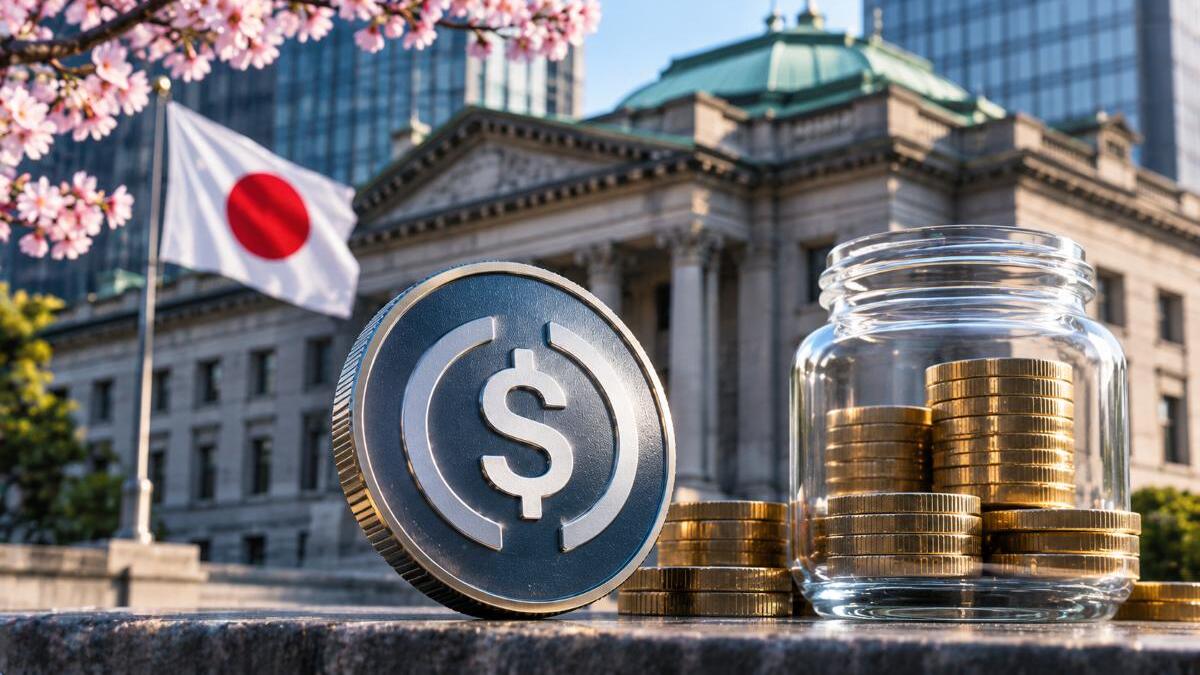
- Bank of Japan Executive Director Kazushige Kamiyama called for regulation of stablecoin reserve assets and tighter links to central bank money.
- The comment landed days after Japan’s first licensed yen stablecoin, JPYC, went dark following a cyber incident at its partner bank.
- The central bank is setting the terms before MUFG, Mizuho and SMBC launch live transactions of a trust-backed yen stablecoin by March 2027.
The Bank of Japan’s Executive Director Kazushige Kamiyama says the country is working to establish reliable links between stablecoins and central bank money and also set up reserve regulations.
The BOJ executive director made the statement on November 27, while speaking at the IMF’s Tokyo seminar.
Kamiyama’s comments provide insight into the central bank’s approach heading into 2027 as Japan’s three megabanks prepare to launch a yen stablecoin by March of the same year. In the meantime, the JPYC yen stablecoin, which is already licensed to operate in the country, had to take down some of its services after outage reports from the issuer.
Why the BOJ is focusing on stablecoin reserve rules in 2027
The BOJ push that Executive Director Kazushige Kamiyama committed to at the IMF’s Tokyo seminar traces back to the singleness of money call led by the Bank for International Settlements (BIS).
In simple terms, the singleness of money refers to the idea that one should be able to swap every version of a currency into every other version at par, with finality.
According to Kamiyama, central bank reserves give competing banks a shared settlement asset, which makes the system work for ordinary bank deposits.
Privately issued stablecoins, on the other hand, maintain their one-to-one pegs to their base currencies by maintaining their reserve assets and redemption terms.
Kamiyama says the BOJ needs to actively monitor those arrangements and carefully wire them into central bank money to ensure high confidence in the parallel stablecoin system.
China, Japan, South Korea, and ASEAN members entered into a November 26 agreement to advance talks on cross-border digital payments, covering stablecoin rules and the impact of tokenization on monetary sovereignty.
Why 2027 matters for Japanese yen stablecoin issuers
The BOJ’s plans for stablecoin issuers arrive as the country’s three megabanks, MUFG Bank, Mizuho Bank and Sumitomo Mitsui Banking Corporation (SMBC), continue to run live commercial transactions for a jointly issued yen stablecoin until the fiscal 2026 year ends in March 2027.
Mitsubishi UFJ Trust and Banking and TISI Inc. joined the three lenders for a proof-of-concept that tested issuance, transfer and redemption between July 17 and July 23. SMBC provided the blockchain platform for the project.
Per Cryptopolitan, the banks behind the joint yen stablecoin project control roughly $6.8 trillion in assets between them.
Kamiyama got a preview of his concerns about yen stablecoin reserves and redemptions earlier in the month, when Japan’s first fully regulated yen stablecoin, JPYC, which is fully backed by yen deposits and Japanese government bonds, pulled its apps offline indefinitely. As Cryptopolitan reported at the time, the issuer did not state any cause or name a restart date.
The downtime followed trouble at its partner, GMO Aozora Net Bank, which suspended service twice between November 10 and 11 after detecting unauthorized traffic against its bank API. JPYC EX, the on-ramp between the token and the yen, went into emergency maintenance during that stretch.
Automated liquidations and after-hours cash
Beyond reserves, Kamiyama flagged five pressure points in tokenization. Smart contracts that trigger margin calls or liquidate collateral automatically could magnify price swings when markets are already stressed, he said.
Round-the-clock token trading sitting on top of payment systems that keep banking hours could force institutions to hold extra cash they cannot always move between platforms fast enough.
“Faster settlement does not automatically mean more efficient liquidity management,” Kamiyama said.
He also pointed to unsettled legal questions about whether moving a token actually transfers the rights to the asset underlying it, and warned that AI could make it easier to find and exploit security holes.
The Bank of Japan, meanwhile, is running its own DLT sandbox across three uses: international payments, interbank settlement and the cash leg of tokenized government-bond trades.
If you're reading this, you’re already ahead. Stay there with our newsletter.
FAQs
What did the Bank of Japan ask for on stablecoins?
Executive Director Kazushige Kamiyama called for appropriate oversight of stablecoin reserve assets and well-designed connections to central bank money, arguing both are needed to keep a stablecoin redeemable at face value.
When will Japan's megabanks launch their yen stablecoin?
MUFG, Mizuho and SMBC aim to begin live commercial transactions during fiscal 2026, which ends in March 2027, using a trust-backed yen token designed mainly for cross-border corporate payments.
Why did JPYC go offline?
JPYC took its apps offline indefinitely on November 18 with no stated cause, after its partner GMO Aozora Net Bank suspended service twice between November 10 and 11 following unauthorized access to its bank API.
Disclaimer. The information provided is not trading advice. Cryptopolitan.com holds no liability for any investments made based on the information provided on this page. We strongly recommend independent research and/or consultation with a qualified professional before making any investment decisions.
Hannah Collymore
Hannah is a writer and editor with nearly a decade of blog writing and event reporting experience in the crypto space. At Cryptopolitan, Hannah contributes to the news page, reporting and analyzing the latest developments in DeFi, RWA, crypto regulation, AI and frontier tech industries. She graduated from Arcadia university with a degree in Business Administration.
5 Ingenious Applications of ChatGPT And What You Should Do About Them
93% Business Leaders Favor AI-Powered Solutions for Brand Sustainability Management, Reuters
Here’s How Macron Supports France’s Vibrant and Productive AI Ecosystem
Bloomberg Estimates the Generative AI Market to Reach $1.3 Trillion by 2032
- Bitcoin ETF vs. Ethereum ETF: What’s the Difference? May 6, 2026 Learn Crypto: Beginner Guides
- What Is Base? The Ethereum Layer-2 Network Launched by Coinbase October 21, 2025 Learn Crypto: Beginner Guides
- Dogecoin vs. Bitcoin: Key Technical Differences May 6, 2026 Learn Crypto: Beginner Guides
- What Is TVL (Total Value Locked) in Crypto? October 14, 2025 Learn Crypto: Beginner Guides
- How to Read a Crypto Whitepaper? October 13, 2025 Learn Crypto: Beginner Guides
- Ripple vs. XRP vs. XRP Ledger: What’s the Difference? May 6, 2026 Learn Crypto: Beginner Guides