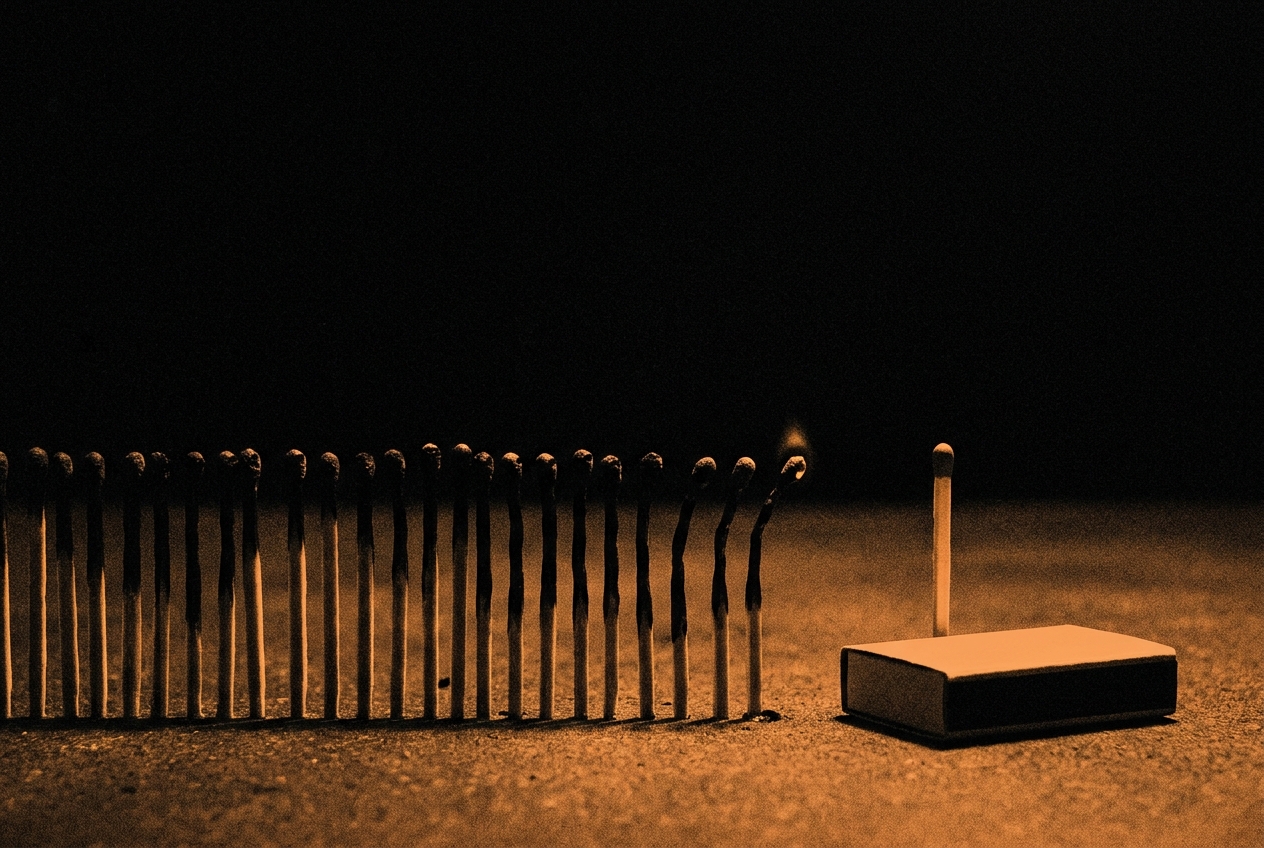
Binance's monthly Luna Classic (LUNC) burn had not shown up as of late on 3 November, according to the burn tracker StatsBin. The exchange has burned a share of its LUNC trading fees every calendar month since March 2023, a run of 44 months through October 2026.
For holders, the burn is one of the few steady sources of supply reduction. Binance destroys half of the fees it earns from LUNC spot and margin trading, so a skipped or delayed month means fewer tokens leave circulation. A late burn is not yet a missed one, though, and the timing rules leave room for it to arrive this week.
The Burn Usually Lands on the First of the Month
StatsBin's snapshot, taken at 22:18 UTC on 3 November, lists no November entry. Its latest recorded burn is Burn #50, dated 1 October 2026 at 11:02 UTC, which destroyed 334,879,422.01 LUNC.
That timing is typical. Last November's burn arrived at 09:31 UTC on 1 November 2025 and removed 652,627,274.97 LUNC. The largest burn of 2026 came on 1 January, at 5.30 billion LUNC.
StatsBin puts the cumulative total at about 88.1 billion LUNC through October. Binance's own published total is reported at 88,116,134,068.45 LUNC, about 21 million higher than the tracker's 88,095,126,936.62. Neither figure comes with an explanation for the gap.
Binance's Rules Leave a Window Until the Fifth
Binance's program rules are described as calculating the previous month's fees before the fifth day of each month, then updating on-chain transactions and monthly reports. The rules do not set an exact date for those transactions.
That matters for the "missed" framing. On that reading, a November burn landing on 4 or 5 November would still fall inside the stated window, even if it breaks the habit of arriving on the 1st. Binance's own announcement page for the program could not be read directly, so the schedule rests on how it has been described rather than on the exchange's text.
Has This Happened Before?
Once. Binance first pledged to burn trading fees after the Terra Classic community voted in late 2022 to burn a portion of every on-chain LUNC transaction. At the end of that year it paused, over a community vote on re-minting tokens.
When it came back, it cut the burn to 50% of trading fees. It announced that rate in December 2022 and only started contributions on 1 March 2023, after the community dropped the re-mints. Every month since then has had a burn, until now.
Community Members Point to Binance's Security Problems
The delay comes days after Binance was reported to have been hacked for $6.3 billion, with the FBI said to have attributed the attack to TraderTraitor, the North Korean group blamed for the Bybit hack. The exchange is also reported to be reopening withdrawals in stages. None of these details could be checked against Binance or the FBI.
A community member known as Vegas (Pedro) claims Binance is doing security maintenance after the hack and moving LUNC to a more secure wallet before it burns. He has not been verified as a Binance contact, and Binance has not confirmed his account.
Terra Classic contributor Dawid Skinder was more cautious. "It might be that it is just an operational issue after the biggest hack ever," he said. "Hopefully that is the case, Terra Classic does not need another problem."
The next marker is 5 November. If a November entry appears on StatsBin by then, the run is intact and only the timing slipped. If it does not, the burn will have fallen outside Binance's own calculation window for the first time since the program restarted in 2023.