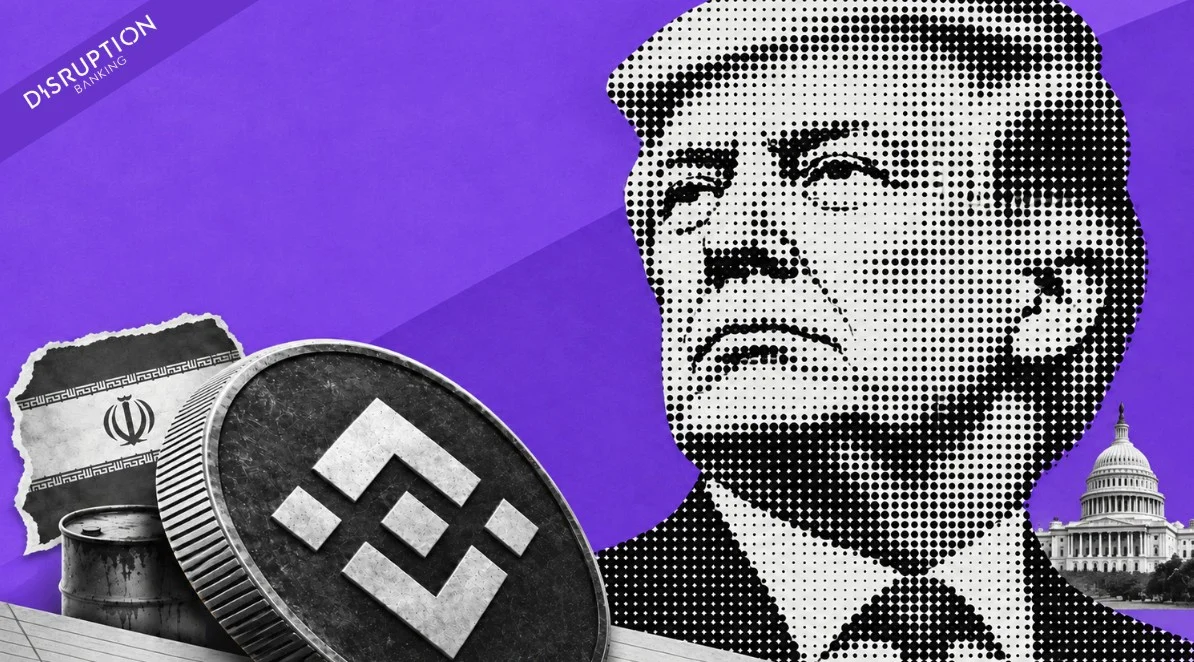
Binance fired or suspended at least four of its own investigators within weeks of their report that $1.7 billion had moved from two accounts on the exchange toward entities allegedly linked to Iran-backed militant organizations. One of those investigators has since sat down with agents from the Internal Revenue Service (IRS), and a federal grand jury in the District of Columbia has subpoenaed him to testify.
Binance fired or suspended at least four of its own investigators within weeks of their report that $1.7 billion had moved from two accounts on the exchange toward entities allegedly linked to Iran-backed militant organizations. One of those investigators has since sat down with agents from the Internal Revenue Service (IRS), and a federal grand jury in the District of Columbia has subpoenaed him to testify.
The backdrop is a war. The United States is fighting Iran, and Iran has supplied the war machine of Russia in Ukraine. So, in a twisted way, two hot wars are linked, with oil and crypto as integral means of exchange. And some of the most powerful men in Washington stand an arm’s length from the pipes that carry the money of Tehran.
Layers Upon Layers
The web of people involved includes Changpeng Zhao (CZ), Justin Sun, Secretary of Commerce Howard Lutnick and the sons who took his place at Cantor Fitzgerald, as well as President Donald Trump, his sons and their business partners in World Liberty Financial (WLF).
Then there is a host of crypto exchanges. Nobitex, Wallex, Bitpin and Ramzinex were all sanctioned by the Treasury Department on June 2. Binance and the TRON network sit a step further out. Between them are shady entities like Blessed Trust and Hexa Whale, which used crypto wallets to shuffle funds in Tether, TRON, BNB and other tokens between the Islamic Revolutionary Guard Corps (IRGC) and its clients and intermediaries.
Minority staff on the Senate Permanent Subcommittee on Investigations say the two firms, both Binance partners, laundered at least $1.5 billion to Iran and the Houthis in 2024 and 2025.
On March 10, 2026, Binance acknowledged the investigation involving Blessed Trust and Hexa Whale but argued that the transactions moved through multiple independent intermediaries. The company claimed that approximately $126.1 million, rather than the entire $1.7 billion, ultimately reached wallets linked to Iranian addresses, with no more than $24.1 million reaching IRGC-related wallets. Mind you, this was after its $4.3 billion settlement and compliance overhaul. Guess that didn’t work!
Binance further said it identified and removed the suspicious accounts, reported its findings to law enforcement, and did not dismiss employees for raising compliance concerns.
An Arm’s Length From Tehran
Ironically, Cantor Fitzgerald and WLF are but an arm’s length from the conduits of the U.S. government’s worst enemies. Cantor holds a 5% stake in Tether, the stablecoin that the same Senate report calls the primary cryptocurrency of Iran’s shadow banking. Senator Richard Blumenthal put the value of that stake at an estimated $10 billion in an October letter to Cantor chairman Brandon Lutnick.
There is no public evidence establishing that Cantor knowingly facilitated the Iran-linked transfers discussed in this article. But Cantor’s financial relationship with Tether, whose USDT stablecoin is heavily used in Iranian shadow banking, puts the firm within the broader financial ecosystem congressional investigators are now examining.
WLF was literally put on the map by Justin Sun, who became its largest investor with a $30 million token purchase in November 2024. Sun created TRON. Zhao’s Binance spawned BNB Chain. Together, those two networks have carried at least $2.3 billion for Nobitex since 2023, according to reports. Those reports found no suggestion that the Trump family knew, but it is unusual for U.S. leaders to be actively profiting from a country they are actively bombing. Usually, they only start bombing once the profits stop flowing.
The $2 Billion Handshake
There is a much more direct financial connection between Binance and Trump’s family business. In 2025, Abu Dhabi investment firm MGX used $2 billion of World Liberty Financial’s USD1 stablecoin to acquire a stake in Binance. Binance also helped develop the technology underlying USD1, according to reports.
The transaction gave the Trump family’s stablecoin a spectacular debut and established a multibillion-dollar commercial relationship between the world’s largest cryptocurrency exchange and a financial product issued by the president’s family. It does not establish that World Liberty Financial participated in Binance’s Iran-linked transactions. But it does raise questions about the political and commercial relationships surrounding an exchange that had already pleaded guilty to violating U.S. financial laws.
Same Exchange, Same Story
Binance is doing what it has always done. It has been a network of choice for years and years. It has been reported that $7.8 billion flowed between Nobitex and Binance from 2018 to 2022. In 2023, Binance pleaded guilty to U.S. charges and agreed to pay $4.3 billion. Zhao spent a stint in prison over the failure to stop funds flowing to and from sanctioned countries, until Trump pardoned him in October 2025.
How many billions has Binance enabled to flow into the accounts of terrorists and mafiosos? We may never know. But once in a while some news dribbles out, and we can hazard a guess at the scale.
The latest dribble came in February 2026. It was reported that Binance investigators had found people in Iran accessing more than 1,500 accounts on the platform, and $1.7 billion moving from two accounts to Iran-linked entities. One of the two accounts belonged to Blessed Trust, a Hong Kong payments firm that worked as a Binance vendor. The investigators reported up the chain. Within weeks, they were out.
Operation Loclock
The paper trail has grown since. According to a search warrant obtained by Forbes, a former senior financial crimes investigator told IRS agents in May that Binance leadership ignored calls for an internal probe, code-named Operation Loclock, into roughly 2,000 accounts suspected of being used by people in Iran.
Those accounts moved about $1.2 billion across the platform. He also told the agents that a Blessed Trust account sent funds to Iran while paying Binance expenses such as salaries.
Binance said approximately $126.1 million ultimately reached wallets associated with Iranian addresses, including no more than $24.1 million that reached IRGC-related wallets. Binance says it identified and removed the suspicious accounts and reported its findings to law enforcement.
Even if Binance’s figures are accepted, that leaves an uncomfortable question: How did tens of millions of dollars reach IRGC-linked wallets through a network involving Binance customers after the exchange’s $4.3 billion settlement with U.S. regulators?
Gregory Bernstein, a partner at Keller Anderle Scolnick LLP who represents the former investigator, said in an interview: “There is substantial evidence that Binance helped evade sanctions and launder more than a billion dollars from China to Iran and Iran-backed entities.”
Follow the Oil
The Justice Department has also followed the money. On September 14, federal prosecutors filed a civil forfeiture complaint seeking approximately $61 million in cryptocurrency allegedly connected to an Iranian oil-laundering operation. The complaint describes a network that received and distributed more than $1.5 billion in proceeds from illicit Iranian oil sales and identifies Blessed Trust and Hexa Whale as intermediaries that used Binance trading accounts to facilitate the transactions.
That puts Binance’s internal investigation and the federal government’s case on overlapping ground. The companies identified by Binance’s investigators are also named in a federal proceeding involving the proceeds of Iranian oil sales. The forfeiture allegations have not yet been adjudicated, and the complaint does not itself establish that Binance knowingly participated in the laundering scheme.
Binance denies all of it. “Any suggestion that Binance knowingly allowed sanctionable activity to continue unchecked is incorrect and defamatory,” Rachel Conlan, a Binance representative, said in an interview.
The company says the investigators were let go for breaching its data privacy policy and that the Iran inquiry never shut down. Its deputy general counsel, Dugan Bliss, told Forbes that Binance disputes the claim that leadership ignored the concerns. Binance has also sued the publisher of the Wall Street Journal for defamation over its version of the story.
“They Are Here for Crime”
Oh please, people. It is hard to imagine anyone delivering that line without a smirk, because Binance’s own compliance staff wrote the rebuttal years ago. In a February 2020 internal chat about certain customers, including some from Russia, then-Chief Compliance Officer Samuel Lim put it plainly, according to a complaint filed by the Commodity Futures Trading Commission (CFTC).
“Like come on. They are here for crime.”
Binance’s Money Laundering Reporting Officer responded:
“We see the bad, but we close 2 eyes.”
This is the open secret of the crypto world. It is infested with criminals. Binance customer accounts received at least $408 million in tether from the Huione Group, which U.S. regulators branded a money laundering concern in May 2025, between July 2024 and July 2025. That was after the guilty plea, with court-appointed monitors watching.
A Binance-hosted address that Treasury linked to a money launderer for the Sinaloa Cartel took in more than $700,000. A Russian money launderer’s wallet moved at least $40 million through Binance accounts. The Chinese fentanyl money ran through rival OKX. All of that comes from an in-depth report by the International Consortium of Investigative Journalists.
Who Watches the Watchers?
Put the dates in a row. In 2020, the compliance chief joked that the customers were there for crime. In 2023, the company pleaded guilty. In October 2025, the founder got his pardon. Weeks later, the people who traced $1.7 billion toward Iran were shown the door.
Now those same investigators are the government’s witnesses. The open question is what the Justice Department does with a case against a company whose founder the president has already pardoned, and who is a prominent backer of the president’s family crypto venture.
Hint: It will do absolutely nothing. The AG is Trump’s former personal lawyer.
Binance claims its controls are working. The people Binance fired for trying to implement those controls are now talking to the IRS.
The IRS has their statements, a grand jury has issued its subpoena, and the Senate has opened its own inquiry. It’s possible the IRS investigation will get shut down, but there’s no doubt Congressional Democrats will be like pitbulls on Binance’s finances.
Author: Tim Tolka, Senior Reporter
#Crypto #Blockchain #DigitalAssets #DeFi
The editorial team at #DisruptionBanking has taken all precautions to ensure that no persons or organizations have been adversely affected or offered any sort of financial advice in this article. This article is most definitely not financial advice.
See Also:
Iran Evades Sanctions Using Crypto on Binance | Disruption Banking
Scott Danaher
Contributing author at Disruption Banking, covering digital assets.
Leave a Reply Cancel reply
Related stories
Bank of England Fires Starting Gun on Systemic Stablecoins
The Bank of England has just opened the doors for feedback on how it plans to police the…
Lloyds Bank Goes Crypto With HBAR
“Something has truly changed.” We hear statements like a lot, but when it comes in response to a…
How To Qualify For A Small Business Loan in Australia: Judo Bank’s Best Tips
Getting a business off the ground and thriving can be a capital-intensive affair. At some point, you may…