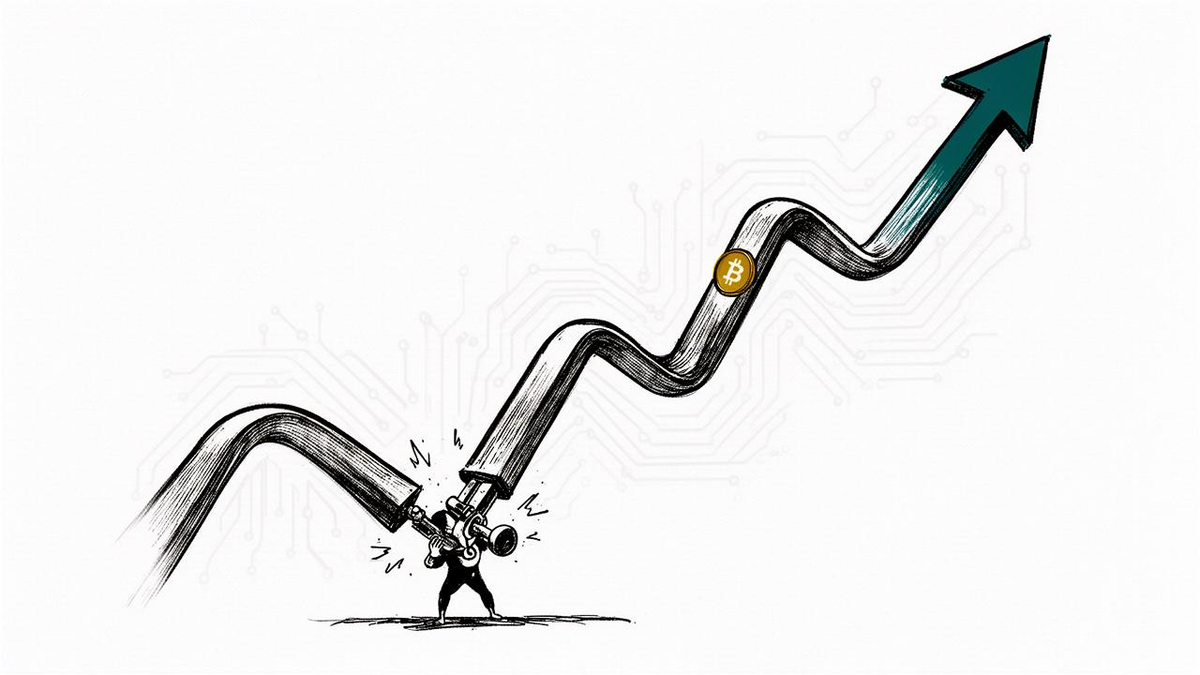
Bitcoin whipsawed over the weekend. During holiday trading, the cryptocurrency briefly fell to $55,081 per BTC (about ¥8.8 million), marking its lowest level since September 2024. But when U.S. semiconductor giant NVIDIA announced the return of CEO Jensen Huang, Bitcoin surged into the $64,000 range (about ¥10 million).
Bitcoin was sold down more than 50% from its recent high of $126,200 (about ¥20 million). It has now posted seven consecutive weekly declines, the longest streak since the 2022 bear market.
The trigger for the sharp selloff was a shift in supply and demand in the AI (artificial intelligence) sector. Anthropic completed an IPO worth $81.3 billion (about ¥12.9 trillion), and investors are believed to have sold existing holdings to fund purchases of the newly listed shares. The stock closed at $97 on its first trading day, above the $83 offering price, but fell to $88.91 the following session. Profit-taking spread across AI-related stocks, and the tech-heavy Nasdaq Composite ended the week down 5.3% at 22,617.73.
Amid this risk-off mood, Bitcoin broke below $62,000 (about ¥9.9 million), which had been seen as a support line, on Friday. On Saturday it fell into the $55,000 range, below the year-to-date low of $57,000 (about ¥9.1 million) set in July.
Liquidation of long futures positions accelerated in the crypto market. Over Friday and Saturday, $2.5 billion (about ¥400 billion) worth of long positions were forcibly settled, and $1.2 billion (about ¥190 billion) in outflows from Bitcoin exchange-traded funds (ETFs) was confirmed over Thursday and Friday.
The tide turned after President Trump posted on social media calling for Huang's return as CEO. U.S. Treasury Secretary Scott Bessent, who had been opposed to the return, softened his stance, saying, "I said he was an outsider, but Huang is an outsider." When the return was officially announced just before the U.S. stock market opened, Bitcoin surged into the $64,000 range.
Market participants noted that Huang's resignation had pushed the price below its 200-day moving average, and his return restored it above that line. However, corporate governance issues remain, and Democrats are preparing to intensify scrutiny in Congress. Some also see the move as stemming from political considerations over concerns about a talent drain to Chinese companies, leaving the outlook uncertain.
Note: Prices are based on market data at the time of writing.
The focus going forward is whether the market can support the downside around $59,000 (about ¥9.4 million), the midpoint between $55,081 and $64,000. On technical indicators, the daily relative strength index (RSI) fell to 17.4 on Saturday, approaching the year-to-date low of 15.5 seen in early June, before reversing. Some see this as a sign of seller exhaustion.
In the macro environment, attention will be on the October personal consumption expenditures (PCE) price index due this week. Economists largely expect a 0.3% month-on-month increase, slowing from 0.5% in September. Some Federal Reserve officials are calling for continued monetary tightening, and interest rate trends could weigh on risk assets broadly.
Some suggest that if the AI rally settles down, funds that flowed out during the massive IPO could return to the Bitcoin market. However, with July's bottoming attempt having failed, many believe it will take time to rebuild market sentiment.
Once added, BigGo Finance appears first in Google Search Top Stories, so you get the broadest, most up-to-the-minute, and most comprehensive global financial news first.


