Bitcoin hovered near $64,800 on Monday morning, holding a fragile foothold after a weekend rout that briefly drove the token to $61,946, as cryptocurrency traders turned their attention to a pair of Federal Reserve appearances later in the day.
The largest digital asset was up about 0.1% over 24 hours but down 13.4% over the past week, according to CoinGecko data cited in market reports. It remains roughly 49% below its record high of $126,080 reached on October 6, 2025, and has shed about 20% over the past month. The weekend's trading range was narrow by recent standards, with the price oscillating between $64,600 and $65,300 after Sunday's low held without a second test.
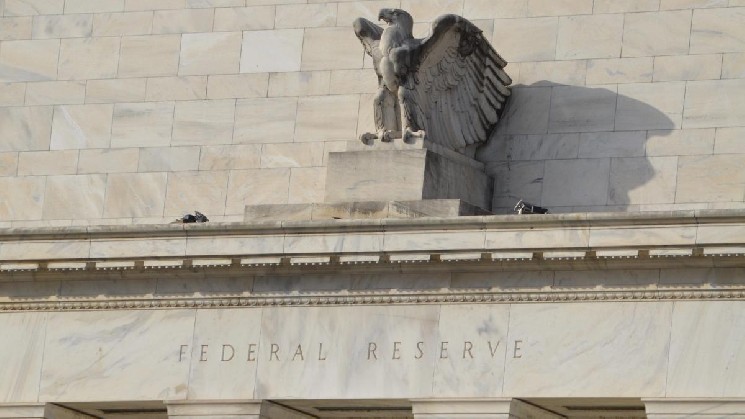
The immediate focus is Fed Chair Kevin Warsh, who is scheduled to deliver opening remarks at the Productivity and Jobs Task Force Conference hosted by the Federal Reserve Bank of San Francisco at noon New York time, or 6 p.m. Central European Time. It marks his first public appearance since the central bank's late-October policy meeting. Earlier, at 11 a.m. CET, Fed Governor Michael Barr is set to speak in Milan on artificial intelligence and financial stability.
At first glance, a conference on productivity has little to do with digital assets. The connection runs through interest rates. After its September increase, the Fed left its policy rate in a 3.75% to 4% range at the end of October, with two members already favoring a further hike. Any signal from the chair pointing toward additional tightening tends to make government bonds more attractive and draw capital away from riskier holdings, a dynamic bitcoin has tracked closely for years.
Warsh has repeatedly pointed to artificial intelligence as a force that could lower production costs and thereby ease price pressures. Reaffirming that view would argue against a near-term rate increase. Emphasizing instead the costs of the AI buildout -- power, chips and scarce skilled labor -- could be read as a case for rates staying elevated for longer. An explicit policy statement is unlikely in brief opening remarks, leaving tone as the operative signal.
"This is the start of a potential bounce and this is exactly what you'd want to see on #Bitcoin," crypto analyst Michaël van de Poppe wrote in a November 15 post on X, pointing to elevated trading volumes and evidence that buyers absorbed selling pressure during the weekend's thinner hours.
The technical picture remains bruised. Bitcoin fell below its 200-week moving average near $67,992 on November 14, and its daily relative strength index dropped to roughly 22.5 to 23, a reading that signals deeply oversold conditions. The token is also trading below its 20-day simple moving average near $74,370, with resistance clustered between $65,400 and $70,000.
Note: Levels compiled from CoinGecko and technical data cited in market reports as of November 16, 2026.
The weekend's price action capped bitcoin's weakest week since early June. Roughly $2 billion in leveraged positions were forcibly closed across crypto exchanges within 24 hours, the bulk of them bets on rising prices. Liquidations occur when the collateral behind a leveraged position no longer covers its losses, prompting the exchange to close the trade automatically. At ten times leverage, a move of about 10% against a trader is enough to trigger that outcome; at twenty times, roughly 5%.
More recent data from CoinGlass showed rolling 24-hour liquidations easing to about $243 million across nearly 66,000 traders, with bitcoin accounting for $107 million of that total. Short positions made up almost $69 million, compared with about $39 million in longs, as the rebound caught traders positioned for further declines.
CryptoQuant contributor BaykusCharts reported that open interest in coin-margined BTC-USD contracts fell from $1.55 billion to $1.1 billion as bitcoin slid from $74,000 to $64,000, while funding rates turned negative for the first time since March. The analyst drew a parallel with February and June, when reductions in leveraged positions accompanied local bottoms, writing that "if the flush is complete, a bottoming zone may be near," while cautioning that growing short exposure could bring further volatility.
Sentiment offers little comfort. The Fear and Greed Index compiled by alternative.me stood at 10 points on Monday, unchanged from Sunday and deep in extreme fear territory. It was at 32 on November 10. Such readings describe how much pessimism is already priced in rather than functioning as a buy signal; in June 2022, the gauge stayed in extreme fear for weeks while prices kept sliding.
The more durable headwind comes from institutional funds. US spot bitcoin ETFs have now recorded seven consecutive trading sessions of net withdrawals, totaling about $1.91 billion, according to Farside Investors. Friday's outflow of $185.4 million included $143.5 million from BlackRock's iShares Bitcoin Trust and $41.9 million from Fidelity's Wise Origin Bitcoin Fund, with all other spot products reporting no flows. Combined withdrawals across US-listed crypto ETFs reached $1.53 billion for the November 9-13 week, including $398.9 million from Ethereum funds and $32 million from Solana products.
Because spot funds hold actual coins, redemptions force issuers to sell bitcoin, adding pressure on top of exchange trading. There has not been a single day of inflows since the start of November. The next flow figures, covering Monday's session, are due Tuesday morning.
Doctor Profit, a crypto analyst who had identified $68,000 as a possible bottom on November 13 before prices fell through it, maintained a longer-term bullish stance and said $57,000 remained his bear-market target, adding that sellers could claim victory only below that level. KuCoin's market assessment identified $62,000 to $63,000 as immediate support, with a sustained break exposing $60,000 and then the $57,000-$58,000 zone.
Macro conditions have compounded the pressure. October US consumer prices rose 0.4% month over month, above forecasts of 0.3%, while core inflation climbed 0.3% against expectations of 0.2%, according to StoneX analyst Fawad Razaqzada. A softer producer price report on Friday, with prices up 0.3% versus an expected 0.4%, briefly lifted bitcoin toward $70,000. Swyftx analyst Pav Hundal said weaker inflation could ease dollar pressure and lend some support, though annual producer inflation remained elevated at 6.5%.
The week's calendar adds several catalysts. CME futures reopened Sunday evening, and a gap between Friday's futures close and current spot prices near $68,200 may draw attention, though such gaps are a reference point rather than a target. Nvidia reports quarterly results on Tuesday, and the Fed publishes minutes of its October 27-28 meeting on Wednesday at 2 p.m. Eastern.
For now, the $61,946 level stands as the dividing line. Holding it would mark a first sign of stabilization after more than $2 billion in liquidations cleared leverage from the market. Reclaiming it is not the same as reversing the trend: with ETF outflows unbroken and the Fed's last meeting tilting toward another hike rather than cuts, rallies are likely to encounter sellers near the 200-week average around $67,800.
Once added, BigGo Finance appears first in Google Search Top Stories, so you get the broadest, most up-to-the-minute, and most comprehensive global financial news first.