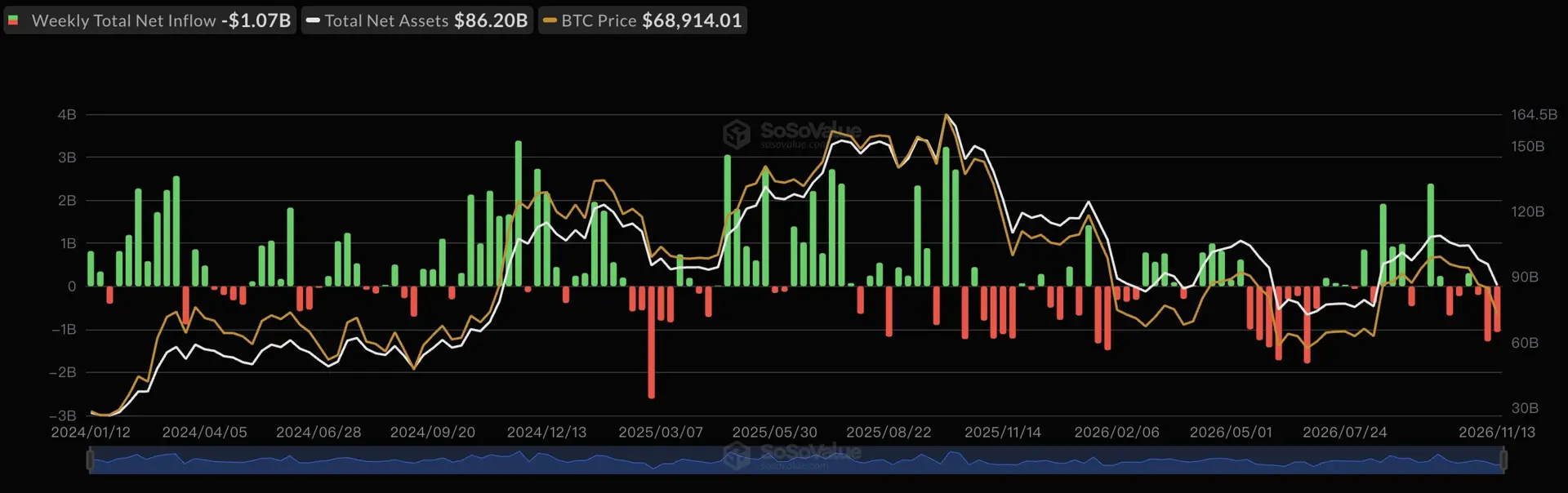
Bitcoin’s fall to around $62,000 has put the risk of cascading liquidations in focus, with another concentration of leveraged positions near $60,000 and the summer low around $59,000 emerging as key levels to watch.
In her November 16 broadcast, Natalie Brunell said Bitcoin had reached a three-month low over the weekend. It had traded above $81,000 the day after the midterms, losing almost 25% in under two weeks. About $2 billion in leveraged positions were liquidated in a single day, affecting more than 300,000 traders, she said.
Brunell described how futures positions funded with borrowed money can amplify a decline. A trader using $7,000 as collateral for a $70,000 position has 10-to-one leverage: a 10% gain would generate $7,000 before fees and other costs, but an adverse move could trigger liquidation before the price falls 10%. Forced closures can then add selling pressure and trigger further liquidations.
She stressed that accusations by some traders that Binance deliberately triggered liquidations remained unproven. Reports cited in the broadcast put almost 40% of the weekend’s liquidations on Binance. The exchange said the heaviest selling of actual Bitcoin occurred on an American exchange, a response Brunell said did not resolve questions about futures trading.
Mining conditions also showed signs of strain. Bitcoin’s mining difficulty fell more than 9%, its largest downward adjustment since June, which Brunell linked to miners shutting down unprofitable machines. Publicly listed miner Mara disclosed selling about 40% of its Bitcoin in recent weeks, worth more than $1 billion, she said.
Brunell identified $60,000 as a level where another wave of leveraged liquidations could occur. She also noted that some analysts regarded the summer low near $59,000 as a bottom already reached, making that level another reference point for the decline.
Bitcoin had also fallen below its 200-week moving average, which stood near $68,000. Brunell noted that the price had recovered after earlier breaks below the measure in 2020 and 2022. She cited analyst James Czech’s assessment that the area represented deep value, while emphasizing his qualification that this did not establish that a bottom had formed.
Brunell closed by distinguishing losses on Bitcoin holdings from forced liquidation of leveraged positions. Holders who simply owned their Bitcoin were not forced to sell during the previous week, she said. For leveraged traders, however, an adverse price move could result in the loss of the position itself.
Riza Dagoc
Riza Dagoc reports on regulation, investing and the digital-asset business for TokenPost. Send corrections or tips to [email protected].