PiCK
Summary
- Bitcoin (BTC) fell to a more than two-year low, erasing all gains since Trump returned to power.
- A hacking incident, the outcome of the U.S. midterm elections, a stronger dollar and the possibility of further rate hikes by the Fed combined to increase pressure on Bitcoin and risk assets broadly.
- The key variable for the market going forward is whether weakening investment demand continues amid institutional outflows, redemptions from Bitcoin ETFs, and large-scale liquidation of leveraged positions.
Forecast Trend Report by Period
Bitcoin fell to its lowest level in more than two years, wiping out all of the gains made since Donald Trump returned to the White House.
Bloomberg reported on November 20 that Bitcoin dropped as much as 6.1% intraday to $57,716. That was its lowest level since September 2024. The token has now lost more than half its value from the record high above $126,000 reached in October last year.
A string of negative developments in the crypto market has weighed on Bitcoin in recent weeks. A hacking incident at Binance, the world’s largest cryptocurrency exchange, in late October hurt investor sentiment. Concerns also grew this month that momentum for crypto-friendly policies could weaken after Democrats scored a landslide victory in the U.S. midterm elections.
Andy Bae, a managing director in asset management at GSR, said confidence has deteriorated sharply across markets and investors are cutting exposure to risk assets. Bitcoin tends to be vulnerable in a deleveraging environment.
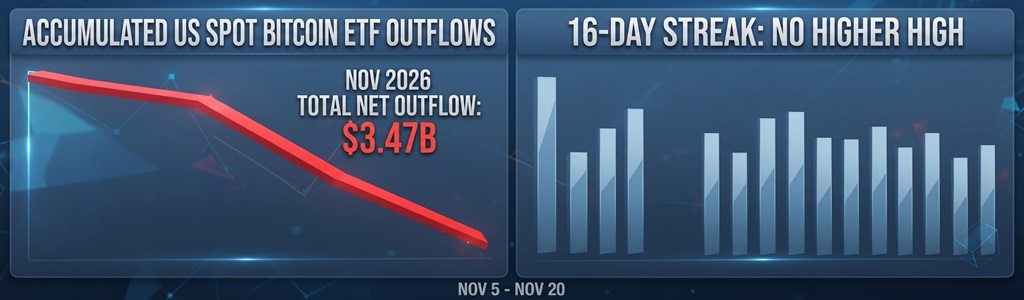
Institutional outflows have added to the decline. As enthusiasm for artificial intelligence-related investments cools, money has continued to leave spot Bitcoin exchange-traded funds. Outflows from Bitcoin ETFs have topped $3 billion so far this year. A stronger dollar and the prospect of additional interest-rate increases by the Federal Reserve have also added pressure across risk assets.
Fabian Dori, chief investment officer at Sygnum Bank, said markets are taking an overly negative view as they price in a more aggressive Fed and a possible slowdown in expanding AI investment.
Large-scale liquidations of leveraged positions also deepened the selloff. Data from CoinGlass showed that about $2 billion in long positions across the crypto market were liquidated over 24 hours as Bitcoin tumbled on November 20. Bitcoin-linked positions accounted for the largest share.
Andrew Yang, an analyst at Kaiko Research, said leverage accelerated the pace of the decline. As losses in the Nasdaq widened during New York trading, Bitcoin fell below $60,000, triggering $94.6 million of Bitcoin position liquidations in just one hour across Binance, Bybit and OKX.
The decline stands out because it comes even as the crypto industry has moved further into the financial mainstream since the Trump administration took office. Despite crypto-friendly policies, deregulation and broader institutional participation, fresh demand has not kept pace with expectations.
Bloomberg said that unlike past crypto crashes, which were often triggered by bankruptcies or forced liquidations at major firms, the current downturn appears to reflect a gradual weakening in investment demand. Institutional investors are still participating in the market, but whether major buyers can increase their Bitcoin holdings at the pace once expected is emerging as the key variable for the market’s next move.
Suehyeon Lee