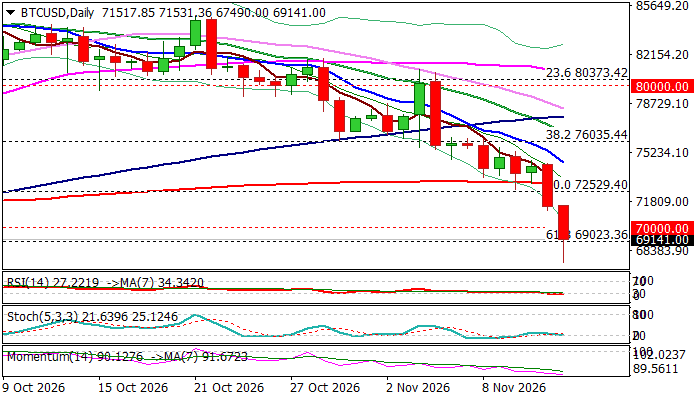
Bitcoin crashed to around $68,000 on Friday as over $1.6 billion in leveraged crypto positions got wiped out.
Table of contents
- Bitcoin slumped to its lowest level in about three months
- Total crypto liquidations topped $1.6 billion in just 24 hours
- BTC price is now down 13% in November
The Bitcoin price crashed early on Friday, dropping below $69,000 as the sell-off intensifies across the crypto market. The drop is the coin’s lowest level in nearly three months, down 13% in November. It is also about 45% below Bitcoin's October 2025 record of $126,198.
Liquidations hit $1.64B as Bitcoin wobbles
According to CoinGlass data, total liquidations in the crypto market reached $1.64 billion in 24 hours, with long positions making up $1.46 billion, which is about 90% of the total loss.
24-hour liquidation heatmap. Source: CoinGlass
Bitcoin accounted for about $912 million of the losses, including almost $450 million wiped out in just four hours. Long liquidations totaled about $870 million, while short liquidations totaled about $42 million.
Other coins were hit as hard. Ethereum fell below $2,000 and dropped to $1,920, which comes to a daily loss of around 5%. XRP initially dropped to $0.9974 before eventually reclaiming the $1 level, and its weekly loss is more than 15%. Solana also dropped from above $83 to 80.
ZEC continued its freefall, with the Zcash price dropping to $915 after losing the $1,000 level earlier in the week. Monero fell 5% to about $526, while other major coins lost 4% to 6%.
Nvidia CEO's exit, strong dollar and rate fears weigh on markets
The Bitcoin crash comes after Nvidia confirmed that Jensen Huang resigned as chief executive and as a board member, with Chief Financial Officer Colette Kress named as the interim CEO. NVDA shares fell after the news, and concerns about its leadership weighed on technology and AI stocks.
Markets were also hit by the stronger US dollar. The US Dollar Index rose above 103 on Thursday, its highest level in about 19 months, FXEmpire reported.
Treasury yields also rose after inflation data came in higher than expected, which raised concerns that the Federal Reserve could raise rates again in December. Higher rates make cash and interest-paying assets more lucrative than Bitcoin.
On the other hand, institutional demand for the coin has been weak. US spot BTC ETFs saw net withdrawals of $299.8 million on Nov. 11, with another $47 million in outflows on Nov. 12. This marks the sixth trading session in a row where the funds recorded losses.
Bitcoin ETF daily chart. Source: SoSoValue
MSCI also confirmed that it will remove Strategy, the largest public corporate holder of Bitcoin, from its equity indexes after Nov. 30. That could force funds that track those indexes to sell MSTR shares.
Sentiment falls to "extreme fear"
The Fear & Greed Index fell to 20 on Friday, in the "Extreme Fear" range. The reading was initially at 28 on Thursday and was in the greed zone just last month.
The stablecoin supply fell by $14.2 billion over 30 days through Nov. 9, leaving, which Glassnode analysts interpreted as providing "less fuel" for a potential crypto rally. The decline in the stablecoin supply coincided with about $1.6 billion in net outflows from US spot Bitcoin ETFs across 20 sessions.
The report added that wallets holding 100 to 10,000 BTC were buying again, while other groups are still reducing holdings.
Bitcoin’s number one critic, Peter Schiff, said the coin is in a "long-term bear market,” maintaining his “Bitcoin to zero” view.
Michael Adeleke is a crypto journalist at CoinCodex with more than three years of experience in crypto journalism. He provides crypto news and market analysis in the easiest way possible to help readers know the latest updates in financial markets. With a background in engineering, he brings strong research and analytical skills to his work.