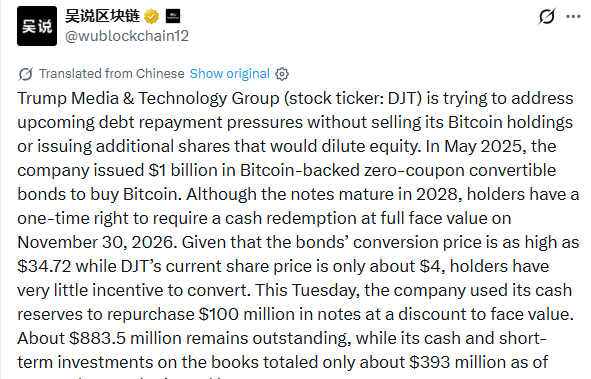
Bitcoin has long since shifted from a niche experiment in digital cryptography to an important market signal within the larger financial sphere. Its movements are no longer just something for enthusiasts to play with; many financial teams, fintech innovators, and cross-border financial experts now use it as a moving barometer for global risk sentiment. Localized pricing tools have become essential for both investors and the curious who want to better understand the Bitcoin price NZD or other regional currencies so they can better assess the exchange rate. And today, there is a growing reliance on digital assets to aid users in designing better and more robust investment strategies. No longer is it about speculative volatility; today, Bitcoin is about better understanding market cycles in general.
Bitcoin and institutional market behavior
The rise of the digital asset market in mainstream finance has completely changed how price movements are being interpreted today. Where Bitcoin’s value was once heavily influenced by headlines and social media hype, it now increasingly mirrors “real-world” finance and even global liquidity cycles.
Reuters has noted that during the “rollercoaster” market fluctuations of 2025, Bitcoin’s price swings began to reflect stock-market sentiment, signaling its eventual integration into traditional investor frameworks. For many analysts today, the asset works as a real-time indicator of liquidity in the modern banking system, as it’s being influenced more these days by central bank policies and interest rates than by fleeting online trends.
The impact of institutional adoption on the bitcoin market
The introduction of new financial products, particularly spot ETFs, has rewritten the supply-and-demand mechanics that normally push digital assets along. CoinDesk reported that US spot Bitcoin ETFs saw a collective net value of $23.6 billion in 2025. This essentially threw open the door for financial entities such as pension funds, as well as pulling in the investment of wealth managers who might have previously given the coin a dubious side-eye.
Such an influx of capital also means that public companies have stepped forward with custody solutions and long-term investment strategies. Now, firms that choose to hold digital assets treat Bitcoin less like a novelty and more like any other strategic diversification tool. But Bitcoin’s growing institutional presence isn’t just a happy accident; it has also had a stabilizing effect on the whole cryptocurrency market, since altcoins, like many similar entities, generally operate on much longer timelines than other short-term investments.
Bitcoin as a part of the practical market
While Bitcoin operates on a decentralized global ledger miles apart from many other types of assets, its practical day-to-day use is often connected to more traditional markets. For instance, investors and fintech firms often track digital assets through domestic currency to better manage their purchasing power and exchange-rate risk. Thus, understanding localized pricing means financial operators in regions such as New Zealand or even beyond in Europe can better calculate the cost of capital and settlements through the use of native currency, which is important for accounting purposes.
In Israel, Bitcoin's price in dollars doesn't always tell the whole story. Changes in the exchange rate between the dollar and the shekel can affect what Bitcoin is worth locally, even when its dollar price stays the same. Israel's Tax Authority also considers cryptocurrencies assets for tax purposes, so records of purchases and sales matter.
Using localized pricing allows companies to use digital rails for cross-border activity while still accounting for changes in their regional currencies. Basically, it creates a bridge between a borderless technology and the practical requirements needed for regional financial reporting.
Bitcoin, tokenization, and future use
Bitcoin is sometimes called “digital gold” due to its foundational nature as the first cryptocurrency, but often these days, it’s also viewed as the cornerstone element of the blockchain-based financial infrastructure. The World Economic Forum has described the rise of tokenization as a major shift toward how assets will be handled in the future. This evolutionary next step, they believe, is a move away from traditional, slow-moving, “batch” processing and toward an “always-on” state that operates 24/7 without interruption.
The Bank of Israel’s digital shekel project examines how a central bank-issued digital currency might operate alongside existing payment methods. The bank continued its research in 2026, although a final decision on issuing the currency had not been announced. Unlike Bitcoin, a digital shekel would be issued by a central bank, making the two distinct approaches to digital payments.
Bitcoin’s network shows how funds can be transferred and settled globally without needing any intermediaries. As more conventional assets undergo tokenization, such as government bonds, real estate, and even works of art, the underlying blockchain technology behind digital assets may continue to act as the working model for a more transparent and efficient global settlement system.
Practical application of bitcoin in today’s business
Financial firms and corporate treasuries are now finding increasingly specific and practical uses for digital asset monitoring. For instance, a treasury team might monitor Bitcoin’s liquidity and movements while also evaluating it for large-scale international payments, as well as a form of diversification. In a world where cross-border finance has become the norm, digital assets can aid in faster settlements with lower costs, as compared to the more archaic networks of traditional banking.
If payments shift from batch processing toward the always-on rail method outlined by the World Economic Forum, then many institutions may see increased transparency and reduced systemic issues. But practicality is still the biggest draw. For any enterprise that operates internationally, using digital asset rails may be able to streamline funds as they move across time zones, and those are funds that might otherwise be slowed by the rigid hours of traditional banking in that area, giving those companies more overall liquidity since they will have faster access to their own assets.
The future of digital assets in global finance
The ongoing integration of Bitcoin into the very fabric of global finance suggests its role has expanded from a curious spectacle into a structural component of the modern financial landscape. Market watchers are learning to interpret its behavior through the lens of liquidity, regulation, and real-world use, rather than purely through its own volatility.
For Israeli investors and businesses, the discussion also includes the shekel's relationship to global digital asset prices and the country's ongoing research into a digital currency of its own.
By placing their focus on both market signals and Bitcoin’s practical uses, investors and institutions alike may be in a better position to make the leap to welcoming Bitcoin into their portfolios. Bitcoin will undoubtedly continue to mature. Likewise, its influence as a global financial indicator will continue to grow, perhaps reshaping how many regard value in the future.
Investing involves risk and your investment may lose value. Past performance gives no indication of future results. These statements do not constitute and cannot replace investment advice.
The information provided in this article is for general informational and educational purposes only. It is not intended as legal, financial, medical, or professional advice. Readers should not rely solely on the content of this article and are encouraged to seek professional advice tailored to their specific circumstances. We disclaim any liability for any loss or damage arising directly or indirectly from the use of, or reliance on, the information presented.
This article was written in cooperation with Tom White