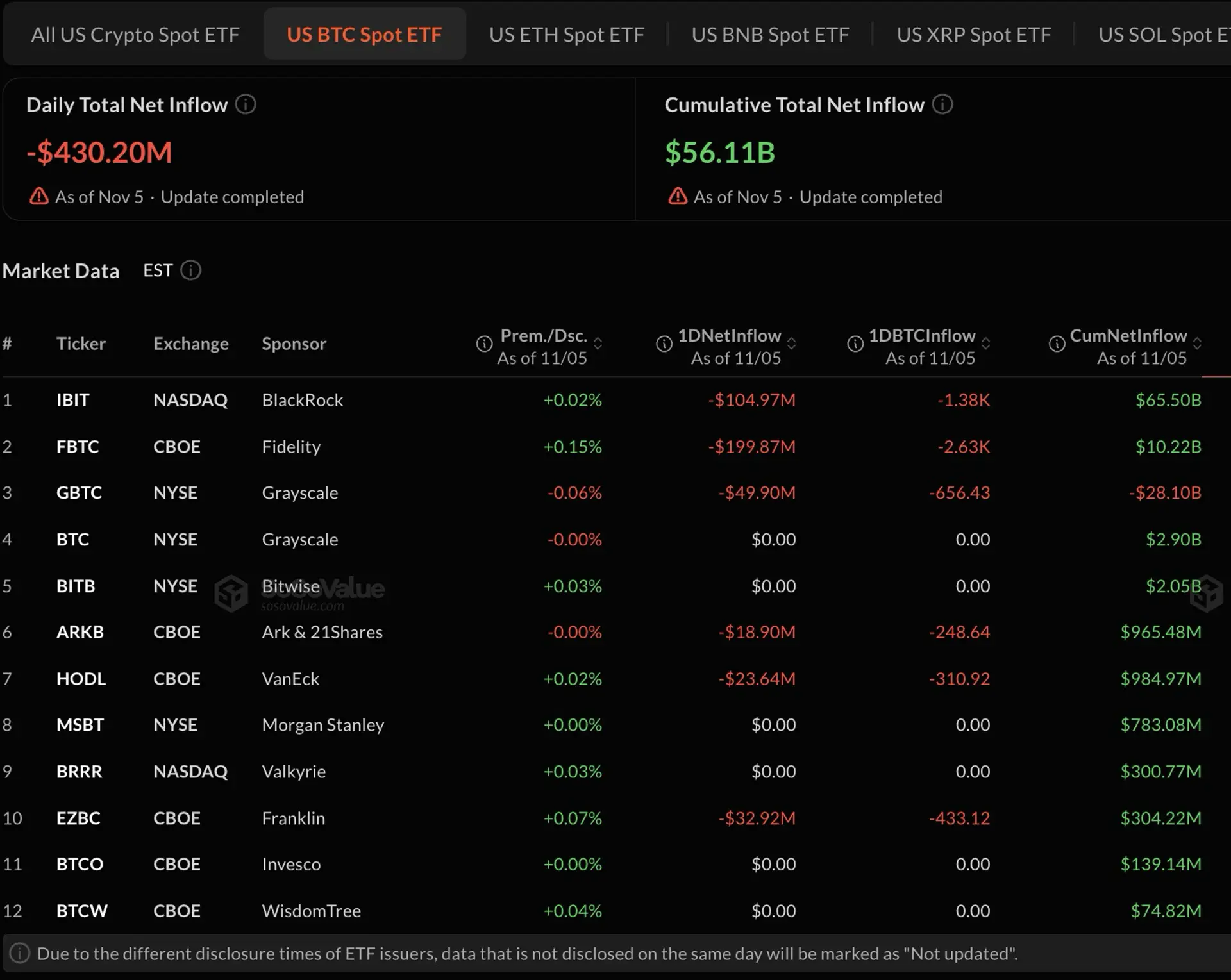
Bitcoin fell back to the $75,000 range just one day after recovering above $80,000, as sharp declines in U.S. artificial intelligence (AI) and semiconductor stocks weakened investor appetite for risk assets. The previous day, expectations of reduced political uncertainty following the U.S. midterm elections, along with hopes for progress in U.S.-Iran negotiations, had briefly pushed Bitcoin close to $81,000. It subsequently surrendered most of those gains.
According to CoinMarketCap, Bitcoin was trading at $75,402 as of 8:30 a.m. on Nov. 6, down more than 6% from the previous day. On South Korean cryptocurrency exchange Upbit, Bitcoin also fell to around 103 million won, putting the psychologically important 100 million won level under pressure. Major altcoins, including Ethereum and XRP, also declined by 7% to 8%. At the same time, Ethereum was trading at $2,215, down 8.57%, while XRP fell 8.11% to $1.20, according to CoinMarketCap.
The immediate trigger for the decline was a sharp selloff in the U.S. stock market, led by technology shares. The Nasdaq Composite plunged 5.5%, while major semiconductor stocks including Nvidia and AMD fell 9.26% and 17.26%, respectively. Selling intensified amid concerns that large-scale AI investments by major technology companies may take longer than expected to generate returns. Disappointment over semiconductor companies' earnings and outlooks also added to the pressure, with Qualcomm's smartphone chip revenue falling short of market expectations.
Political uncertainty has also weighed on sentiment. Democrats won majorities in both chambers of the U.S. Congress in the midterm elections, prompting concerns that regulations on AI data center construction and electricity use could become tighter. The election outcome has also added uncertainty to the legislative outlook for a cryptocurrency market structure bill and the future direction of industry oversight. However, the impact of the results on cryptocurrency legislation remains unclear, and concerns about potential regulatory changes appear to have contributed to investor caution.
Large-scale liquidations in the cryptocurrency derivatives market further amplified the decline. According to CoinGlass, positions worth $1.09 billion were liquidated in cryptocurrency futures markets over the previous 24 hours. The forced closure of a large number of long positions, which bet on rising prices, added to selling pressure as falling prices triggered further liquidations.
Market-specific concerns have also contributed to investor anxiety. On Oct. 29, Binance, the world's largest cryptocurrency exchange, experienced a security incident that affected approximately $6.34 billion in digital assets. Binance said that about $2.85 billion had been frozen or intercepted and that 98% of the affected assets had been replenished as of Nov. 3. Meanwhile, readings of the cryptocurrency Fear and Greed Index stood between 31 and 34, within the "Fear" zone. These indicators suggest that sentiment has been pressured not only by the technology stock selloff but also by concerns within the cryptocurrency market.
Analysts expect U.S. stock market movements and macroeconomic data to remain key drivers of cryptocurrency prices in the near term. Joshua Lim, co-CEO of FalconX, said the market was focused on the possibility that data center expansion could slow following the midterm elections. Bitcoin has recently moved in tandem with U.S. technology stocks, suggesting that volatility in equity markets is increasingly spilling over into cryptocurrencies. However, the technology stock decline alone does not fully explain Bitcoin's weakness. The upcoming release of U.S. October employment data and expectations for Federal Reserve interest rate policy could further influence market volatility.