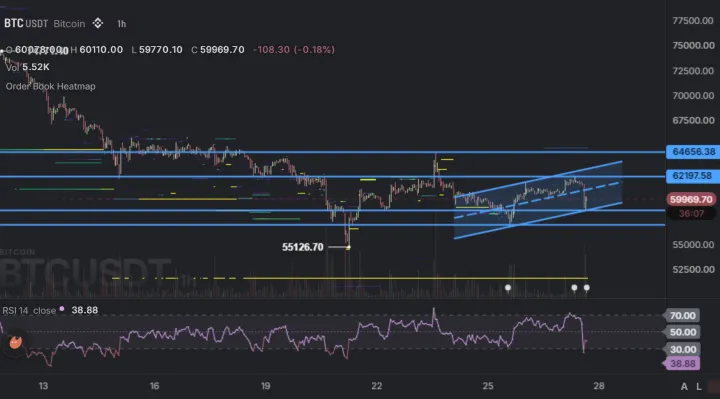
NEW YORK — Bitcoin investors are facing their sharpest unrealized loss skew in more than a decade as onchain data points to a broad capitulation phase across digital asset markets. According to analytics platform CryptoQuant, the seven-day moving average of Bitcoin's supply in profit-to-loss ratio dropped to 0.825 on Thursday, slipping well below the parity mark of 1.0.
What the 11-Year Low Signals for Holders
A reading below parity indicates that a larger share of circulating Bitcoin is currently held at an unrealized loss than in profit. While the metric's 30-day moving average remains higher at 1.27, the rapid slide in the shorter-term average underscores the weight of November's sell-off. Bitcoin traded near $60,084 after sliding to $55,081 on Nov. 21, marking a month-to-date drawdown that reached 28.8% at its trough and remains close to 20%.
Seller Exhaustion and Historical Parallels
Alongside the profit-to-loss drop, Bitcoin's sell-side risk ratio has fallen to a 30-day moving average of 16.52. The indicator measures total onchain realized profit and loss relative to realized capitalization, with compressed readings typically reflecting fading selling pressure around current price levels. Market analysts note that comparable conditions last emerged near major cyclical lows, including the 2022 bear market.
With Bitcoin having already experienced multiple capitulation waves in 2026, U.S. Traders are closely watching whether seller exhaustion near $60,000 can stabilize spot demand ahead of December's Federal Reserve policy meeting.