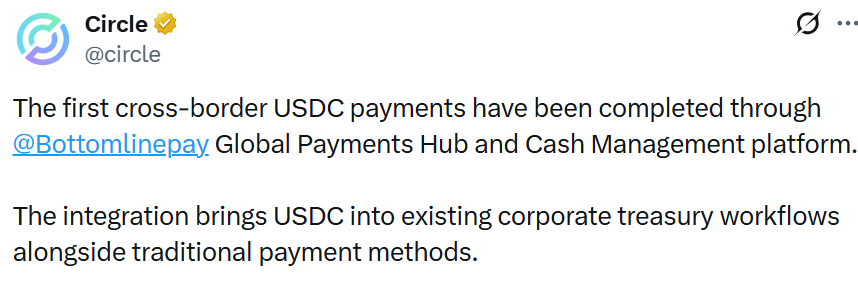
Bottomline USDC payments are now live, and the first cross-border transfer is done, according to Circle’s post on X. The payment ran through the Global Payments Hub and Cash Management platform, and it moved cash inside one firm and not for a client.
Key Takeaways
Bottomline sent its first live cross-border payments in USDC.
The first transfer was between two units of one firm, not a client payment.
USDC runs next to bank payments with the same checks and audit steps.
No revenue, volume, or client names were shared.
Bottomline sent its first live cross-border payments in USDC.
The first transfer was between two units of one firm, not a client payment.
USDC runs next to bank payments with the same checks and audit steps.
No revenue, volume, or client names were shared.
What Are Bottomline USDC Payments, and Why Do They Matter?
Bottomline is a business payments firm, and its platform lets finance teams pay banks in many currencies from one screen. Now the same team can send USDC, a dollar coin made by Circle, from that screen.

This matters since most crypto tools ask teams to learn a new system, while this adds USDC to the tools they use each day, as the Bottomline press release says.
How Did the First Cross-Border USDC Transfer Work?
The first live deal moved cash between two parts of one firm in two countries, and the platform used its normal checks. A move inside one firm is a safe first test, since both sides are known and the risk is low.
Circle says the work brings USDC into the way firms already manage cash, next to old payment methods, so a team can pick the best one for each payment.
How Stablecoin Payments Fit Into Treasury Work
A treasury team is the group that runs the cash, bank accounts, and payments of a firm. Bottomline says USDC payments follow the same checks and audit steps as bank payments, so the team needs no new tool.
For readers of crypto news, this shows that stablecoins are moving into the daily tools of finance teams and not just into crypto apps.
Why Cross-Border Stablecoin Payments Matter for Business
Global bank payments often pass through a chain of banks, which can slow them down. Bottomline says it aims for near real-time settlement in some cross-border cases, and that goal is not for every payment it handles.
Since USDC aims to track one US dollar, a firm can move value across borders at a steady price, which is why many firms now test stablecoin payments.
What Is Still Unconfirmed About Bottomline USDC Payments
The announcement does not share revenue, payment volume, deal terms, or the names of clients who plan to use USDC. It also does not say when other clients can join or which banks and countries come next.
Stablecoins carry risks such as new rules, so finance teams should check local laws and their own policy first, and this report is not advice.
The Bottom Line
Bottomline USDC payments show that stablecoins can run inside the software that finance teams already use, and the next thing to watch is when real client payments follow the first test.
YMYL Disclaimer: This article is for information only and is not financial or investment advice. Crypto is volatile and carries a risk of loss, so check official sources before you act.
About the Author Sanjeev Upadhyay
English Blog Writer at coingabbar.com
Sanjeev Upadhyay is a skilled crypto and web3 content writer who focuses on creating content on the crypto industry. He writes about Bitcoin, Dogecoin, blockchain technology, and the wider digital asset market. Crypto can sound complicated, so he explains each topic in plain words and short sentences. He checks facts before he writes and stays away from hype and big promises. His goal is to make every article clear, useful, and easy to trust. Whether you're new to crypto or have followed it for years, his content is written to help you understand the market with confidence.
Frequently Asked Questions (FAQ)