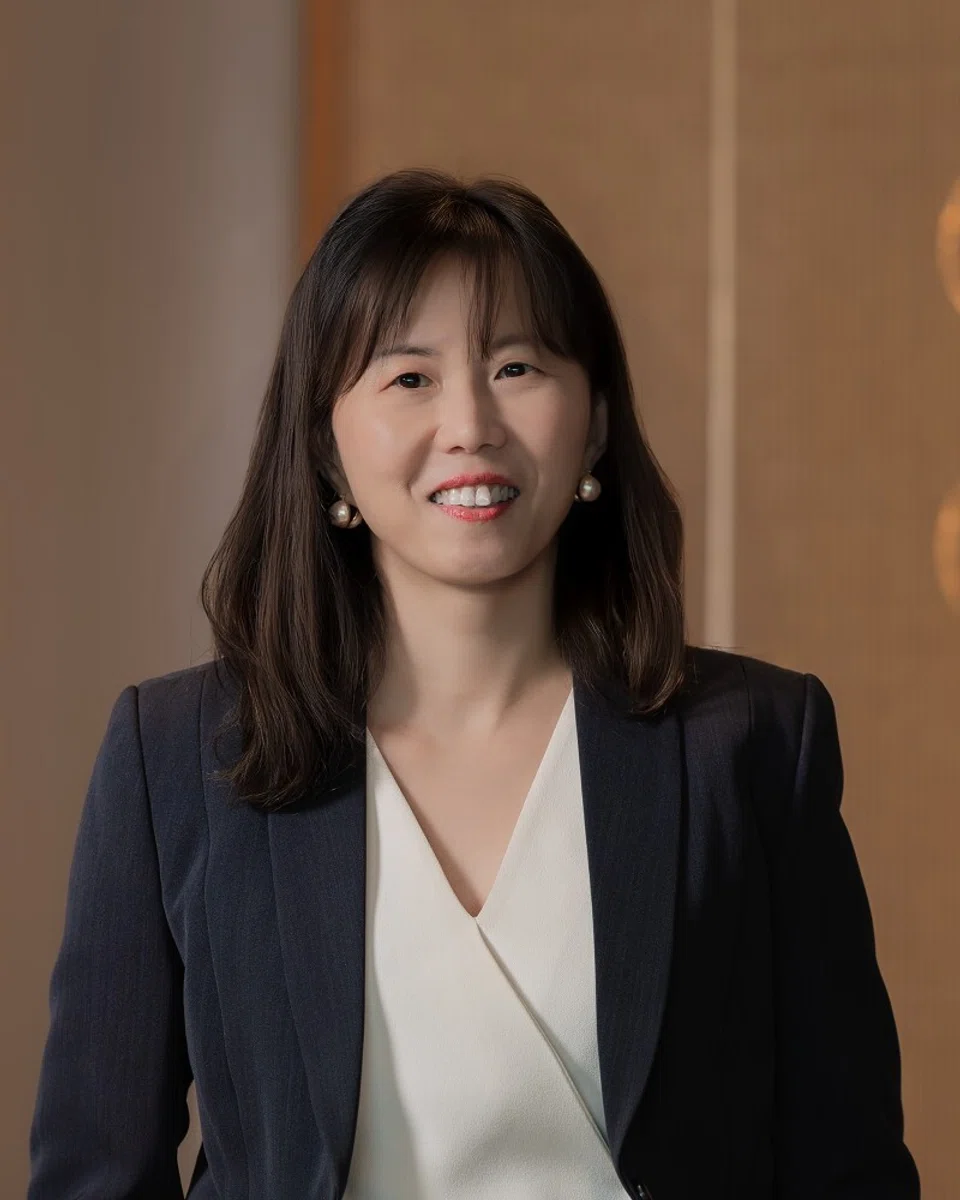

Standard Chartered’s Ying-Ying Tan explains how businesses can turn blockchain and traditional finance convergence into commercial advantage
THE future of finance will be connected and integrated instead of there being a contest between old and new.
Rather than replacing traditional financial infrastructure, blockchain-based systems are increasingly being integrated into it. Banks, payment providers, asset managers and technology firms are building links between conventional money, tokenised assets, stablecoins and digital settlement platforms, creating what industry experts describe as a more connected financial ecosystem. “The real significance of convergence is not that blockchain replaces traditional finance,” said Ying-Ying Tan, global head of digital assets and global head of securities services at Standard Chartered. “It is that the capabilities of both begin to converge into a more programmable, connected financial infrastructure.” For businesses, the question is becoming less about whether to choose traditional finance or digital finance, and more about how to use both effectively, that these options integrate with the mainstream financial systems they already use. Tan noted: “The future is therefore likely to be multi-rail, with businesses using stablecoins, tokenised deposits and traditional bank money to address various needs of each transaction.” This is not necessarily about moving everything onto a blockchain, she explained. “It is about companies and institutions having more choice to decide what works best for their needs,” Tan added.
Choosing the right payment rails for business needs
With different forms of money and payment infrastructure available, businesses will need to consider which rails are best suited to which transactions.
Tan noted: “Businesses, therefore, should not ask whether stablecoins will replace existing payment systems. The more practical question is where these new technologies can solve a problem that existing rails do not solve well enough.”
For example, she explained that the most compelling stablecoin use cases are cross-border payments, transfers outside banking hours and settlement of tokenised assets. However, traditional payment systems retain important advantages where established networks already provide fast, cost-effective payments in the required currency. Other instances include counterparties who prefer bank money, or when payments need to integrate with existing cash-management and financing arrangements. Thus, the choice is not about adopting the newest technology, but identifying where an alternative rail can address a specific business need more effectively.
For corporate treasurers, this distinction is particularly important as their priority is the business outcome. Tan said: “A corporate treasurer is indifferent whether a transaction runs on a blockchain or a conventional ledger. They care about whether they can move money safely, access liquidity, settle transactions efficiently and operate across markets with less friction.”
The Business Times Insights
Asia Pacific Sustainability Index 2026
Sustainability has reached Apac boardrooms but are board members sufficiently equipped? Find out more in our report.
Making liquidity and assets work harder
Beyond payments, there is tremendous potential from the convergence of traditional finance and blockchain technology. For instance, a 2024 report by Standard Chartered and Synpulse projected that demand for tokenised assets could reach US$30.1 trillion by 2034. Tan said: “Beyond payments, the greatest potential value is in making liquidity and assets easier to deploy across three connected activities: treasury investment, collateral management and securities settlement.” Tokenised investment products can help companies put idle cash to work, to reduce friction between holding cash and investing it. In collateral management, tokenisation can make eligible assets easier to mobilise for trading or financing. “Together, these capabilities can help assets work harder in support of funding and working capital,” said Tan. Standard Chartered has been involved in several initiatives illustrating how these applications are developing.
In April 2025, Standard Chartered and cryptocurrency exchange OKX announced a collateral-mirroring pilot with Franklin Templeton, designed to enable cryptocurrencies and tokenised money market funds to serve as off-exchange trading collateral. A year on, the bank and OKX announced a framework with BlackRock allowing eligible OKX clients to use its tokenised short-term US Treasury fund as trading collateral while retaining the assets in Standard Chartered’s regulated off-exchange custody. Both examples illustrate how tokenised investments can support trading. In August, Standard Chartered participated in a cross-border tokenised deposit transaction with another global bank using Swift’s blockchain-based ledger. The transaction demonstrated how interbank obligations could be matched and netted, with final settlement taking place through existing systems. More recently, the bank launched tokenised deposits on Nov 2, with live transactions through the Hong Kong Monetary Authority’s Ensemble TX infrastructure. It then expanded the solution to Singapore on Nov 19, enabling near real-time transfers between the two markets. This illustrates how tokenised bank money can connect treasury, liquidity and investment activities across markets, and the bank plans to expand the solution to other markets over time. Wider adoption of blockchain-based solutions will depend on several requirements being met, Tan noted. These include clear legal rights and regulatory standards, interoperability between fragmented networks, access to liquidity and redemption, and integration with existing treasury, accounting and operational flows, all supported by robust risk management and controls. She said: “A technically functioning solution will not scale if businesses cannot establish their rights, connect to counterparties or access value when it is needed.”
How banks bridge traditional and digital finance
Banks can act as the bridge between traditional and digital finance. Tan explained: “Banks must evolve to connect clients’ payments, liquidity, investments and collateral across traditional and digital infrastructure… relevance has to be earned by solving client problems.” This means building on banks’ established transaction banking and asset-servicing capabilities, together with their own digital asset capabilities and specialist technology partnerships, and connecting them within a trusted, regulated, bank-grade governance framework. She said: “For us, the opportunity is in orchestration: bringing different forms of money and assets together to give clients the optionality to use what works best for the transaction at hand, whether for payments, investments or collateral.” For example, building on its presence in the United Arab Emirates, Luxembourg and Hong Kong, the bank has announced the upcoming offering of custody for selected crypto assets, stablecoins and tokenised real-world assets to institutional clients and accredited investor corporate clients in Singapore. Tan said: “What differentiates our approach is the combination of cross-border market expertise, established transaction and asset-servicing capabilities, bank-grade governance, and broad ecosystem partnerships.” For corporate and institutional clients, the aim is practical – “to help them move, invest, safeguard and mobilise value across markets, with greater optionality to use the right form of money or asset for the transaction at hand, while retaining clear accountability and human advice”, she added.
SEE ALSO
Beyond technology to real-world application: Preparing for the next wave of institutional digital assets
What lies ahead for financial convergence in 2027
Tan identifies three developments that could shape the next phase of convergence next year:
- Tokenisation will become more deeply integrated into established market infrastructure, helping scale uses such as cross-border settlement with tokenised deposits and tokenised funds as trading collateral.
- Artificial intelligence and programmable finance will increasingly converge.
- Money will become a broader spectrum, with different forms serving increasingly differentiated purposes.
Tan said: “The opportunity in 2027 will not simply be to put more assets on-chain. It will be to make money, assets and information work together more effectively, translating new infrastructure into better liquidity, lower friction and greater commercial flexibility.” For businesses, the priority should be to identify where new financial infrastructure can deliver measurable commercial benefits, including addressing trapped liquidity, settlement delays, underutilised assets and repetitive reconciliation processes. These opportunities should be evaluated within businesses’ legal, regulatory and risk requirements. The next phase of financial innovation is not about chasing the latest technology, but making liquidity smarter and assets more productive for businesses. Tan said: “It is no longer about proving the technology works… It is now about putting the pieces together and connecting them to a trusted ecosystem that can scale the movement of value across markets further embedding digital assets into mainstream finance.”
For more insights on diverse opportunities in Asean, click here.
Decoding Asia newsletter: your guide to navigating Asia in a new global order. Sign up here to get Decoding Asia newsletter. Delivered to your inbox. Free.
Share with us your feedback on BT's products and services
TRENDING NOW
As Indonesia picks new vice-president to succeed Gibran, investors see risks and opportunities
US proposes new tariffs on 14 trading partners, including rate of up to 20% for Singapore
StarHub-M1 deal could add to Keppel’s special dividends but analysts flag potential wait
South-east Asia has lost Nvidia’s best salesman