Canaan Inc. (NASDAQ: CAN), while reporting its third-quarter results, announced the launch of an initial share repurchase program of up to $20 million (approximately NT$660 million). The move falls under a larger repurchase authorization approved by the board totaling $100 million (approximately NT$3.3 billion), with the authorization period running 12 months from November 6, 2026, giving the company flexibility to increase buybacks within the authorized amount.
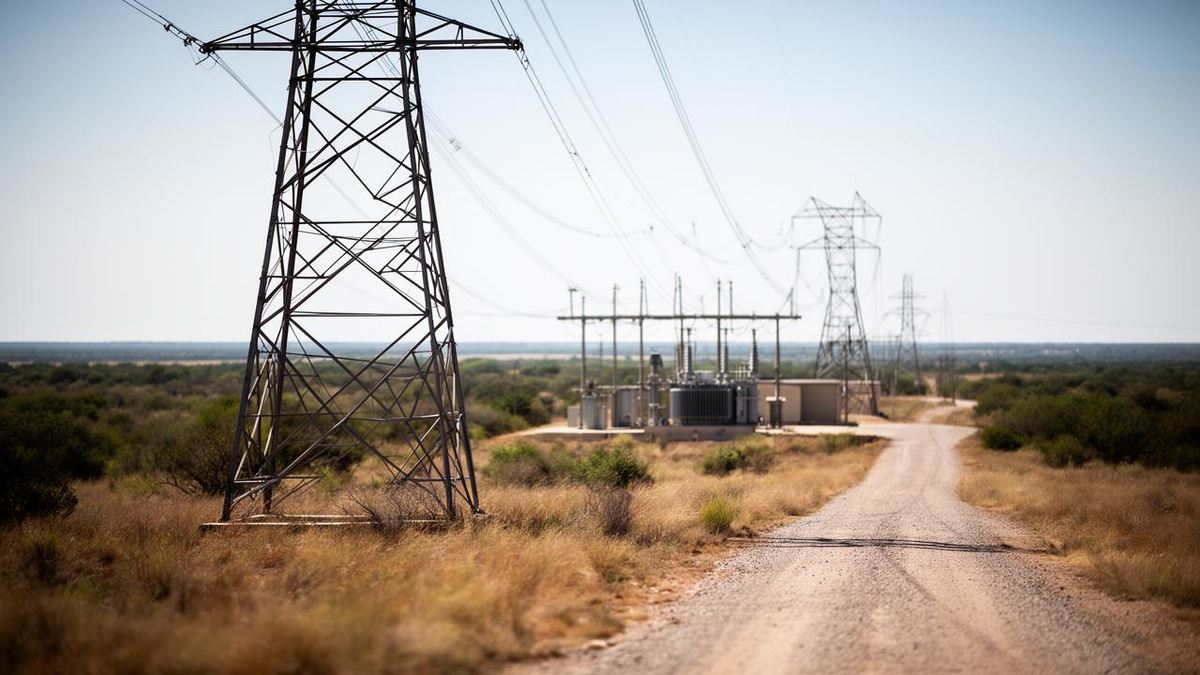
Chairman and CEO Nangeng Zhang said the company's 1-gigawatt (GW) project in Duval County, Texas has obtained a conditional load classification through ERCOT's (Electric Reliability Council of Texas) "Batch Zero" process, and together with another 1-GW power project in reserve in Zapata County, reinforces the company's confidence in its transformation into an energy and computing infrastructure provider. He stated bluntly that the current share price significantly undervalues the strength of the company's business model and long-term growth potential, making the buyback an important capital allocation priority; as funds become available, the company intends to execute repurchases more aggressively while retaining sufficient liquidity for daily operations and committed projects.
Under the plan, Canaan will repurchase American Depositary Shares (ADSs) and/or Class A ordinary shares through open-market transactions, privately negotiated transactions, block trades, or a combination of the above, in accordance with the Securities Exchange Act of 1934 and insider trading policies. The actual number and timing of repurchases will depend on price, trading volume, overall market conditions, and the company's working capital requirements and general business conditions; the board or management will periodically review the plan and adjust terms and size as necessary, with funding primarily from cash on hand and other available liquidity.
Third-Quarter Return to Profit, Digital Asset Fair-Value Gains as Key Driver
On the financials, Canaan's third-quarter revenue was $14.5 million (approximately NT$480 million), within the previously guided range of $11 million to $15 million; net income reached $8 million (approximately NT$260 million), primarily from a $51.9 million (approximately NT$1.7 billion) fair-value gain on digital assets and related financial derivatives, reflecting the rebound in Bitcoin prices during the quarter. Adjusted EBITDA was $22.4 million (approximately NT$740 million), also benefiting from this fair-value gain.
CFO Jin James Chang noted at the earnings call that third-quarter mining gross margin improved significantly from approximately 20% in the second quarter to nearly 30%, with 133 Bitcoin mined during the period; even after monetizing some holdings, the company still held approximately 1,875 Bitcoin as of September 30. He explained that the company maintained a substantial Bitcoin reserve through the market trough, enabling it to participate in the subsequent price rebound, with the increase in holdings value contributing significantly to quarterly profit.
On cost control, third-quarter total operating expenses were $34.2 million (approximately NT$1.1 billion), down 15.5% from the prior quarter. Inventory fell to $119 million (approximately NT$3.9 billion), the lowest level in five quarters. Management explained that multiple next-generation mining ASIC development projects were completed or near completion over the past two quarters, with engineering sample test results meeting design expectations and sufficient to support market demand for years to come, eliminating the need to rely on sustained large-scale R&D investment to drive growth and enabling further expense reduction.
On capital allocation, the company monetized its Ethereum holdings and some Bitcoin in the third quarter, generating approximately $40 million (approximately NT$1.3 billion) in cash, with Bitcoin selling at an average price of approximately $79,000 (approximately NT$2.6 million) and Ethereum at approximately $2,400; of this, $5.4 million (approximately NT$180 million) was used to repurchase 13.6 million ADSs. As of September 30, cash and cash equivalents were $22.8 million (approximately NT$750 million); including $50 million (approximately NT$1.6 billion) in restricted cash pledged for power project letters of credit, total cash position reached $72.8 million (approximately NT$2.4 billion), up 10.3% from the end of June. Additionally, the company completed approximately $1.1 million (approximately NT$36 million) in power-related land acquisitions in Zapata County in October.
Weak Mining Demand, Pivot to Energy and AI Computing Infrastructure
Zhang set the tone at the outset of the earnings call by framing structural changes in the industry environment. He noted that Bitcoin mining hardware demand remains persistently weak, industry inventory is elevated, and hardware prices are under pressure; meanwhile, rapidly growing artificial intelligence demand is absorbing substantial leading-edge chip capacity, driving up foundry costs and tightening supply, making it difficult even for higher-performance next-generation mining machines to be produced at reasonable cost and earn adequate commercial returns.
He expects these factors to suppress new mining machine production and deployment over the coming years, with Bitcoin's total network hash rate unlikely to sustain its historical growth pace; for operators with low-cost power and existing equipment, long-term mining economics may actually improve. Canaan is therefore adjusting its R&D, manufacturing, and capital investment strategy, shifting its long-term focus toward energy and AI high-performance computing (HPC) infrastructure.
The company, which built its name on Avalon-brand mining machines, is attempting to transform years of North American mining operations experience into core capabilities in power procurement, site development, equipment deployment, and operations management. Zhang revealed that the company is in talks with a U.S. institution with an investment-grade credit rating for a potential strategic partnership, hoping to leverage external capital and credit support to enable tenants to participate more efficiently in large-scale energy infrastructure development while controlling its own capital commitments and risk.
He emphasized that the company will flexibly choose business models based on project conditions: projects suitable for AI HPC will prioritize corresponding development and partnerships, while lower-cost power resources better suited for mining will be allocated to mining operations first. The Duval County project has entered the substantive stage of the grid interconnection process, while the Zapata County project is in early development and preparing for grid studies; management said during Q&A that Zapata's timeline will lag Duval by several months, and investors can watch for ERCOT's subsequent grid study and capacity allocation announcements, with the current timeline pointing to 2027.
Conservative Fourth-Quarter Outlook, Buyback and ADS Ratio Adjustment in Parallel
Looking ahead to the fourth quarter, Canaan guided revenue of $18 million to $22 million (approximately NT$590 million to NT$720 million) and acknowledged that mining equipment demand will not see a meaningful recovery. The company also plans to adjust its ADS ratio, raising the per-ADS trading price to make it easier for institutional investors whose investment policies restrict holdings of low-priced securities to participate; meanwhile, as its business focus shifts to energy and computing infrastructure measured on a quarterly basis, it will stop publishing standalone monthly mining reports, with key mining metrics disclosed in quarterly earnings instead.
The company also announced that in the third quarter it changed its certifying accountant to KPMG Singapore, replacing the previous KPMG Beijing office, to align with its increasingly internationalized operations.
Analysts are focused on how the company will fund both the $20 million buyback and Duval project construction given its Bitcoin-collateralized borrowing and approximately $23 million (approximately NT$760 million) in unrestricted cash. Management responded that in the third quarter it generated approximately $14 million (approximately NT$460 million) in cash from monetizing Ethereum and some Bitcoin, using $5.4 million of that for share repurchases; as long as the share price remains attractive, buybacks will be one of the preferred uses of newly available funds, with actual pace and size progressing gradually based on funding conditions, market conditions, and regulatory requirements.
For investors, this earnings report sends two signals simultaneously: near-term profit remains highly dependent on digital asset fair-value gains, with no recovery visible in core mining hardware demand; medium-term performance will depend on whether the two 1-GW Texas power projects can successfully complete the ERCOT interconnection process and whether strategic partners can bring in external capital. While the buyback authorization offers room to imagine downside support for the share price, given limited cash on hand and substantial project capital requirements, the execution strength of repurchases will remain a key focus for the market in assessing the company's capital discipline.