Crypto commentator Lark Davis has labeled Cardano a "largely failed blockchain," arguing that nearly nine years after its mainnet went live the network still lags far behind Solana on the metrics that measure actual use.
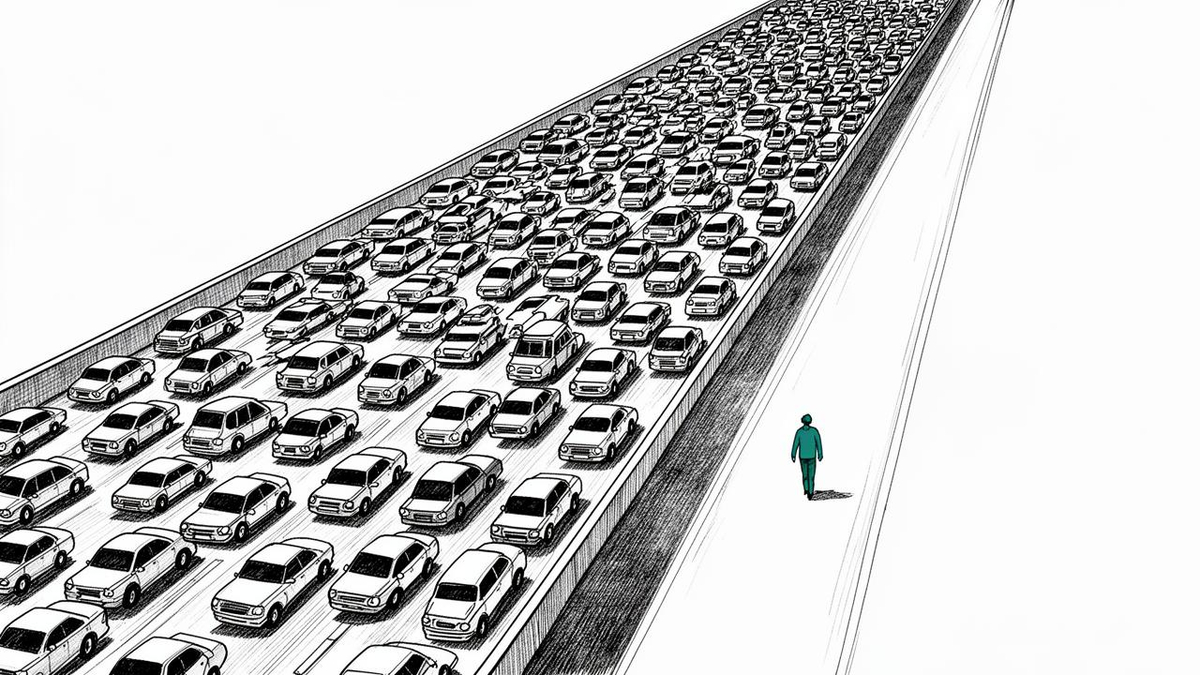
In a Nov. 20 post on X, Davis said Cardano attracts only about 1% of Solana's daily users, roughly 0.3% of its perpetual futures trading volume and some 0.2% of the application revenue generated across Solana's ecosystem. "Nine years in and Cardano is still waiting on adoption," he wrote.
The revenue comparison is the starkest. According to Davis's figures, apps on Solana collectively earn about $500 for every $1 that Cardano applications bring in.
Independent data from DefiLlama's Nov. 20 snapshot broadly supports the picture, though the exact ratios differ from Davis's estimates.
Note: Figures are from DefiLlama data cited in coverage of the dispute. The perpetual futures volume figure could not be independently verified.
The active-address gap works out to roughly 0.5%, tighter than the 1% Davis cited but still a wide margin. Application revenue was thinner than his estimate suggested, with Cardano's daily haul equal to about 0.06% of Solana's. Total value locked, a measure of capital deposited in decentralized applications, stood near $44.2 million on Cardano against about $4.76 billion on Solana.
Davis has overstated Cardano's head start. Cardano's mainnet launched in September 2017, while Solana's mainnet beta went live in March 2020, a difference of about two and a half years rather than four. Even so, the core of his argument holds: Solana started later and has built a substantially larger market for its applications.
Not everyone accepts the verdict. A commentator posting as Dagnum argued that Cardano has invested heavily in peer-reviewed research and formal verification, a mathematical approach to checking how software behaves. The network, in that view, has been penalized for prioritizing reliability over the kind of activity traders reward.
"Cardano bet on infrastructure while Solana bet on memes," Dagnum wrote on X. "That's not a failure. That's a market telling you what it wants."
Solana's own record on uptime is not spotless. The network stopped producing blocks for about five hours in February 2024. Cardano has had incidents of its own, including a temporary chain split in November 2025 that the Cardano Foundation documented in a review.
The reliability argument has a limit, though. It explains why a user might trust an exchange or lending protocol built on Cardano, but it does not explain what brings that user back the next day. A single day of data is a thin basis for declaring a nine-year-old network a failure, and daily revenue can swing sharply with one busy trading session. Still, after nearly a decade, questions about repeat usage are difficult for the ecosystem to wave away.
The criticism marks a reversal in tone for Davis, who as recently as late September argued that Cardano's devoted following could lift ADA back toward $1, with further gains possibly reaching $1.50 or $2. In November 2025 he had also floated the idea of an ADA rally comparable to XRP's 2024 surge, citing the strength of the community and the brand.
Those calls rested on speculative demand and community loyalty rather than any measurable improvement in network activity. The latest assessment focuses squarely on the latter, and on the gap between what Cardano has built and how many people are using it.
For ADA holders, the timing is uncomfortable. The token has been under pressure for weeks, and on-chain activity offers little in the way of a catalyst. The debate now turns on whether Cardano's bet on verifiable, research-driven engineering eventually attracts the applications and users that have so far gravitated to faster, more transactional chains, or whether the market has already rendered its judgment.
Once added, BigGo Finance appears first in Google Search Top Stories, so you get the broadest, most up-to-the-minute, and most comprehensive global financial news first.