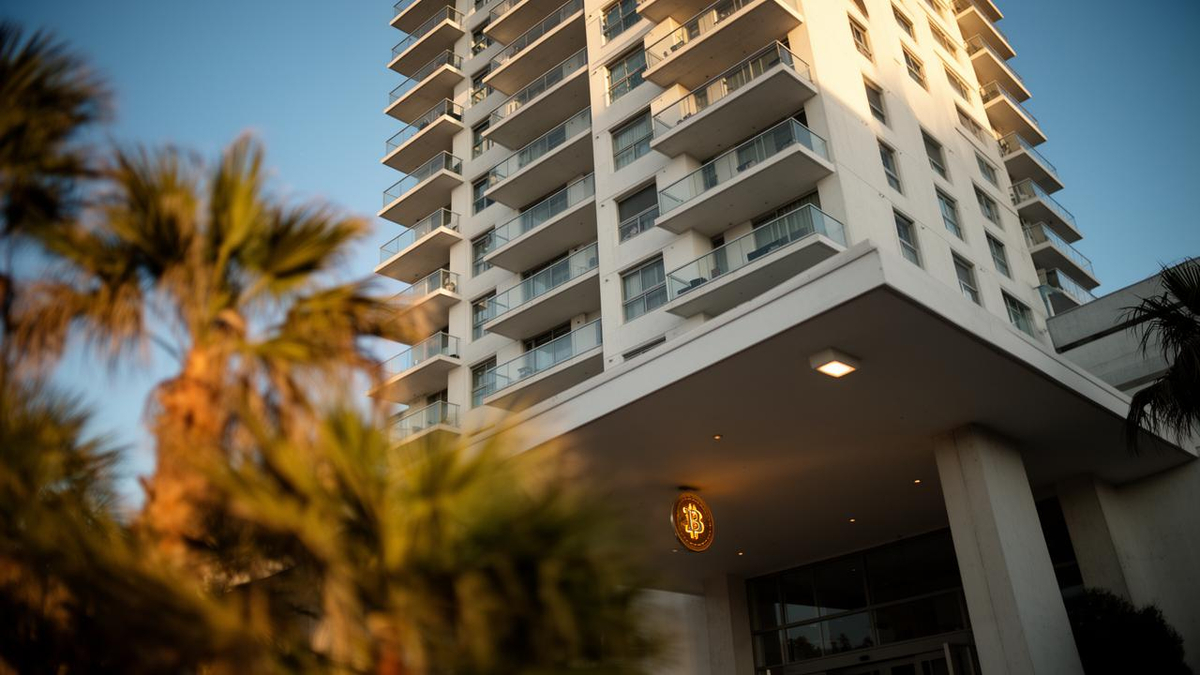
Cardone Capital has closed on 1,545 multifamily apartment units while tying a 1,000 Bitcoin allocation to a single Fort Lauderdale, Florida, high-rise, extending the firm's effort to pair rental real estate with a digital-asset treasury.
The Fort Lauderdale property accounts for 350 of the units in the transaction. The remaining 1,195 apartments sit in other Florida multifamily buildings that are separate from the tower carrying the Bitcoin sleeve. Founder and CEO Grant Cardone said on X that the deals ran through the company's Distressed Opportunity Fund, which obtained five-year interest-only debt from Fannie Mae at an annual rate of 5.52%.
At roughly $60,900 per coin, the planned 1,000 BTC position would be worth about $60.9 million. The company did not disclose the price it paid for the Bitcoin, the principal amount borrowed, the loan-to-value ratio on the properties, or whether the full allocation has already been purchased. It also did not say how much of the coin purchase would come from existing cash, investor money or property income.
"All transactions were funded on Cardone's balance sheet & retail investors," Cardone wrote in the post dated Nov. 24.
Participation in the Distressed Opportunity Fund was limited to accredited investors, with a minimum commitment of $250,000. Under interest-only terms, a borrower services interest without paying down principal during the loan period; at 5.52%, each $1 million of debt would carry $55,200 in annual interest expense.
The structure mirrors an approach Cardone Capital has been building out since at least 2025. In May of that year it launched the 10X Miami River Bitcoin Fund, which bundled a 346-unit residential property with an initial $15 million Bitcoin allocation, targeted $150 million in fundraising and set the same $250,000 minimum. Under the firm's published strategy, it buys Bitcoin when it acquires a property and then steers positive operating cash flow into additional purchases through dollar-cost averaging. Bitcoin may represent between 15% and 50% of a hybrid fund's total allocation, a range the company can adjust for capital improvements, liquidity needs and debt maturities.
The firm has been adding coins through 2026, including during stretches when crypto prices were falling. Its holdings stood at about 1,000 BTC in January after a $10 million purchase, according to crypto.news. It then bought 282 BTC for roughly $18 million during a June downturn, following an earlier 130 BTC purchase that cost about $9.7 million. On Aug. 28, Cardone announced plans involving another 1,200 BTC and roughly 2,000 multifamily units.
Cardone has set an interim goal of 3,000 BTC by the end of 2026 and a longer-term target of 10,000 BTC spread across its investment vehicles. Neither the August announcement nor the latest disclosure gave a consolidated Bitcoin balance, so the company's current holdings cannot be derived by simply adding up the announced allocations.
Cardone Capital's portfolio lists $5.9 billion in assets under management across 50 assets, 16,392 multifamily units and about 500,000 square feet of commercial office space. Bitcoin-linked property funds are listed in Miami, Boca Raton, Naples and Fort Lauderdale.
The economics differ from those of a publicly traded Bitcoin treasury company. Investors in Cardone's private vehicles hold an interest in a fund that owns both property and cryptocurrency, and their capital remains exposed to the fund's operating costs, debt service and withdrawal limits. The firm's investment guidelines say it may eventually sell part of its Bitcoin or borrow against it to return capital to investors; no Bitcoin-backed credit facility has been announced for the Fort Lauderdale acquisition.
The hybrid model cuts both ways. Rental cash flow can offset some of the volatility of a Bitcoin position, and property ownership gives the fund an income stream that a pure crypto treasury lacks. But the two asset classes carry distinct risks that can compound: apartments bring maintenance costs, refinancing exposure and shifting rental demand, while Bitcoin remains prone to sharp price swings. The five-year interest-only loan pushes principal repayment to the end of the term, leaving the fund dependent on refinancing or asset sales at maturity.
For investors, the transaction is another signal that private real estate managers are willing to bolt crypto exposure onto traditional property vehicles rather than hold digital assets in a separate fund. Whether that structure draws broader institutional interest will depend on disclosure: without a stated purchase price, borrowing level or executed Bitcoin balance, outside investors have limited ability to gauge the fund's true leverage to the coin.
Once added, BigGo Finance appears first in Google Search Top Stories, so you get the broadest, most up-to-the-minute, and most comprehensive global financial news first.