In China, an intermediary market that lets users bypass restrictions to access advanced American artificial intelligence (AI) models is growing into a commercial ecosystem. According to a recent analysis published by blockchain analytics firm Chainalysis, so-called proxy services that unofficially broker access to restricted US AI models—including OpenAI's ChatGPT and Anthropic's Claude—are spreading across China, and many of them accept cryptocurrency payments.
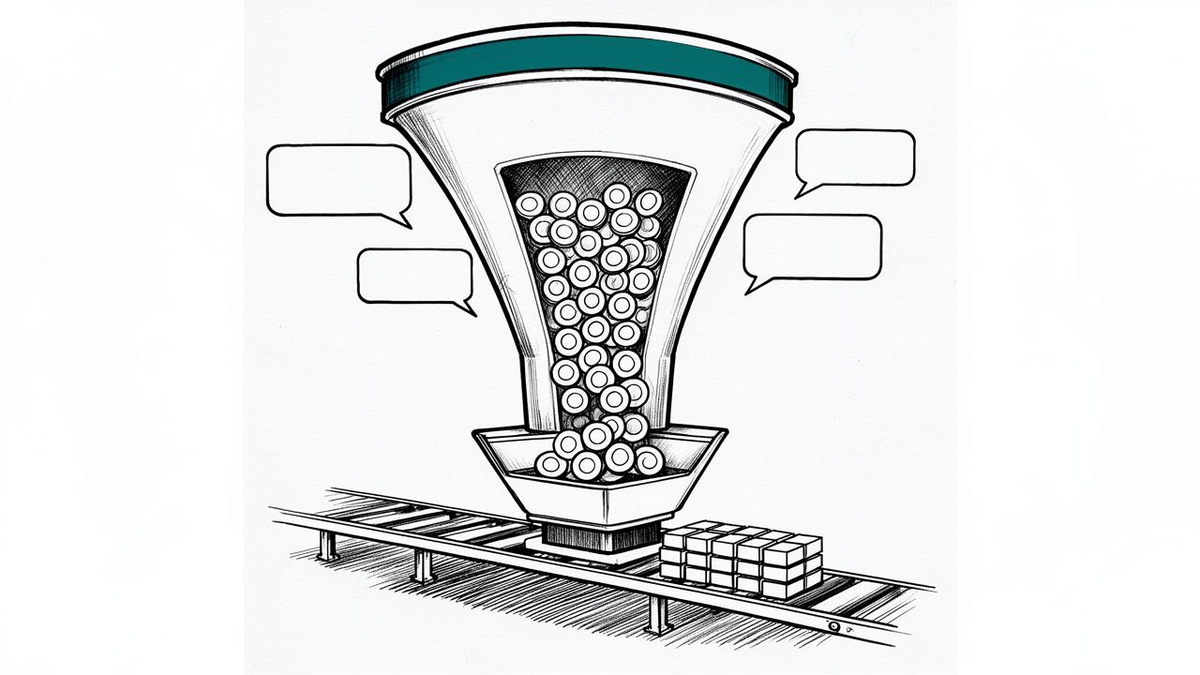
Proxy services work by forwarding a user's request to an AI model and passing the result back to the user. Users can access these models without directly connecting to the official services of US AI companies. The intermediaries earn revenue by charging based on usage or by selling access passes valid for a set period.
The concern is that this channel can go beyond simple workarounds and be used by Chinese AI developers to upgrade their own models. By using answers produced by high-performance models as training data, distillation technology can boost the performance of relatively small models, sharply reducing the cost of developing large-scale models from scratch. Distillation itself is not illegal, but it becomes a problem when capabilities are extracted in violation of the original model provider's terms of service or access restrictions.
Anthropic previously alleged that three Chinese AI companies operated about 24,000 fake accounts through proxy services to extract the capabilities of its Claude model. DeepSeek, Moonshot and MiniMax were named as the companies involved.
Cryptocurrency has established itself as a key payment method in this market. Of the 100 AI proxy services Chainalysis examined, 40 supported cryptocurrency payments, which were mainly made in stablecoins pegged to the value of fiat currencies such as the dollar. These operators also accept conventional Chinese payment methods such as WeChat Pay and Alipay, but they offer a separate payment channel through crypto.
Note: Payment methods and the number of services reflect conditions at the time of the study; the fake-account figure is Anthropic's allegation.
Another feature is that the payment structure is split into multiple layers. Some proxy operators receive crypto directly from users, but many process funds through custodial payment services or third-party payment processors. When multiple intermediary layers sit between users and service operators, it becomes correspondingly harder to identify the final destination of funds. Chainalysis noted that such funds could flow into regulated platforms such as crypto exchanges without any direct link being apparent.
A correlation between the release of new US AI models and crypto transactions was also observed. In the days immediately after major US AI models were released, payment activity from wallets believed to be linked to China rose more sharply than among all active wallets. The interpretation is that this reflects demand to quickly secure the capabilities of new models. Chainalysis, however, said it could not confirm whether those transactions were actually aimed at model distillation. It explained that increased crypto transactions alone cannot establish a user's identity or purpose.
Analysis found that many of the crypto wallets used for payments were located in China. Related wallets were also identified in Japan, Hong Kong, Singapore and South Korea. Chainalysis analyzed that the market is developing into a commercial ecosystem as roles become more specialized—suppliers that secure access to AI models, intermediaries that resell it, and payment processors that handle transactions.
This structure raises concerns that it could undermine US restrictions on access to AI technology. Because transactions pass through multiple intermediaries, shutting down one service can simply be filled by another. Chainalysis said blockchain intelligence can be used to trace fund flows and connections among proxy operators, users, payment processors and exchanges, and that this can help identify the key connection points in networks that support unauthorized access.
The analysis adds a new dimension to the debate over the effectiveness of AI technology controls. The key point is that blocking access to models alone cannot prevent circumvention, and that tracking payment infrastructure must accompany it. As crypto payments add intermediary layers that make tracing harder, observers say the response scope of regulators and AI companies in various countries could widen from the model distribution stage to the fund-flow stage.
Once added, BigGo Finance appears first in Google Search Top Stories, so you get the broadest, most up-to-the-minute, and most comprehensive global financial news first.