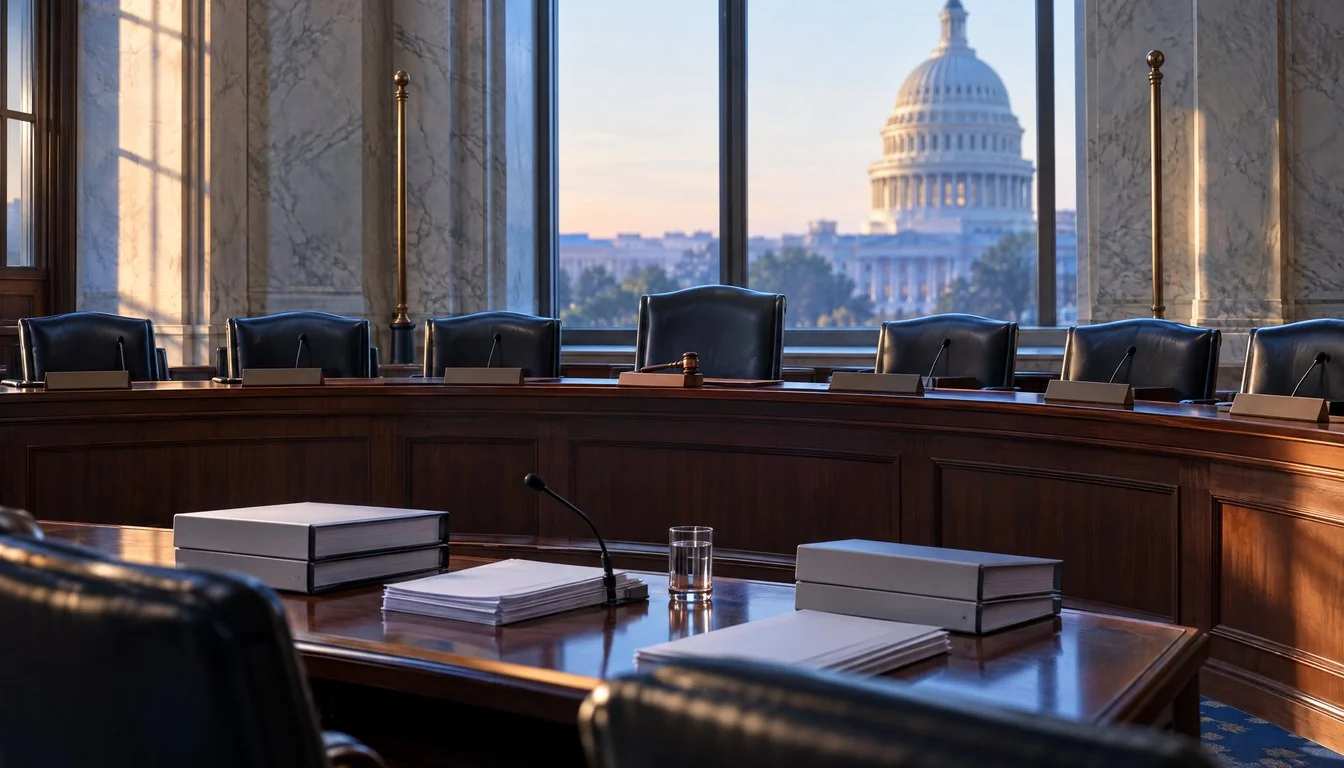
The Washington honeymoon that crypto spent two years building is over. Democrats won control of both the House and the Senate in the November 3 midterms, and Bloomberg’s report on the end of crypto’s Trump-fueled Washington boom frames the result as the close of an era. The industry now faces a Congress that is more likely to tighten rules than to loosen them.
President Donald Trump made digital assets a national priority during the preceding two years. That push gave exchanges, token issuers and stablecoin firms a friendly audience at nearly every level of government. The midterm result removes the congressional leg of that arrangement, and it opens the door to closer scrutiny of the industry’s ties to the president himself, as BusinessDay NG reported.
The bill at the center of the shift is the Clarity Act. It passed the House in 2025, then died in the Senate in September 2026 on a procedural vote of 49-50. Our earlier look at the Clarity Act limbo after the Democratic sweep covered the first market reaction. This analysis goes further: what the seat math says, what survives, who gains, and what builders should do now.
Don't miss new tech stories on Google
Add Shattered once in the Google app and our stories show up in your news suggestions.
How the Midterm Results Reset Crypto Politics
Voters went to the polls on November 3, 2026, with all 435 House seats and 35 Senate seats on the ballot, according to NBC’s election coverage. Republicans entered the day with a 53-47 Senate advantage and a 219-214 House edge. By the end of the week, Democrats held both chambers.
That outcome ends unified Republican control of Washington. NPR’s reporting says it is expected to produce divided government for the rest of Trump’s term, which raises congressional resistance to his crypto agenda. For an industry that spent the last two years lobbying a sympathetic majority, the arithmetic has flipped overnight.
The reset matters because crypto policy has run almost entirely through party-line channels since the Clarity Act left the House. Committee chairs set hearing calendars. Chairs decide which nominees get votes and which oversight letters go out. A change in who holds those gavels changes what crypto firms hear from Washington, even before a single bill moves.
Bloomberg’s headline uses the word endgame, and the Sydney Morning Herald’s coverage carries the same message to an Australian audience. Several outlets confirmed the central claim. The favorable political environment for crypto in Washington ended with the Democratic wins. Beyond that headline, the details still depend on which agency, which bill and which committee you track.
The Seat Math: Three Outlets, Three Tallies
Counts differed across outlets in the days after the vote, because several races were still being finalized. The table below keeps each number attached to the outlet that published it. Treat the Senate figures as a range, not a final answer.
Both Senate tallies clear the 51-seat bar, so the direction is not in doubt. The BBC’s 54 and NPR’s 52 differ because NPR’s dashboard still showed unresolved contests. Democratic pickups, according to NBC’s regional coverage, included states usually seen as Republican or competitive, among them Kansas, Iowa, Texas, Ohio, Maine, North Carolina and South Carolina.
For crypto lobbyists, a Senate margin that wide matters more than the exact digit. A bare majority forces Democratic leaders to manage every moderate. A larger one lets them write bills with fewer compromises on consumer protection and conflict-of-interest language, two themes that ran through the September debate.
Why the Clarity Act Failed 49-50 in September
The Senate procedural vote ended 49-50, and the Clarity Act did not advance to a final up-or-down vote. Reports on the vote tie the failure to four fights: stablecoin rewards, investor protections, banking competition and concerns about Trump’s own crypto dealings.
A margin that thin reads like a near-win, but the reaction around it says otherwise. Representative Maxine Waters, the ranking Democrat on the House Financial Services Committee, called the vote bipartisan. Her point, made in a statement on the committee’s site, was that the bill did too little to rein in the president’s conflicts. That framing gave opponents a clean argument, and it is the one Democrats will carry into the new Congress.
Timing also worked against the bill. September left only weeks before the campaign season hit full speed. With the midterms looming, any Senate Democrat weighing a yes vote had to ask whether helping a Trump-aligned crypto push would play well at home. The 49-50 count shows how little room the bill had.
The failure also left the industry with a sunk cost. Two years of drafting, hearings and negotiation produced a House-passed text that no longer has a path in its current form. Any revival starts from a worse bargaining position than the one crypto held in September.
What the Clarity Act Tried to Settle
The bill aimed at a question crypto firms have asked for years: who regulates a digital asset? The Clarity Act sought to clarify whether digital assets would fall primarily under the Securities and Exchange Commission or the Commodity Futures Trading Commission. The Congressional Record describes the proposed framework as dividing primary oversight between the two agencies.
It also would have forced the agencies to work together. Under the proposal, the SEC and CFTC would coordinate and harmonize their rules instead of running two separate regimes. For a startup trying to launch a token, that promise mattered as much as the jurisdictional split. Two agencies reading the same asset differently is a compliance cost that scales with every new product.
Without the Clarity Act, the old ambiguity stays. Firms still must guess whether a given token counts as a security, a commodity or something else. Courts and enforcement actions fill the gap case by case, and that process is slow and expensive. The regulators are still writing rules, which softens the blow, but rules written by agencies can be revised by the next administration. Statutes cannot be undone as easily.
The Disputes That Sank the Bill
Four disputes ran through the Senate debate. Each one will return in any new attempt, so they are worth separating.
Stablecoin rewards and bank competition
Stablecoin rewards touch banking competition directly. Paying holders a return can look like interest delivered outside the banking system, and deposits are the ground banks defend hardest. In our analysis, a Democratic Congress has little reason to side with crypto over banks on that point.
Investor protections and Trump’s crypto dealings
Critics wanted stronger safeguards for retail buyers and clear limits on officials profiting from the industry they oversee. Senator Elizabeth Warren argued ahead of the procedural vote that the country needs crypto regulation, but not a bill written by the crypto industry for its most extreme voices, as her remarks on the Senate floor vote show. Her argument ties ethics, national security and economic stability together, and that bundle is now the Democratic opening position.
The ethics thread connects to oversight plans well beyond crypto. Our report on House Democrats’ planned probes of Apple, Meta and Musk shows the same instinct: a new majority intends to look at how businesses and the White House intersect.
Trump’s Two-Year Crypto Push and the Scrutiny Ahead
For two years the administration treated digital assets as a national priority. That meant sympathetic agency leadership, public support for stablecoin legislation and a White House willing to say the industry was welcome. Crypto firms built their Washington strategy around that posture, hiring lobbyists, funding political groups and timing product launches to the policy calendar.
The same closeness is now the industry’s largest liability. Reports on the new balance of power say Democrats plan to zero in on the industry’s ties to Trump. Committee subpoenas, document requests and public hearings are standard tools of a congressional minority turned majority. None of them require a vote on a crypto bill, so none can be blocked by the industry’s remaining allies.
Politics around money also shifted. The midterms put technology firms under a harsher spotlight in general, a theme we followed in our piece on three risks for SpaceX and Tesla after the Democratic win. Crypto has a narrower version of that exposure. It lacks the consumer goodwill of a car brand, and its biggest political supporter is the person Democrats most want to investigate.
Expect the oversight focus to land on conflicts first and market structure second. A hearing about presidential crypto dealings makes better television than a hearing about SEC and CFTC jurisdiction. It also makes any later bipartisan negotiation harder, because Republicans will defend the president while Democrats press the point.
What Stays in Place: Stablecoin Law and Agency Rulemaking
The picture is not all downside for crypto. A federal stablecoin law is already in place. Repealing it would take new legislation, and that requires votes a divided Congress would struggle to assemble. The Congressional Record calls the GENIUS Act the first digital-asset regulation bill to become law, and it set a federal framework for stablecoins, including rules on permissible issuance.
The SEC and CFTC also keep writing digital-asset rules. That work does not depend on Congress passing anything. It does depend on who leads the agencies, and a Democratic Senate gains leverage over nominees when seats open. The table below sorts the main pieces of the framework by status.
The takeaway: stablecoin issuers keep their legal footing, while exchanges and token projects lose the clarity they were promised. That split will shape which crypto businesses feel the change first.
What the Experts Say
Four voices frame the debate. Each is quoted from public statements or published coverage, and each points in a different direction.
Coinbase co-founder and CEO Brian Armstrong backed the bill as bipartisan work. In a post on X, he wrote: “The CLARITY Act represents a ton of bi-partisan work to finally establish clear rules for crypto in America, which 70% of Americans say we should already have.” The 70% figure is his claim, and we have not independently verified the poll behind it.
Washington policy analyst Jeffrey Seiberg, quoted by CNBC after the election, was blunt about the odds: “The resulting political environment may make it impossible to advance a version of Clarity that the crypto sector could back.” That is the bearish read, and it matches the vote math.
House Financial Services ranking member Maxine Waters took the opposite side. In a committee statement, she said: “No one need look any further as to why the Republicans’ crypto market structure bill, the CLARITY Act, failed in the Senate in a bipartisan vote than the fact that it did nothing to rein in Trump’s overt, pernicious, and dangerous corruption.” Warren’s paraphrased position, covered above, runs along the same line.
Read together, the quotes show the problem. The industry wants clear rules and says the public does too. Democrats say they want rules as well, but with ethics provisions the last bill lacked. Both sides claim to favor regulation, so the fight is over its terms, not its existence.
Market Impact: Bitcoin Still Below Its Highs
Bitcoin remained below its previous highs, according to the Bloomberg report. That is the only market figure we can confirm for this story. The sources behind this piece do not give a specific Bitcoin price, a percentage decline or any company valuation, so we are not printing one.
What the missing numbers tell us is itself useful. A policy shock of this size would normally produce a clean headline figure if it had triggered a crash. Its absence suggests traders are treating the result as a slow-building risk, not a single-day event. Crypto prices respond to liquidity, rates and sentiment far more than to the composition of Congress.
Our previous coverage of the post-election Bitcoin and Zcash moves followed price swings in the first days after the vote. Price data moves quickly and ages badly, so check a live feed before acting. The structural point holds either way: a stalled Clarity Act removes a bullish catalyst that many investors had priced in over two years.
Other segments feel the shift differently. Stablecoin businesses keep a federal law behind them. Exchanges and token issuers do not. Firms with heavy exposure to U.S. retail trading face the largest regulatory unknown, since market structure rules would have defined their core products.
Three Paths Forward for Crypto Rules
With the Clarity Act stalled, the industry has three routes to regulatory clarity. Each carries different speed, durability and political cost. The comparison below sets them side by side.
No single path wins on every measure. Reviving the bill is the most durable but also the hardest. Agency rulemaking is quickest and also the easiest to reverse. Most firms will likely pursue the first two in parallel while preparing for the third. The fourth route is what happens by default when Congress and agencies stall.
What It Means for Developers and Product Teams
Policy shifts reach engineers through product requirements. Teams building wallets, exchange backends, stablecoin integrations and on-chain apps should expect compliance work to grow, not shrink. Our software coverage follows the tools that make that work easier, from code editors to testing frameworks.
Security fits into the same picture. Lawmakers who want tougher oversight often cite hacks and thefts as evidence. We have tracked several of them, including BTCPay Server hot wallet thefts on older installs and the pressure insurers now apply after the $6.3B Binance hack. Each incident hands regulators an argument for stricter standards.
Build jurisdiction rules as configuration
Hard-coding regulatory assumptions is a mistake when the rules can still flip. A simple pattern is to keep per-asset and per-region policy in versioned config, so a legal change becomes a reviewed pull request instead of a code rewrite. The snippet below is an illustration only, not a legal classification of any asset.
Log decisions for future audits
A Congress focused on oversight asks for records. Teams that keep clear logs of why an asset was listed, who approved it and which rule applied at the time will answer inquiries faster. That habit costs little now and saves real money during a subpoena response.
Historical Context: From Unified Control to Divided Government
Crypto’s relationship with Washington has swung hard over a short span. Before the Trump years, the industry’s chief complaint was regulation by enforcement, with agencies applying old securities and commodities law to new assets and leaving firms guessing. Trump’s return changed the tone. Digital assets became a stated national priority, and legislation moved for the first time.
The stablecoin law was the first result. The Clarity Act was the sequel, passing the House in 2025 and then hitting a wall in the Senate in September 2026. In political terms, that is a familiar arc: a trade group wins a first bill under friendly control, then loses momentum when the majority shifts.
Technology policy more broadly is on the move. Democrats have signaled interest in AI rules, privacy and data center limits, as our look at three AI targets after the January 2027 takeover explains. Crypto joins a crowded agenda, and it competes for committee time against issues with wider public support.
One difference separates this moment from earlier reversals. The industry now has a federal stablecoin law and active agency rulemaking to anchor it. Earlier regulatory fights left firms without a federal statute to stand on. This one leaves them with a floor, even if the ceiling has dropped.
Five Predictions for the Next 12 Months
These are analytical judgments, not reported facts. They rest on the confirmed vote counts and statements above.
- The Clarity Act returns in a different form. The original text has no path. A rewritten version that adds ethics and conflict-of-interest terms is the likeliest route, and it will not arrive quickly.
- Oversight arrives before legislation. Expect hearings and document requests on the industry’s ties to Trump well before any market structure bill advances.
- The stablecoin law survives, but gets amendment pressure. Repeal needs new legislation that a divided Congress is unlikely to pass. Tightening rewards or reserve terms is a more realistic target.
- The SEC and CFTC become the main arena. With Congress stuck, agency rulemaking carries more weight, and nomination fights over commissioners gain importance.
- Compliance spending rises at crypto firms. Companies will hire for legal, audit and security roles to prepare for scrutiny, and engineering teams will absorb policy-driven requirements.
The common thread is delay. Nothing here produces a clean resolution within a year. Firms that plan for months of uncertainty will fare better than those waiting for a single decisive ruling.
What We Don’t Know Yet
Several details remain unconfirmed in the sources available to us. No source we reviewed gives a specific Bitcoin price or percentage decline tied to the election. None gives a company valuation, a named executive’s personal crypto holdings or a verified claim that a particular company halted operations or left Washington.
The final Senate count is also still moving, with the BBC and NPR publishing different tallies. The new Congress has not yet been seated, and committee leadership assignments are not confirmed in our sources. We will update this analysis as wire syndication of the Bloomberg report and later coverage add detail.
Treat any social post claiming a firm has shut down its U.S. operations, or giving a precise price reaction, as unverified until a named outlet confirms it. The story is moving fast and rumors move faster.
FAQ
What happened to crypto’s Washington boom?
Democrats won control of the House and the Senate in the November 3, 2026 midterm elections. That ended the favorable political environment crypto enjoyed under Trump and raises the odds of tougher regulation and closer scrutiny of the industry’s ties to the president.
What is the Clarity Act?
It is a market structure bill that sought to clarify whether digital assets fall primarily under the SEC or the CFTC. It would also have required the two agencies to coordinate their rules. The bill passed the House in 2025.
Why did the Clarity Act fail in the Senate?
A procedural vote in September 2026 ended 49-50, so the bill did not advance. Disputes over stablecoin rewards, investor protections, banking competition and Trump’s crypto dealings all played a part.
Is the federal stablecoin law at risk?
Not directly. It is already in place, and repealing it would require new legislation. Amendments are more plausible than repeal in a divided Congress.
Are the SEC and CFTC still writing crypto rules?
Yes. Both agencies continue developing rules for digital assets, and that work does not depend on a new law. Leadership and nominations will shape where it goes.
What happened to the Bitcoin price?
Bloomberg’s report says Bitcoin remained below its previous highs. The sources we reviewed give no specific price or percentage move for this story, so check a live market feed for current figures.
Can the Clarity Act come back?
Analysts such as Jeffrey Seiberg doubt a version the crypto sector could back will advance in the current political climate. A rewritten bill with stronger ethics terms is the more likely form of any revival.
What should developers building crypto products do now?
Keep regulatory assumptions in versioned configuration, log listing and approval decisions, and plan for added compliance work. Rules for exchanges and token projects remain unsettled, while stablecoin products sit on firmer legal ground.
Priya Anand writes about privacy and data protection: how personal information leaks, how breaches unfold, and what individuals and teams can realistically do about it.