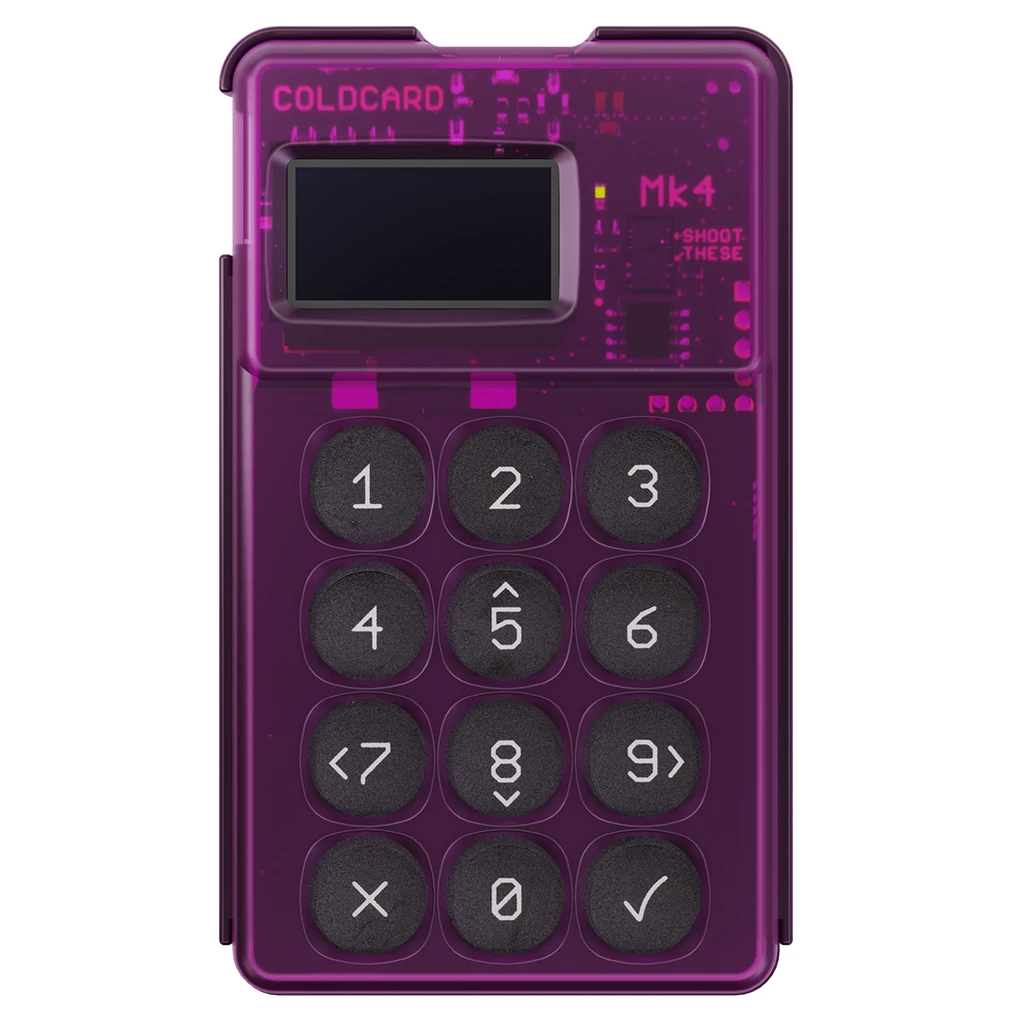
Coinkite, the Canadian maker of the Coldcard bitcoin hardware wallet, disclosed that a firmware defect in its seed-generation process survived at least 15 independent security reviews over more than five years before attackers used it to drain roughly 1,778.84 BTC from user wallets.
In an 18-page postmortem published Nov. 23, the company traced the problem to a software library integration in March 2021. A configuration error diverted seed generation away from the hardware random number generator the product was designed to use and onto a weaker software-based pseudorandom number generator. Recovery phrases still appeared normal and passed some security checks, which is why the reviews did not flag the change.
The weakened randomness left affected wallets far short of the intended 128-bit security target. Coinkite estimated roughly 40 bits of effective entropy on Mk2 and Mk3 models, and about 72 bits on the Mk4, Mk5 and Q devices.
According to the report, the security checks confirmed that Coldcard had the correct system for producing recovery phrases but never verified that the devices were actually using it. The independent reviews between 2021 and 2026 included commissioned product assessments, firmware examinations and automated testing, and none caught the integration defect before exploitation began on July 29.
Galaxy Research, which analyzed the blockchain and spoke with 190 affected owners, put the losses at more than 8,600 bitcoin addresses and valued the stolen coins at about $112.7 million in its August assessment. The figure excluded several additional suspected thefts. Coinkite said the attackers reconstructed private keys offline without touching or compromising the physical devices.
Coinkite shipped corrected firmware on July 31 across all supported release tracks and added further safeguards in August, including extra randomness sources, mandatory user input and stronger verification controls. Security firm Keylabs confirmed that the seed-generation fix worked within its defined review scope. The company said it has implemented 12 security recommendations, with three still outstanding.
As of Nov. 18, Coinkite had logged about 300 loss-related support tickets tied to 242 customer accounts, roughly 0.21% of its estimated customer base. The company cautioned that the true victim count is probably higher because a single seed can control multiple addresses. It has not identified the attackers or settled on a compensation plan, and it said law enforcement and the Canadian Centre for Cyber Security are conducting separate investigations.
Recovery has been limited. Galaxy researcher Alex Thorn previously traced 52.37 BTC in recovered funds to wallets linked to the incident, and affected owners can file ownership claims through Crypto Recovery Trust.
Coinkite is urging users of affected devices to install the patched software, generate new recovery phrases and move remaining funds to fresh wallets. It warned that a software update cannot make an already compromised recovery phrase safe again.
Key figures from the disclosure:
Note: Loss valuations differ by date; Galaxy Research estimated about $112.7 million in August, while other tallies put the figure near $107 million at recent prices.
The disclosure points to a broader risk for the hardware wallet sector: a device can keep private keys offline and still fail if the randomness behind its recovery phrase is weak. Because such a flaw leaves no trace on the blockchain until funds move, buyers have little way to judge a product's seed generation beyond the audits its maker commissions. For Coldcard holders, the practical takeaway is that patched firmware protects only newly created wallets, leaving old recovery phrases permanently exposed.
Once added, BigGo Finance appears first in Google Search Top Stories, so you get the broadest, most up-to-the-minute, and most comprehensive global financial news first.


