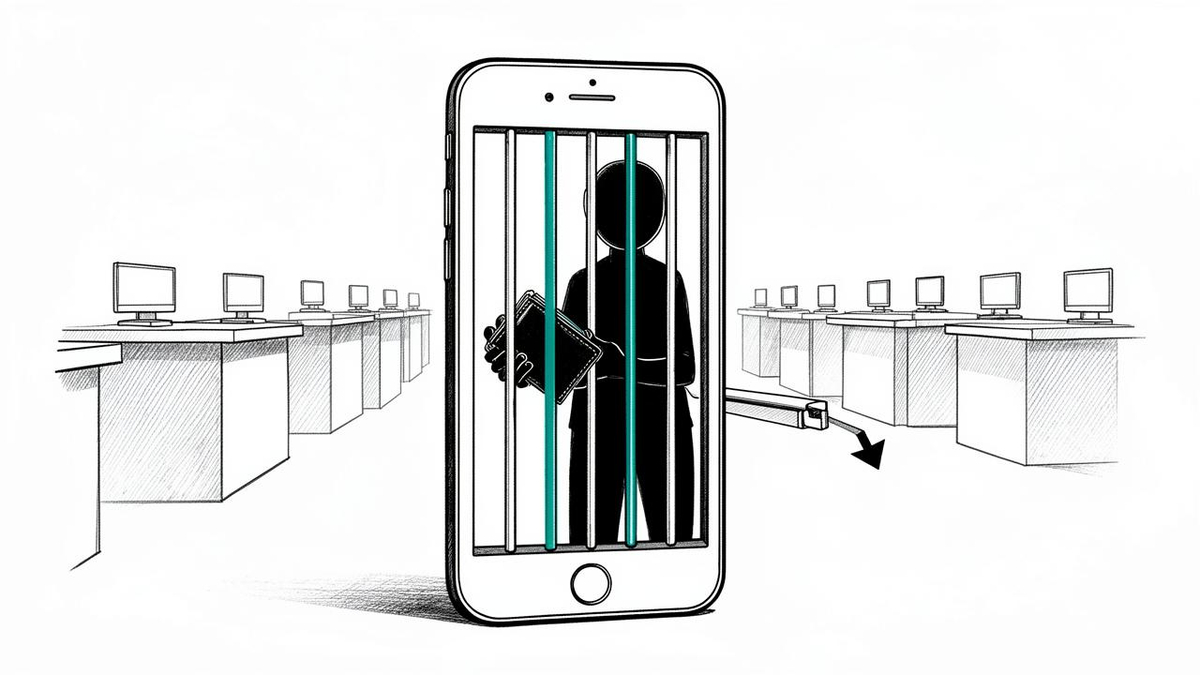
Coins.ph, one of the Philippines' largest licensed crypto platforms, has stopped allowing customers to move digital assets directly to or from self-custody wallets, effective November 19, 2026. Under the policy, which applies in both directions and extends to API users, crypto can now only travel between Coins.ph accounts and accounts held at other regulated exchanges, whether domestic or international.
The restriction wipes out a route that had long been standard for Filipino crypto holders: sending assets straight to a hardware or software wallet they control. Withdrawals aimed at unhosted addresses fail automatically, and the funds stay in the user's Coins.ph account rather than being lost. Incoming transfers from self-custody wallets are rejected and sent back to the originator, with blockchain network fees deducted before the return.
Coins.ph frames the change as a regulatory necessity. "These changes are required by regulation and help keep crypto transfers safe and transparent," the platform said in its support documentation. Chief Executive Wei Zhou confirmed that exchanges licensed either locally or abroad both qualify as acceptable counterparties under the policy, according to BitPinas.
The compliance burden is visible in what a transfer now demands. Senders must supply the counterparty's full name, wallet address, the exchange or platform involved, the wallet type and the purpose of the transaction. Transactions begun before verification is finished sit in a pending state until Travel Rule data is confirmed.
How the Travel Rule Brought Coins.ph Here
The policy traces back to the Bangko Sentral ng Pilipinas, which in 2021 issued Circular No. 1108 requiring virtual asset service providers in the country to comply with Travel Rule obligations aligned with Financial Action Task Force standards. In December 2023, Memorandum M-2023-042 widened those requirements to cover sanctions screening and enhanced due diligence on unhosted wallets.
Self-custody wallets sit awkwardly under that framework. Because no licensed institution operates them, an exchange has no counterparty from which to obtain and match sender and recipient identity data. Routing transfers exclusively through regulated exchanges gives Coins.ph a partner platform that can confirm account ownership and supply the required information.
Note: The September 2026 resolution affected DCPay, the entity holding the electronic money issuer license, while the November transfer restriction applies to the crypto layer run by Betur Inc.
Coins.ph operates through two central bank-licensed entities. Betur Inc. holds the virtual asset service provider license covering trading and custody, while DCPay Philippines Inc. carries the electronic money issuer license for peso and bank operations, including InstaPay and PESONet integrations. The September partial suspension of DCPay's inflow channels hit the fiat side of the business; the November change lands on the crypto-transfer layer handled by Betur.
Separately, unconfirmed reporting has linked the November ban to Coins.ph's earlier shutdown of a Web3 wallet feature after November 30, 2024, casting it as an earlier step in the same regulatory sequence. That account rests on a single source and has not been checked against an official Coins.ph announcement.
What the Restriction Means in Practice
The operational consequence is blunt: crypto can no longer pass directly between Coins.ph and a hardware wallet, a software wallet, or any address a customer controls without an institutional intermediary in between. No workaround currently exists on the platform, and users whose transfer routines relied on an unhosted wallet as an intermediate hop can no longer complete that route through Coins.ph.
Bitcoin holders face a specific detour. Moving bitcoin from cold storage into a Coins.ph account for conversion or trading now requires routing through another regulated exchange first. The platform's documentation does not address how Travel Rule obligations apply across other platforms or to self-custody arrangements generally.
Because network fees are skimmed off before a rejected inbound transfer is returned, sending from a self-custody wallet to Coins.ph now carries a direct cost with no completed transaction to show for it.
Market Impact
The change narrows the paths between the regulated and unregulated corners of the Philippine crypto market and pushes activity toward licensed custodial venues. It also sets a template that other exchanges operating under active Travel Rule enforcement may follow, particularly in jurisdictions where the central bank has moved aggressively on anti-money laundering standards. For a market that has positioned itself as one of Southeast Asia's more active regulated crypto hubs, the trade-off between compliance and self-custody is becoming concrete rather than theoretical.
Once added, BigGo Finance appears first in Google Search Top Stories, so you get the broadest, most up-to-the-minute, and most comprehensive global financial news first.


