CrowdStrike Zscaler talks over a possible acquisition have rattled cybersecurity stocks, with reports on 20 November 2026 saying the two companies are discussing a deal, according to people familiar with the matter.
Zscaler (ZS) shares jumped as much as 18% while CrowdStrike (CRWD) fell more than 8% in the hours after the news broke, as first reported by unite.ai. A completed deal would create a combined company worth roughly $265bn, among the largest tie-ups the cybersecurity sector has seen.
Shares swing before either side confirms anything
Bloomberg broke the story, reporting that CrowdStrike is in talks to buy Zscaler in what would rank among the industry’s biggest-ever combinations. Reuters followed with its own sourcing, citing two people familiar with the matter who stressed no deal is guaranteed, in a report carried via wmbdradio.
CNBC, citing Bloomberg’s reporting, put CrowdStrike’s market value at $235bn against Zscaler’s $32bn ahead of the news, a gap that narrowed sharply once trading reopened. Zscaler’s after-hours surge took its implied market capitalisation to roughly $33.5bn.
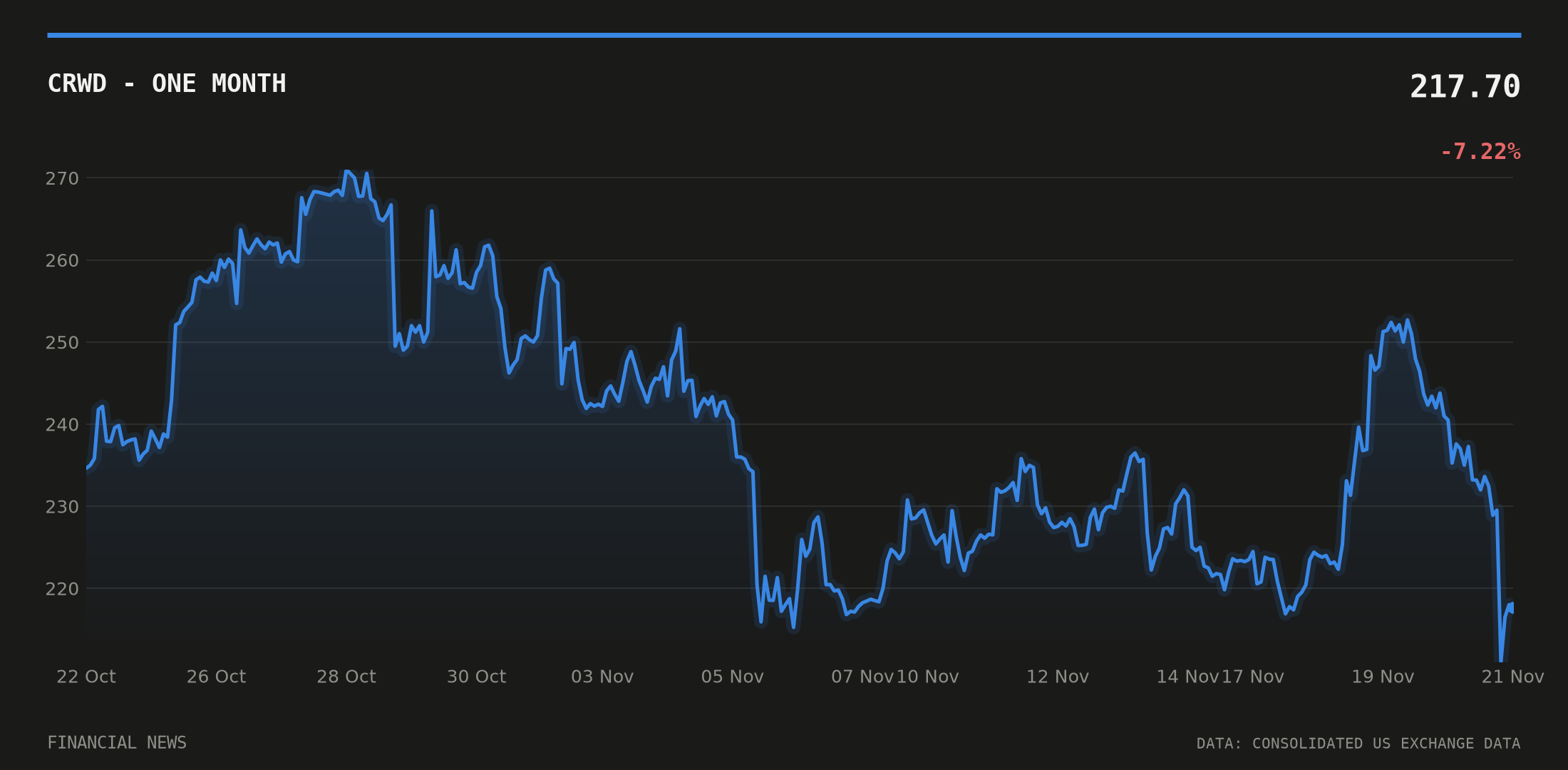
CrowdStrike itself was last quoted at $217.70, down 6.82% and extending a 20-day decline of 14.8%, with volume running at roughly twice its 20-day average. The stock has traded in a $211-$259 range over the past month.
Corroborated, but not confirmed
Neither company has gone on the record. CrowdStrike declined to comment and Zscaler did not immediately respond, according to unite.ai’s reporting. That silence matters: the central claim rests on unnamed sources at Bloomberg, Reuters and CNBC rather than any filing or statement from either business.
Not every outlet treated the story the same way. One site, cryptobriefing.com, said its own checks turned up no corroborating reporting beyond social-media chatter and noted that CrowdStrike and Zscaler have historically operated as technology partners rather than as acquirer and target. That caveat sits alongside three independently sourced reports naming the same transaction, leaving the story in sourced-but-unconfirmed territory rather than settled fact.
Trading data from the session gives some support to the idea that the reaction was driven by genuine news flow rather than noise. FINRA’s short-sale data shows CrowdStrike’s short-volume ratio falling to 0.403 on 20 November from 0.566 the prior session, consistent with ordinary buying and selling swamping short-side activity rather than a short squeeze driving the move.
A much bigger swing than CrowdStrike’s recent dealmaking
If talks progress, a Zscaler deal would dwarf CrowdStrike’s recent acquisition pace. Earlier in November 2026 the company agreed to buy AI security specialists Fiddler AI and Dreadnode for a combined $495m, according to cryptobriefing.com. A Zscaler transaction would represent a step-change in scale by comparison.
Cybersecurity has already produced several outsized deals in recent years: Google’s roughly $32bn purchase of Wiz in 2025, Cisco’s near-$28bn acquisition of Splunk in 2024, and Palo Alto Networks’ $25bn deal for CyberArk earlier in 2026, according to figures cited by unite.ai. A CrowdStrike-Zscaler combination at a reported $265bn combined value would sit above all three and would likely draw close antitrust scrutiny given the overlap between the two firms’ endpoint and network security products.
Separately, CrowdStrike chief executive George Kurtz filed Form 4 disclosures with the SEC on 18 and 19 November, just before the talks were reported. The filings record routine transactions and contain no share-count or value data in the public record that would support any inference about timing or motive.
Markets will now watch for any formal statement from either company, along with whether reported talks progress toward a signed agreement or quietly lapse, as has happened with other speculative cybersecurity tie-ups in recent years.
This article is for information only and is not investment advice or a recommendation to buy or sell any asset. Markets move quickly; figures are correct as sourced at the time of writing. Always do your own research before making financial decisions.