Crypto and AI companies spent $250 million in the midterms in hopes of picking the lawmakers who will decide how — or whether — their industries will be regulated. Most of the races they spent in were safe seats, where the candidates they backed were always going to win. But nearly three-quarters of their money went to the competitive races, and there, they got clobbered.
Of the twelve competitive races called so far, the side backed by crypto and AI super PACs lost nine. The PACs spent $74.7 million on the losing side of those races, compared to $28.3 million on the winning side.a
The longer postmortem will go out next week. Subscribe to get it in your inbox. If you’d like to support the work that goes into this newsletter and keeping Tech Influence Watch up to date, consider signing up for a paid membership.
For more details on each of these races, see my 2026 midterms election guide.
The losses
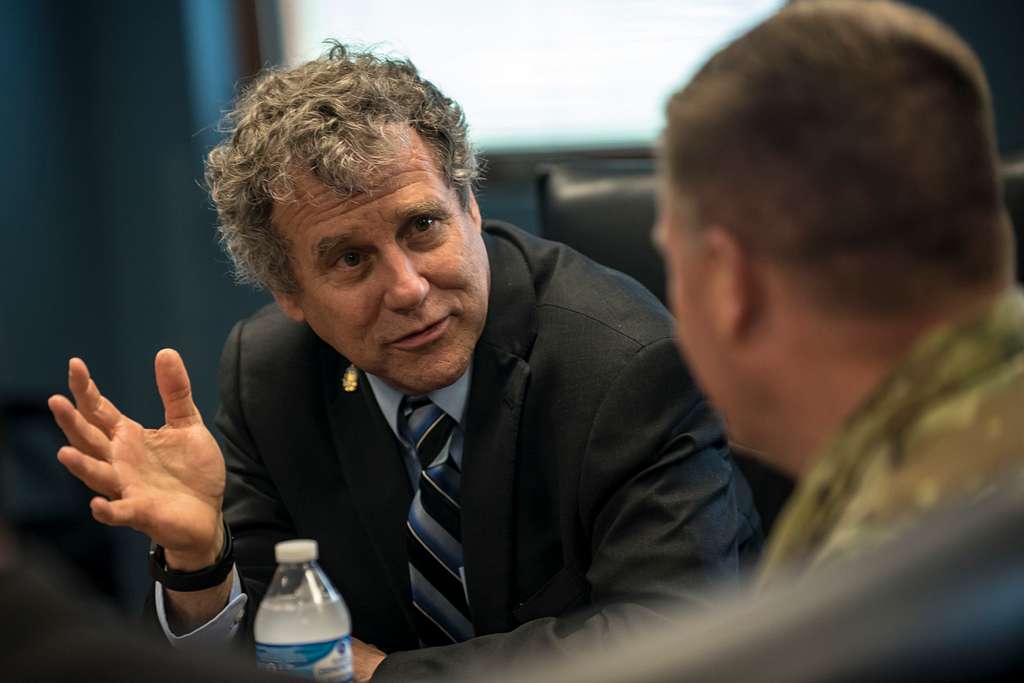
Ohio Senate: Democrat Sherrod Brown overcame more than $64 million in crypto money spent to oppose him and support Jon Husted — the most the industry has ever spent on a single race, and nearly five times what it spent on any other race this cycle. This is a devastating defeat for the crypto PACs, whose backers like Coinbase’s Brian Armstrong crowed in 2024 that “being anti-crypto is a good way to end your career”.1 Brown’s career, it turns out, is doing just fine. Much of Fairshake’s leverage in Congress depends on lawmakers being scared of it, and they have a lot less reason to be now.
South Carolina Senate: Democrat Annie Andrews beat Darline Graham, despite nearly $4.1 million in AI money that backed Graham through her primary runoff and general election.
Wisconsin District 1: Democrat Mitchell Berman unseated incumbent Bryan Steil, who chairs the House Financial Services digital assets subcommittee. Crypto spent $1.9 million to support this key ally and oppose Berman.
Michigan Senate: Democrat Abdul El-Sayed beat Mike Rogers, despite $810,000 from a Lummis-linked crypto PAC and just over $1 million from the conservative AI group Alliance for a Better Future backing Rogers.
Iowa Senate: Democrat Josh Turek won his race against Republican Ashley Hinson, overcoming $700,000 in spending from the Winklevosses’ pro-crypto Digital Freedom Fund and $171,000 from AI’s Alliance for a Better Future.
Texas Senate: Democrat James Talarico defeated Ken Paxton, despite a last-minute push by crypto’s Digital Freedom Fund to boost Paxton and oppose Talarico. Crypto’s Fellowship PAC also spent to support Paxton in his primary runoff. Altogether, crypto spent $1.4 million on the race.
Maine Senate: AI group Alliance for a Better Future spent $810,000 boosting longtime incumbent Susan Collins, who was ousted by Democrat Troy Jackson.
Alabama District 2: Crypto helped elect Democrat Shomari Figures in 2024, but it abandoned him this time around. Despite more than $200,000 in crypto spending to oppose him and support his Republican opponent, Rhett Marques; $960,000 from the AI-focused Public First network to boost Marques in his primary; and a district redrawn to favor Republicans, Figures still won.
Kansas Senate: AI spent $81,000 in support of Roger Marshall, with Alliance for a Better Future buying an ad that promoted AI but warned that politicians like Alexandria Ocasio-Cortez and Bernie Sanders would try to regulate it “for their benefit”. Apparently Kansans weren’t buying it, and Democrat Adam Hamilton flipped the seat.
Mixed results
North Carolina District 1: The OpenAI- and Andreessen Horowitz-linked Leading the Future PAC spent $509,000 boosting Republican Laurie Buckhout in her primary. But during her general election race against Democrat Don Davis, the Guardrails Alliance — which describes itself as a group of workers and activists pushing for stronger AI regulations — spent $612,000 opposing her. Davis ultimately won re-election.
Where their side won
Nebraska Senate: Incumbent Republican Pete Ricketts retained his seat in an unexpectedly challenging contest against independent Dan Osborn. As a member of the Senate Banking Committee, Ricketts is a powerful ally to the crypto sector — which is likely why it favored him over Osborn, who has also spoken positively of crypto. The Fairshake network spent $13.5 million to oppose Osborn in the general election. The Fellowship crypto PAC and Public First AI PAC spent $350,000 and $263,000, respectively, to support Ricketts in his primary.
Colorado District 8: Democrat Manny Rutinel unseated incumbent Gabe Evans, who’d faced $600,000 in opposition spending from the AI-focused Public First network. Rutinel also had $977,000 in primary support from You Can Push Back, a super PAC funded by crypto billionaire Chris Larsen but focused mainly on AI regulation. (Rutinel’s win came from the Anthropic-backed, self-described “AI safety” faction of AI money. The industry is split on how it wants to be regulated, so the other AI super PACs likely do not consider this a shared victory.)
Still too close to call
Michigan District 4, California District 34, Montana District 1, Arizona District 1.
You can expect a very different story out of the industry. I have written before about these PACs’ “back the winners” strategy, where they toss relatively small amounts of cash behind near-certain winners, both to buy (or reward) loyalty and to juice their win rates. In 2024, 82% of candidates endorsed by the Coinbase-linked advocacy group Stand With Crypto had been given at least a 75% chance of winning; 27 of the 39 had a 90% or better chance, and 32 were incumbents [I68]. Fairshake pointed to the 2024 results — where they claimed a 91% win rate2 — as evidence of a mandate. “The voters last year were clear,” a spokesperson said in July 2025.3
They’re already running the same play this cycle. A month before the election, Fairshake was touting a record of winning “53 of the 57 races we engaged in” (referring to this cycle’s primaries).4 In the 40 safe races with crypto or AI PAC spending that have been called so far, their picks have gone 40 for 40. Expect those sure wins to be counted the same as the multimillion-dollar bets they lost.
I’ll keep updating Tech Influence Watch as results continue to trickle in. Look out for a longer postmortem next week, once more of the close races are called and the industries have had time to react.
For this update I’m just focusing on money spent in the general election, so overall totals are less than the $250 million spent across primaries and general races. ↩
For this update I’m just focusing on money spent in the general election, so overall totals are less than the $250 million spent across primaries and general races. ↩
“Crypto Cash Fueled 53 Members of the Next U.S. Congress”, CoinDesk. ↩
“Crypto-focused PAC Fairshake amasses $141 million war chest ahead of 2026 elections”, The Block. ↩
“Crypto super PAC to back candidates in 32 House races”, The Hill. ↩
“Crypto Cash Fueled 53 Members of the Next U.S. Congress”, CoinDesk. ↩
“Crypto-focused PAC Fairshake amasses $141 million war chest ahead of 2026 elections”, The Block. ↩
“Crypto super PAC to back candidates in 32 House races”, The Hill. ↩
Have information? Send tips (no PR) to molly0xfff.07 on Signal or [email protected] (PGP).
I have disclosures for my work and writing pertaining to cryptocurrencies.
[noted] is a short-form companion to Citation Needed. You can manage your email preferences for each separately.