Edited By WuBlockchain
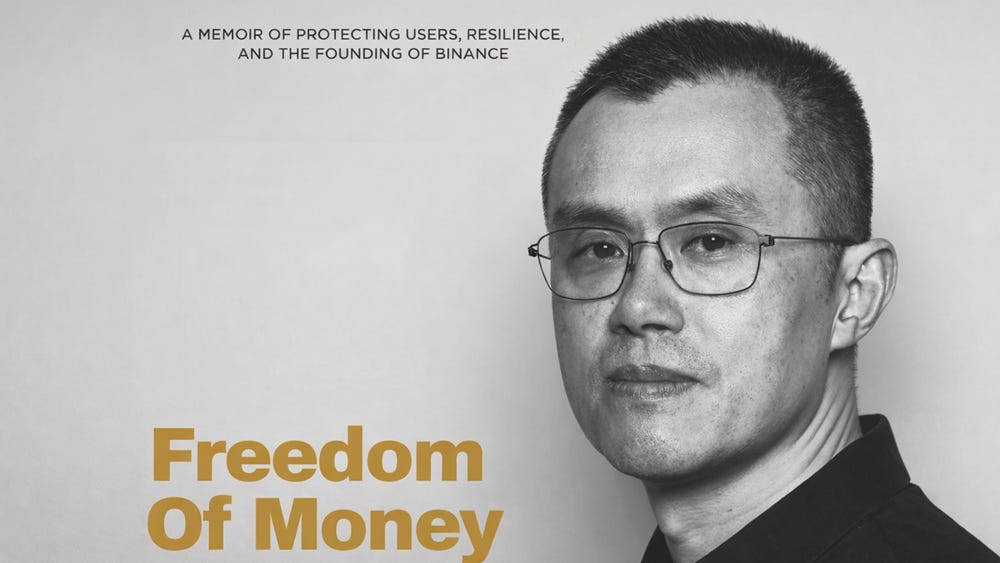
Binance founder Changpeng Zhao, better known as CZ, discussed his new book and personal journey at a reader event for Binance Life in Hong Kong on Aug. 27, 2026. He revisited his decision to sell his home to buy Bitcoin, the founding of Binance, the company regulatory setbacks and some of the lowest points in his life, while sharing lessons on entrepreneurship, hiring, resilience and career development.
CZ said that in the early stages of a startup, the most important priorities are building the product and serving users. He also described initiative as a key trait Binance looks for when hiring, and advised young people to develop at least one skill in which they can become genuinely strong.
Why Did You Want to Write Binance Life?
CZ: The first reason was honesty. The second was that I wanted to tell the full story and put everything back into context.
At the time, I was also pretty bored and didn’t have much to do. I was in prison, so I thought I might as well find something to keep myself occupied. I started spending about 15 minutes a day writing things down.
After I got out, I figured I had already written so much that it would be a waste to throw away all that effort, so I decided to finish it properly.
I’m actually not a very good writer, either in English or Chinese. So I basically wrote the way I normally speak, using very simple, straightforward language to describe what happened.But I do think my life has had a lot of ups and downs, and some of the things that happened are probably stranger than anything someone could make up for. So the story itself is already interesting enough. I just tried to tell it in the simplest way possible.
There is also quite a lot in the book about mindset, although I didn’t go into it in great detail because I don’t think my writing is good enough for that. At one point, some professional writers helped rewrite parts of it. But when I read their version, I felt it no longer sounded like me. So in the end, they changed very little.
I didn’t really approach traditional publishers. In Hong Kong, the Commercial Press helped us publish the book, and they’re here today, so I’m very grateful to them.
For the English edition, finding another publisher could have taken another six months. I had already spent a year on the book, and I thought there was no point waiting any longer. I just wanted to get it out.
As for why I wrote it, there were a few reasons.First, I wanted to tell the story as truthfully as I could — at least to explain how things happened from my perspective. Second, whether it’s about entrepreneurship or life more broadly, I think there are lessons worth sharing, especially for Asian founders and companies trying to become truly global. Looking around the room today, there are a lot of Asian faces here.
Binance is probably one of the more globally successful companies to have come out of Asia, so I think the story can also serve as a case study. What people ultimately take away from the book will be different for everyone. I hope you enjoy it. And if you really don’t, you can always read it before bed — it might help you fall asleep faster.
Host: The last time we spoke, CZ mentioned that he had originally hired people to translate the book, but when he read the translations, something just didn’t feel right. He felt that since his own writing style was never particularly polished to begin with, he wanted the book to sound authentic and straightforward — closer to the way he actually speaks.
CZ: Exactly. The translators were already making an effort to keep the language simple, but everyone who helped translate the book had much better Chinese than I do, including Yi He. Yi helped translate a few sections at the beginning. She writes very well, but when I read what she had written, there were characters in there that I couldn’t even pronounce.
And I thought, this is my book. People know I speak Chinese, so the Chinese edition can’t have words in it that I don’t even know how to read. So we ended up taking out almost all of the more complicated language.
Host: You also said the idea of writing the book really took shape after you went to prison. What was going through your mind at the time? Did you go in already knowing that you wanted to write a book, or did you have to work through a lot emotionally before you got there?
CZ: There was definitely some internal struggle. Before I went to prison, I had already been stuck in the U.S. for more than five months. I couldn’t leave, and there wasn’t much for me to do, so I had already started thinking about whether I should write something.
But at that point, I was still waiting for sentencing, and I had no idea what the outcome would be. From the time I was preparing for the hearing until I actually went in, I was constantly worried about what might happen next.
I kept wondering: Would they keep me there indefinitely? Would something new come up a few months later — another charge, another issue — that would keep me there even longer? The hardest part was really the uncertainty. That was what worried me most.
Once I was actually inside, though, there wasn’t much to do. So I figured I should find something to keep myself busy. My days were basically eating, sleeping, working out and writing. That was pretty much it. I really started writing in earnest once I was in prison. There was no internet access, and I couldn’t look up dates or reconstruct the exact timeline, so at first I wrote almost entirely from memory.
In a way, that was useful. When you’re relying purely on memory, the things that come back to you first tend to be the things that were genuinely important or interesting. After I got out, I went back and checked the timeline carefully. I had posted about a lot of things on social media over the years, so I basically went through my entire social media history again.
There were definitely things I had forgotten to include. But looking back at them later, most of those things weren’t as interesting as the events I had remembered on my own. So the main storyline of the book was still largely built from memory.
Host: One of the first things that struck me when I read the book was how extraordinary your memory seemed. You describe events from very different periods, and you remember the whole sequence in a surprising amount of detail.
CZ: My memory is actually terrible. Someone can tell me something now, and five minutes later I may have already forgotten it. Maybe my memory is slightly better than a goldfish’s. But I think there’s a difference between everyday things that happen over and over again and major events in your life. You probably won’t remember what you had for breakfast this morning or yesterday morning. But when something truly significant happens, a lot of the details stay with you.
It’s like 9/11. A lot of people can probably still remember exactly what they were doing when it happened. When something major happens, you’re constantly thinking about it. You have to figure out what it means, how to respond and what to do next. Sometimes the pressure is also enormous. A lot of the events I wrote about in the book were moments when I had to think very carefully and make important decisions. Those kinds of memories tend to stay with you.
Why Were You Willing to Sell Your Home and Bet on Bitcoin When Almost Nobody Believed in It?
Host: You’ve made a number of contrarian decisions in your life, and those kinds of choices are never easy. You had a well-paid job at Bloomberg and, by most conventional standards, a very successful career. But you were willing to walk away from it and start over. Later, you gave up what you had built and started over again.
Eventually, you even sold your home to bet on Bitcoin at a time when most people either didn’t believe in it or barely understood what it was. So I’m curious: how did you recognize the opportunity in the first place? What made you believe it represented the future — and gave you the confidence to actually make that bet?
CZ: I think there are a few parts to that. The first is conviction — how well you understand Bitcoin and the underlying logic behind it. Society keeps moving forward, and humanity keeps progressing. If a new technology creates real value, it will eventually be adopted. So the first thing is to identify the underlying technology and the broader sector correctly.
Looking back, that sounds obvious. People will tell you that the big opportunity used to be the internet, and today it’s blockchain and AI. You can also add biotech and other areas. Those major technology waves are usually not that difficult to identify. The companies that truly succeed within them can grow by thousands or even tens of thousands of times. Before the internet, you had things like computer hardware.
So at a high level, technology keeps advancing, and the major long-term trends are relatively easy to see. Blockchain and Web3 are one of those major trends. But even today, despite being such a large sector, blockchain still has a very narrow range of applications. Most of what we use it for is still related to money.
There are many other potential use cases — things like government land registries, for example — that still haven’t really been adopted at scale. So I was convinced that the broader blockchain sector itself was real. What you can actually build within that sector is a separate question. That depends much more on your own abilities.
There’s also a saying I really like: 80% of success in life is just showing up. You have to participate. If you’re not in the game, you don’t even have the chance to succeed. The second part is risk. How much risk can you actually afford to take? Should you take that risk? How do you evaluate it? Those answers are different for everyone.
The first question you should ask yourself is: what can I actually afford to lose? A very simple way to think about it is this: what happens if everything goes to zero? If you start a company and it fails completely, your investors lose all their money and the project shuts down, can you still carry on with your life? How much would your quality of life change? And is that something you could accept?
In my case, I had already worked as a professional manager and earned a relatively high salary. For my age at the time, I was probably doing quite well financially. So I thought: even if the startup failed, even if Bitcoin went to zero, I could probably go back to Wall Street, find another job and earn a six-figure salary.
That was my downside. Knowing that gave me the confidence to take the risk. But not everyone has that same safety net. If you don’t, then you probably shouldn’t take as much risk.
In general, younger people can often afford to take more risk because the risk-reward profile is different at that stage of life. Many younger people also have fewer family obligations.
As you get older, family responsibilities and other commitments tend to increase, which can reduce your ability to take risks. On the other hand, older people may have more savings and stronger networks, so there is a balance.
That’s why a lot of entrepreneurs don’t actually start companies until they’re in their 40s. I was already around 39 or 40 when I founded Binance.
What Was It Like to Suddenly Step Onto the Global Stage After 40?
Host: You wrote in the book that your life before 40 was fairly ordinary, but after 40 you suddenly became a globally recognized figure. How did you adjust mentally to such a dramatic change?
CZ: It’s not something you can plan for, and you definitely can’t predict it. It just happens. When it did, there were times when the whole thing felt a little unreal. I would sometimes think, how could this possibly be happening to me?
But once it happens, all you can really do is try to take it in stride and deal with it as calmly as possible. I’ve always seen myself as a pretty ordinary person who got lucky and happened to go through a lot of unusual experiences. Those things just happened to happen to me.
That’s also a small part of what I wanted to convey in the book. From my perspective, life can take some very dramatic turns. By sharing what I went through, I hope that when other people face major changes in their own lives, they might be a little less surprised by them — and perhaps a little better able to take them in stride.
CZ: Resilience May Matter More Than IQ
CZ: Different stages of life bring different kinds of pressure, and people vary a lot in how much they can handle. What feels stressful to one person may not feel stressful to someone else.For me, one of the most stressful periods was the few weeks after BNB was issued and fell below its ICO price. We had just completed the ICO, with roughly 20,000 to 30,000 people participating, and then BNB quickly dropped below the offering price once it started trading.
Those two or three weeks were extremely stressful for me.But everyone faces different pressures. For people who have just graduated from university or are still early in their careers — and many people here come from very strong academic backgrounds — I don’t think success ultimately comes down to IQ.
Of course, you need a certain level of intelligence to succeed. But I think everyone here is already well above that threshold. Once you pass a certain point, having an even higher IQ probably doesn’t make that much difference. Emotional intelligence matters too. But in the end, I think the ability to handle pressure is extremely important.
Host: If you could go back to any point in your life, when would you choose? Is there anything you would want to change in hindsight?
CZ: If I could really go back, I’d go back to being 18.Youth is probably the most valuable thing you have. If someone told me today, “We’ll take away all your wealth, but you can be 18 again,” I wouldn’t even have to think about it. I’d take that deal 100%. Immediately.
Deciding What Not to Do Is Often More Important Than Deciding What to Do
CZ: At any stage of life, deciding what not to do is often more important than deciding what to do. A lot of people don’t really think about what they should cut out. Someone sends them a message, and they feel they have to reply. Someone invites them out, and they feel they have to go. They think they need to socialize, attend every event, or like the same things their friends like.
A lot of that can simply be removed from your life, but many people find it very hard to do that. So I think learning how to simplify your life and reduce the number of things competing for your attention is extremely important. How far you can take that will be different for everyone, and over time you probably get better at knowing what to eliminate.
I think that matters a lot. And this isn’t something I came up with myself — I read it somewhere else: deciding what not to do is often more important than deciding what to do.
Host: So choosing to be here today and meet everyone was something you genuinely wanted to do?
CZ: Yes. Everyone here today is important, so give yourselves a big round of applause. This was also something I could easily have chosen not to do. But in the end, I decided to come.
What Should Founders Focus on in the Earliest Stage of a Startup?
CZ: As a founder, you eventually have to cover most of the areas you just mentioned. But at the very beginning, I think two things matter most: product and users.
You need a product, and you need to be able to attract users. You have to give people something they are willing to pay for, or something that genuinely creates value for them. So in the early stages of a startup, product and users will take up a huge amount of a founder’s time.
If you’re the CEO — the person ultimately responsible for the company — then as the business grows, you’ll also have to deal with many other things: building the team, legal, compliance, marketing and so on. Marketing may not be that important at the very beginning. Legal depends on what kind of business you’re building.
If you’re in financial services, legal and compliance matter from day one. If you’re building a technology company in an area with relatively low regulatory risk, they may be less critical at the start. But as the company grows, you will eventually have to deal with all of these things.
At the beginning, though, the core is still product and users. If you have neither, you don’t really have a startup yet. Once you have a product and you have users, then you can start worrying about everything else.
If You Were Starting Binance Again, How Would You Approach Compliance?
CZ: Looking back now, it seems much clearer. Today, there is broad recognition that crypto is fundamentally connected to money, and regulators in most countries have gradually moved toward a similar view. In that environment, compliance becomes extremely important.
In many jurisdictions, crypto platforms — especially exchanges — are regulated in much the same way as financial institutions, which usually means they need the appropriate licenses. So if I were looking at it today, that part would be fairly straightforward.
And if the regulatory environment in the U.S. is particularly complicated, then perhaps the better approach from the beginning would be to separate U.S. users entirely. In hindsight, these things look simple. But for most startups outside financial services, the compliance burden usually isn’t nearly as heavy.
Host: At what point can a founder start handing off a significant amount of work to other people? And how do you find people you can genuinely trust?
CZ: I think once you find someone you truly trust, you can start handing things over. But if you haven’t found that person yet, then you still have to do a lot of it yourself. As a founder, you first need to understand what you’re good at and what you’re not good at. Then you can figure out what kind of co-founder or partner you need.
My own background is in technology. I haven’t written code in a long time, but I still understand technology relatively well. Marketing, on the other hand, was never one of my strengths. We found Yi He, and she was extremely strong in that area.
So there isn’t a fixed point where a company reaches a certain size and the founder can suddenly step away. Even after you delegate, you still need to stay involved. You still have to go deep into the business from time to time.
There is never a stage where all you do every day is talk to ten senior executives or ten partners. You still need to speak with users. You still need to look at whether a particular product feature is designed well. You still need to understand how the system is performing. Founders need to get into the details from time to time.
I think that’s part of the job of being a founder or co-founder. A company also can’t depend on just one person. It can’t depend entirely on the CEO, and you can’t simply hand everything off to other people. To build a strong company, you need a team where people genuinely care about the business and are willing to dig into specific problems themselves.
You can still see that today. Yi talks to users every day. I’ve always spent a lot of time talking to users as well, and I still do. Even today, every time I speak with users, I learn something new because this industry changes so quickly.
And it’s not just the two of us. A lot of people across the company operate the same way. So I think staying very close to users and customers is extremely important. I remember reading in a book that you don’t actually need to talk to that many users at once. Three to five can be enough.
What matters is maintaining ongoing relationships with three to five high-quality users who can give you useful feedback. Over time, those people can change. You don’t need to speak with hundreds of users every month. If you have five genuinely in-depth conversations with users each month, that can already be enough.
Host: If I had only heard this part of the conversation, I might conclude that you’re exceptionally good at judging people. But having read your book, I also know that you’ve had plenty of setbacks when it came to choosing people and business partners.
What did those experiences teach you? And today, Binance is a global company where many employees don’t work from a fixed office. How do you actually manage an organization like that?
More broadly, when you misjudge someone or choose the wrong partner, and then have to pick yourself up and move forward again, what goes through your mind?
You’ve said before that you don’t spend much time looking backward or dwelling on the past — that you believe the opportunities are always ahead.
CZ: Yes, you should look back, but there’s no need to dwell on the past. The world we live in is imperfect, and life is never going to be perfect either. You’re not going to judge people correctly every single time, because there are no perfect people.
So I wouldn’t say I’m 100% accurate when it comes to judging people. Definitely not. But at the same time, if you were terrible at reading people, it would be very difficult to build a large company. So relatively speaking, I think I’m fairly good at it.
Even then, a few things can still go wrong. The first is simple: sometimes you just misjudge someone. The second is probably more common. When you first meet someone, you don’t know all of their flaws. Everyone has flaws.
That’s why, in interviews, I often ask people directly: What do you think is your biggest weakness? A lot of people don’t particularly like that question. But I think most people should be able to recognize their own weaknesses and be willing to face them.
Even if you don’t ask that in an interview, if you’re going to work closely with someone for a long time — especially as business partners — you need to understand their flaws very well.
Everyone has weaknesses. Whether they are willing to admit them is one thing, but you need to know what they are. More importantly, you need to understand how to compensate for them. Having flaws doesn’t mean you can’t work with someone. What I find unacceptable are ethical problems.
If someone has serious ethical issues, or does anything that breaks trust, then I don’t think you can work together. The sooner you cut ties, the better. And frankly, the fewer people like that you have in your circle, the better.
Some people think, “This person may have some ethical issues, but maybe they’ll still be useful to me someday, so I should stay in touch.” I don’t really see much value in that. I don’t have that many friends, but the people I consider real friends are extremely reliable.
As for making mistakes, I think the same principle applies: life is imperfect. You are going to make mistakes. What matters isn’t avoiding every mistake. It’s getting out of one as quickly as possible once you realize you’ve made it. Don’t let the problem get bigger, and don’t keep digging yourself deeper into it.
If you keep doing the right things and maintain the right mindset, you’ll still make mistakes from time to time. But generally, they won’t become so large that they’re impossible to deal with. Some of the mistakes I’ve made were probably fairly big. It took a lot of time and energy to deal with them, and the pressure was enormous.
But looking back now, it doesn’t seem quite as bad. If you only look at the consequences, I probably came out worse than most. At least in cases involving the U.S. Bank Secrecy Act or similar violations, I’m one of the relatively few people who actually went to prison. Many comparable cases end with fines, home confinement, or never reach that point at all.
But once you’ve been through something, eventually it becomes part of the past. At the time, four months felt very long. Looking back now, I got through it, and that was that. You’re always going to run into setbacks in life. When that happens, get back up and keep moving forward.
Host: What you went through is pretty extraordinary. It’s the kind of story even a movie might struggle to make believable, and not many people can say they’ve lived through something like that and then written a book about it.
You’ve been through bull markets and bear markets, and you’ve experienced both extraordinary highs and very difficult lows.One thing that comes up repeatedly in your book is the importance you place on users, trust and long-term thinking.
Those values seem especially important at a time when so much of the world feels focused on short-term results. So if you could give one piece of advice to the young people here today, what would it be?
CZ’s Advice to Young People: Develop a Skill You’re Truly Good At
CZ: The first thing I would say is that you need to develop a real skill — something you know you’re genuinely good at. Competition today is global, and it’s extremely intense. So whatever field you choose, you need to become very strong at it.
That doesn’t mean you have to be dramatically better than everyone else. Take programming, for example. There are many different specialties within programming, and millions — probably tens of millions — of programmers around the world. It’s basically impossible to be twice as good as everyone else.
But if you can become just a little better than most people — say, reach the top 1%, or even the top 0.1% globally — the rewards can be completely different.You may only be slightly better in terms of actual ability, but your income could be several times higher, tens of times higher, or even more.
So you should try to become as good as you possibly can. The difference in ability between the very best people may be quite small, but the difference in outcomes between first place and second place can be enormous.
Once you have that core skill, you can start building other strengths around it — your network, your reputation, and skills in areas you may not naturally be good at. If you want to become an entrepreneur, you’ll probably need a broader range of capabilities. If you don’t, you can take more time to build them gradually.
I also think finding the right partners is very important when you’re young. At that age, many people are still learning how to judge character and choose the right people to work with.
What Matters Most If You Want to Work at Binance?
CZ: I’m not very involved in hiring anymore, but one of the most important criteria I set early on was whether someone was proactive. Binance is a remote company. In a remote environment, it’s very easy to slack off if you want to. Someone can work a few fewer hours every day, and nobody may notice immediately.
If a person isn’t self-driven, you may realize two months later that very little has actually moved forward. That’s why being proactive matters so much to me. I also deal with a huge number of things every day. I’ll jump from one issue to another, and sometimes after I assign something, I forget about it almost immediately.
Maybe the task needs an update a week later, but I generally won’t chase people for it. If that person doesn’t come back proactively and tell me where things stand, I may forget about it entirely. Then two months later, I suddenly remember and ask what happened, and they tell me: “We worked on it for a week, then it stopped moving.”
Someone like that, I might just let go. I basically don’t follow up. I need people to push updates to me without being asked. So being proactive is extremely important.
And more broadly, I think in today’s world, if you are someone who takes initiative, stays positive and keeps pushing things forward. Your chances of succeeding are much higher. If you only start working after your boss checks on you, reminds you or pushes you, it’s very difficult to go very far that way.
What Unique Advantages Does Hong Kong Have in Web3?
CZ: Hong Kong has some very strong advantages when it comes to Web3. First, it is already a major financial center, with a relatively deep pool of talent in finance and fintech. It is also very accessible from mainland China. Whether it’s getting the necessary travel permits or later applying for a work visa, the process is relatively convenient.
So within Asia, I think Hong Kong has a very strong position in this area. If you look at other industries, such as AI, I’m not sure Hong Kong has the same kind of advantage. Electricity costs and data-center infrastructure, for example, are not particularly competitive.
But at the intersection of Web3 and finance, Hong Kong is very well positioned. I assume most people here today have had at least some exposure to Web3. AI is extremely hot right now, so a lot of people may be moving into AI instead. I don’t think there’s anything wrong with that.
Every new industry goes through periods of intense excitement, and AI will continue to develop. What really matters is finding something that sits at the intersection of three things: what you’re interested in, what you’re good at, and what actually creates value. From that perspective, I think Hong Kong is particularly well suited to Web3.
Host: One final question. Over the past year, many people have felt that Web3 has been going through a difficult period. Excluding Hong Kong, what are three places you think are best positioned for Web3 development?
CZ: I think the UAE is very good. Both Dubai and Abu Dhabi are very attractive places for the industry. The U.S. is also in a much better position now. The policy environment there has started to become more supportive of the industry.
Host: All right, let’s give CZ a big round of applause, and thank you again for speaking with us.
I now have to hand the floor over to the students here today. To save time, we collected some of their questions in advance. Let’s invite our first student representative. I’m told that he was actually one of the people who inspired a character mentioned in your book.
One thing that struck me while reading the book is that CZ seems to place a lot of value on personal relationships. He writes about many of the people he met at different stages of his life. This student traveled here from Taiwan specifically for today’s event. When CZ visited Taiwan years ago, he was still a university student and was one of the students who warmly welcomed him at the time.
From Uniswap to Hyperliquid: What Comes Next for DEXs?
CZ: A lot of people ask me this — what do I think will happen next? To be honest, I’m not that good at predicting the future. I don’t have a crystal ball. The future is always hard to predict.
But DEXs have already come a long way. At the beginning, I thought Uniswap was a big breakthrough. Then we had PancakeSwap and many other DEXs. After that, we started seeing products like Hyperliquid.
Uniswap had a lot of regulatory and political pressure, especially in the U.S. But from what I understand, that pressure is much lower now.
Today, it seems a decentralized trading platform can separate its international platform from its U.S. platform. On the international side, it may only need to block users from certain restricted jurisdictions, instead of requiring KYC for every user.
At least that’s my understanding today. If the policy environment becomes more open, then I think the industry can move much faster. One of the issues in my own case was that they said Binance did not have strong enough KYC. But at the time, we were already requiring KYC.
Now, if a DEX can operate compliantly without requiring every user to do KYC, then that creates a lot more room for the industry to grow. I think a lot of product and technology development in the past was held back by regulation.
If those restrictions continue to come down, the industry may actually grow much faster from here.
CZ: Tokenized Securities Are Growing Much Faster Than I Expected
CZ: Ecosystems are actually pretty simple. How an ecosystem develops is not something I can decide by myself. I’ve always preferred to let people build freely first. Once we see a trend emerging, we can put more resources behind it and follow the trend.
Recently, one area that has been growing very quickly is RWA. That’s something I didn’t fully appreciate before. Tokenized securities are developing much faster than I expected.
Once I saw it actually starting to happen, I thought about it again and realized it makes a lot of sense. Today, a lot of people want to buy U.S. stocks or A-shares, but they may not even be able to open a brokerage account.
From a company’s perspective — and I won’t comment on China specifically, just most countries — once you issue shares, why would you only want people in your own country to buy them? Why wouldn’t you want people all over the world to be able to buy your stock?
If eight billion people can potentially buy your shares, that’s obviously better than limiting access to a few hundred million people in one country. The problem today is that opening a brokerage account in another country is very difficult for most people.
Even if you can open one, there are still other barriers. If we’re in Asia and want to trade U.S. stocks, the market is mostly open at night. You can’t stay up until the early morning watching the market every day. And then the market is closed on weekends.
All of that creates friction. If you can bring these assets on-chain, access becomes much easier. It becomes much easier for users around the world to get exposure to those assets. That was something I hadn’t fully thought through before. It only became obvious to me later.
Take Southeast Asia. Let’s use the Philippines as an example. Many countries don’t have a very large or liquid stock exchange. The entire Philippine stock market may only trade around $50 million in a day. That could be roughly what one large trader in New York trades in a day.
So naturally, companies listed there start thinking: should I list in Hong Kong instead? Should I delist locally and try to list somewhere else? But even if you list in another country, the number of investors you can reach is still limited.
If you tokenize the asset and really bring it on-chain, then you’re looking at a global market. Binance, for example, already has more than 300 million users, and that number is still growing quickly. For an issuer, the potential user base and global liquidity are completely different.
So from my perspective, I would strongly encourage people to build in RWA. And RWA itself has many different areas. Stablecoins are also a form of RWA. They are basically currencies brought on-chain. Which country wouldn’t want its currency to be used more widely around the world?
Putting a currency on-chain is probably one of the simplest and most direct ways to do that. Today, the vast majority of stablecoins are denominated in U.S. dollars, and the total market is already worth roughly $200 billion to $300 billion.
So if you’re another country, why would you want to leave that entire market to the U.S. Dollar? In theory, every country would want to bring its own currency on-chain and expand its use. And once you have that, you can build many more types of financial products and derivatives on top of it.
Follow us
Twitter: https://twitter.com/WuBlockchain
Telegram: https://t.me/wublockchainenglish