The results of the U.S. midterm elections shifted market expectations regarding AI industry policies, causing brief pressure on semiconductor supply chain-linked markets such as South Korea and Japan. However, Samsung Electronics and SK Hynix have signed long-term supply agreements, providing continued visibility into near-term demand.
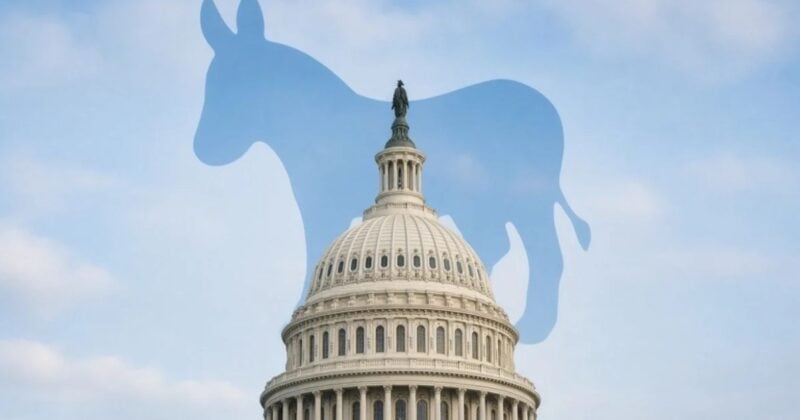
Results from the U.S. midterm elections are gradually being announced, with the Democratic Party making significant gains. Investors are concerned that a shift in congressional power dynamics could lead to increased regulation of the artificial intelligence (AI) industry, potentially impacting the construction of U.S. data centers and demand for chips.
South Korean chip stocks plunged sharply on Wednesday, with the Korea Composite Stock Price Index (Kospi) falling as much as 4% intraday; it has now nearly erased all of those losses, after previously rising as much as 3.2%, signaling a clear reversal in market sentiment.
Shares of Samsung Electronics and SK Hynix both fell at least 4.5% at one point, becoming the main drag on the Kospi. South Korea’s stock market, once regarded as a representative Asian AI trading hub, posted one of the largest declines among major Asian markets on Wednesday.
According to Bloomberg, the Democratic Party swiftly gained control of the House of Representatives and secured six key Senate seats in Tuesday’s midterm elections. Investors are concerned that the Democrats’ electoral gains may lead the U.S. to intensify scrutiny of the technology and AI sectors, particularly regulations on data center construction. This could create uncertainty for chip manufacturers in South Korea, Taiwan, and Japan, as well as other hardware suppliers, all of whom are key participants in the expansion of U.S. AI infrastructure.
AI regulatory expectations impact Asian tech stocks
After the election results were announced, Asian stock markets fell to their lowest level in over six months. The MSCI Asia Pacific Index dropped as much as 2.3% intraday, with the technology sector leading the decline. Japan's Nikkei 225 fell 4.5%, while Singapore's benchmark index faced pressure to enter a technical correction zone.
Huh Jae-Hwan, an analyst at Eugene Investment & Securities in South Korea, noted that the elections in Ohio and Texas are particularly noteworthy, as these states are increasingly becoming major hubs for AI data center investments.
He said that if Texas implements new regulatory rules, AI infrastructure will be the first to be affected, and this concern is already reflected in stock prices.
In the Senate elections, media outlets predict that Democratic candidate James Talarico will defeat Republican Ken Paxton in Texas; CNN predicts that former Ohio Senator Sherrod Brown will defeat Republican Senator Jon Husted.
Dilin Wu, strategist at Pepperstone Group, said that the stock markets of South Korea and Japan are closely linked to the global semiconductor industry and are therefore particularly sensitive to shifts in AI market sentiment. The Democratic Party’s increased influence in Congress could lead to adjustments in AI regulation, chip export restrictions, and data center energy policies.
However, she noted that Samsung Electronics and SK Hynix have already signed multi-year supply agreements, meaning that near-term demand remains relatively visible. More importantly, it remains to be seen whether future AI spending can sustain its current growth rate, as policy uncertainty, financing costs, and power supply constraints could all increase the difficulty of advancing new projects.
The market is shifting its focus to policy gridlock and energy policy.
After the Democratic Party made gains, investors began adjusting their positions in anticipation of potential political gridlock in Congress for the remainder of Trump's term. U.S. stock index futures briefly declined, reflecting market caution regarding the policy outlook.
Homin Lee, Senior Macro Strategist at Lombard Odier, believes that the Democratic Party's electoral advantage will prompt markets to adjust positions more quickly in anticipation of future political gridlock. However, these short-term fluctuations may have limited impact on the medium-term trajectory of the stock market.
The election results also created market opportunities beyond the AI industry. Shares of South Korean solar companies rose, as investors believed the Democratic Party's strong performance could benefit renewable energy policies, providing support to related stocks.