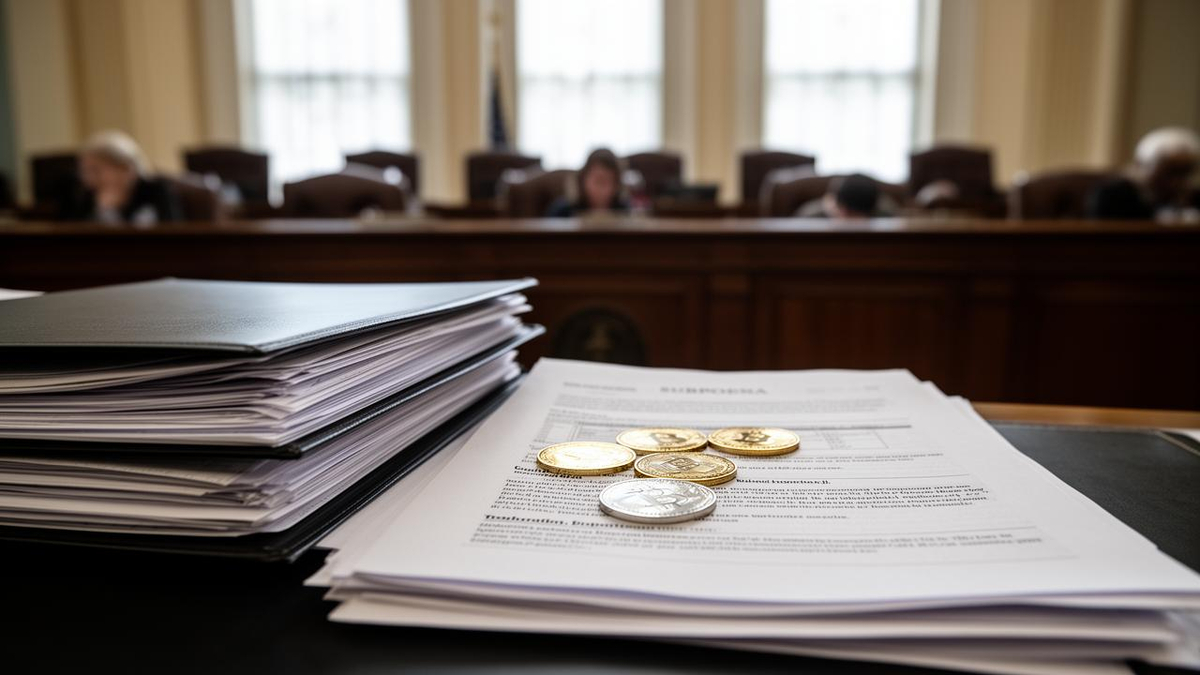
House and Senate Democrats, newly empowered by midterm election victories, are preparing formal investigations into the Trump family's cryptocurrency business empire, with World Liberty Financial and its USD1 stablecoin emerging as the first target of subpoena-backed scrutiny.
Representative Robert Garcia of California, who is set to chair the House Oversight Committee, summed up his message to the incoming targets in a single phrase after the results came in: "Lawyer up." His office said the panel will examine the family's digital asset dealings alongside corporate corruption and immigration enforcement. Garcia told Punchbowl News the inquiries will reach into World Liberty, the ventures of Donald Trump Jr., and contracts and board positions tied to Jared Kushner.
For the first time in two years, House Democrats will hold subpoena authority, letting them compel testimony and documents from administration-linked individuals and private firms without presidential sign-off. Their earlier efforts were confined to voluntary requests and letters that carried no enforcement mechanism.
On the Senate side, Elizabeth Warren is expected to take the helm of the Banking Committee and has already pressed federal agencies on World Liberty's token sales, foreign relationships and exposure to illicit finance. Her Sept. 15 letter to Treasury Secretary Scott Bessent and Attorney General Todd Blanche renewed requests first made in November 2025 and May 2026, asking whether gaps in anti-money laundering enforcement allowed Trump-linked ventures to profit from tainted token purchases. The letter cited reporting that Aqua 1 spent $100 million on World Liberty tokens and pointed to the firm's reported links to Guren "Bobby" Zhou, a businessman under investigation for money laundering in Britain. It did not assert that the purchases themselves constituted laundering. Warren's office also asked how regulators intend to supervise the business given its preliminary national trust bank approval.
Separately, Senators Adam Schiff, Warren, Richard Blumenthal and Chris Van Hollen wrote to administration officials questioning Binance's sanctions compliance and its ties to the Trump and Witkoff families. They cited USD1's role in a $2 billion investment in Binance by an Abu Dhabi state-backed fund and sought records on compliance monitors, communications with officials and federal oversight of reported Iran-linked transactions. The letter noted Binance has disputed the accuracy of media reporting on its conduct.
World Liberty, launched by the family in September 2024, sits at the center of the storm. A $500 million investment by a group led by Sheikh Tahnoon bin Zayed Al Nahyan, the UAE's national security adviser, closed shortly before the January 2025 inauguration and carries a 49% stake. According to The Wall Street Journal, Tahnoon's and Trump-affiliated entities together control roughly 87% of the bank holding company behind USD1. The venture is seeking a federal trust bank charter for the stablecoin, with conditional approval already granted by the Office of the Comptroller of the Currency and final approval still pending.
A second strand concerns the October 2025 pardon of Binance founder Changpeng Zhao, whose exchange helped launch USD1. Zhao has said he has no business relationship with the Trump family and never discussed clemency with them. Trump's 2025 financial disclosure listed more than $1 billion in crypto-related income, including $635 million in TRUMP memecoin royalties, while Reuters has estimated the family's total crypto earnings at $2.3 billion or more. House Financial Services Democrats under Maxine Waters have run a parallel oversight campaign covering the memecoin, World Liberty and USD1, and the Oversight panel published a January 2026 report examining trading fees, token purchases and interest earned on stablecoin reserves.
Note: Committee leadership takes effect when the new Congress convenes in January.
The political math limits what the probes can achieve. Trump retains veto power and Democrats lack two-thirds majorities in either chamber, so new legislation is unlikely. White House press secretary Lauren Bis dismissed the plans as "a decade long witch hunt." Analysts expect the administration to invoke executive privilege and slow-walk document production, a tactic used in Trump's first term, with Democrats likely to counter by aiming subpoenas at private entities rather than agencies.
The legislative cost may prove the most concrete. In September, the Senate blocked the CLARITY Act on a 49-50 procedural vote after Democrats demanded stricter limits on presidential crypto holdings, including divestment requirements above a set threshold. Senator Mark Warner said he still wants industry rules but objected to passing them while the president can profit personally from the sector. TD Cowen's Jaret Seiberg said the mounting scrutiny may stall market structure legislation the industry has sought, and Bloomberg Intelligence flagged crypto, defense and technology as the sectors most exposed to the investigations.
For crypto companies, the practical effect is a lobbying calendar dominated by defense rather than offense. Firms that bought tokens, signed partnerships or accepted USD1 payments now face document requests, and the industry's push for regulatory clarity competes with an oversight agenda that treats its ties to the White House as the story.