Interview with Ambre Soubiran, CEO of digital asset analytics firm Kaiko
Highlights potential of Korea's financial and tech firms, but says institutional market remains underdeveloped
"Stablecoins will drive trading activity, while RWA has the greatest growth potential"
"Korea is one of the world's largest cryptocurrency markets by trading activity, but its institutional investor market is one of the least developed. This gap is both a major limitation and an opportunity for Korea."
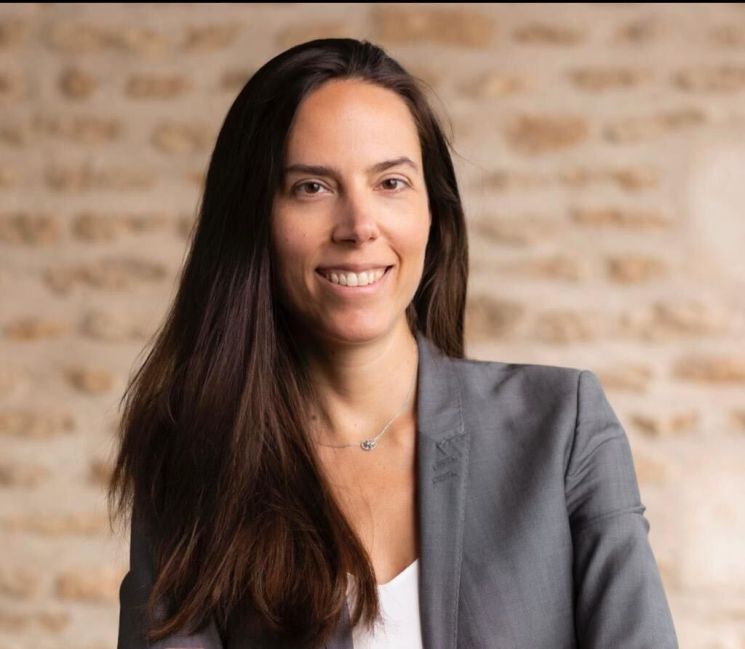
Ambre Soubiran, CEO of global digital asset data company Kaiko, made the remarks in a recent interview with The Asia Business Daily. She cited strong investor demand and the business foundations of financial and technology companies as sources of Korea's competitiveness in the global digital asset market.
Ambre Soubiran, CEO of Kaiko
"Large financial groups and technology companies in Korea have the capital and customer bases to expand their businesses quickly once relevant regulations allow them to," Soubiran said. "The limitations stem from the structure of the market." At present, she said, the markets and infrastructure needed for institutional investors to participate are not yet sufficiently developed.
Soubiran highlighted regulatory clarity as the first priority for strengthening Korea's competitiveness. "Everything else depends on regulation," she said. "Institutional investors can participate in the market only once rules are in place specifying which assets they can hold and how. Custody and trading infrastructure must also be built in line with those rules." She noted that, after the Digital Asset Basic Act is passed, regulations and rules for won-denominated stablecoins and digital asset businesses could be established.
As a second priority, she emphasized the importance of expanding institutional investor participation. "Infrastructure should be designed from the outset to connect with global markets. The institutionalization of tokenized securities would be a good opportunity," she said. She also stressed the need to establish a reliable pricing benchmark denominated in won, saying, "If won-denominated exchange-traded funds (ETFs), structured products and tokenized funds emerge, an independent pricing benchmark will be needed to value them."
Among the trends to watch in the global digital asset market in 2026, she cited traditional financial institutions' efforts to tokenize existing financial assets such as stocks and bonds, and to shift financial infrastructure as a whole, including trading and settlement, to on-chain systems. "Over the next three years, stablecoins will drive the most trading activity, while real-world asset (RWA) tokenization has the greatest growth potential," Soubiran predicted. She added that legal certainty, interoperability and reliable data are essential for tokenized assets and blockchain-based finance to be widely used around the world.
Below is an edited Q&A.
-What is the trend to watch most closely in the global digital asset market in 2026?
▲The integration of digital assets and traditional finance has made significant progress in terms of market access, but there is still a long way to go on the infrastructure front. The trend to watch in 2026 is the rebuilding of this infrastructure on-chain by institutions that operate traditional markets. The U.S. Depository Trust & Clearing Corporation (DTCC), for example, is preparing a tokenization service for Russell 1000 constituents, major exchange-traded funds (ETFs) and U.S. Treasuries. The fact that companies responsible for settlement in traditional financial markets are beginning to build systems for actual on-chain transactions means that the integration of digital assets and traditional finance is moving beyond the pilot stage and into live operation.
-What are the key challenges that need to be addressed now?
▲Connecting markets across borders. Regulations on tokenized assets vary among the United States, Europe and Asia. As a result, an asset tokenized in one market may not be held, traded or used as collateral in another. Tokenized assets also need a regulated form of money that can be used on-chain for settlement. Stablecoins and tokenized bank deposits are examples, but these are still under development in most markets.
-What is the most significant change tokenization will bring to financial markets?
▲Today, transferring bonds or fund shares between counterparties requires going through multiple intermediaries and reconciling each institution's records, while settlement is also limited on weekends. Tokenization, however, can make it possible to transfer and settle assets around the clock, 24/7, in just a few minutes.
The practical benefits will emerge first in the area of collateral. Tokenized money market funds (MMFs) can generate returns while also being used as margin, and can be transferred between counterparties outside banking hours, enabling more efficient capital management. Costs will fall as post-trade reconciliation and the number of intermediaries are reduced. Investor access will also improve because tokenized funds can be distributed in small units across multiple platforms. However, this may vary depending on investor protection rules in each country.
-Which areas will drive the digital asset market over the next three years?
▲Stablecoins will drive the most trading activity, while real-world asset (RWA) tokenization has the greatest growth potential. Stablecoins already function as cash in on-chain markets, with their circulation exceeding $300 billion. With regulatory frameworks in place in the United States and Europe, their use is expected to expand further in payments, treasury management and cross-border payments. Bank-issued stablecoins and tokenized deposits will also compete with existing issuers. For RWAs, once the relevant infrastructure is operational, the market will expand beyond U.S. Treasuries and money market funds to credit assets, equities and private assets. In addition, cryptocurrencies such as Bitcoin will continue to grow as an asset class, as investment allocations through ETFs increase.
-What is needed for tokenized assets to take hold in mainstream financial markets?
▲Legal certainty and interoperability are needed. The same assets are currently being issued on different blockchains that are difficult to connect. The final requirement is reliable data. For each asset, prices must be calculated on the same basis across all blockchains, and their sources must be traceable. This would allow tokenized assets to be used for valuation, margin calculations and regulatory reporting, just like other financial assets.
-How would you assess Korea's competitiveness and limitations in the global digital asset market?
▲Korea is one of the world's largest cryptocurrency markets by trading activity, but its institutional investor market is one of the least developed. This gap is both a limitation and an opportunity for Korea. Large financial groups and technology companies in Korea have the capital and customer bases to expand their businesses quickly once relevant regulations allow them to. However, the limitations stem from the structure of the market: trading activity is concentrated on a small number of exchanges, and the market is driven by retail investors.
-What should Korea prioritize to strengthen its competitiveness in the global digital asset market?
▲Regulatory clarity must come first, because everything else depends on regulation. Institutional investors can participate in the market only once rules are in place specifying which assets they can hold and how. Custody and trading infrastructure must also be built in line with those rules. Passing the Digital Asset Basic Act and allowing corporations and institutional investors to participate in the market would set the rest of these changes in motion.
The next priority is expanding institutional investor participation. Korea should design its infrastructure from the outset so that it can connect with global markets. The new framework for tokenized securities is a good opportunity. The value of tokenized assets issued in Korea can be maximized only if global investors and infrastructure can use them.
At this stage, a reliable pricing benchmark denominated in won is essential. If won-denominated ETFs, structured products and tokenized funds emerge, an independent pricing benchmark will be needed to value them. These benchmarks should be calculated using data from multiple trading platforms, with a publicly disclosed methodology and independent oversight.
Hot Picks Today
- The Era of Getting 200 Million Won After 30 Years Is Over... A Japanese Bank's "Perpetual Department Head" Who Just Clocked In Cries Out
- Spain Hit by Its Worst Tragedy... Lee Kangin, Moreno and Real Madrid Join Soccer World in Mourning
- They Said, “Make It Your Home for Life” - Then Suddenly Kicked 200 Passengers Off... What Happened to the Around-the-World Cruise?
- "130 Rice Bowls Sold Out in a Day"... 'Unfiltered Face' Adds 8 Million Won to Night Market Sales: China's Bungeunwoo
◆About Kaiko = Founded in 2014, Kaiko is a global digital asset data and analytics company that provides cryptocurrency market data and analytics services, indexes and valuation solutions. It serves around 250 institutions worldwide, including banks, asset managers and exchanges, and has built a data infrastructure covering more than 150 exchanges and protocols. Recently, it has expanded its business into data and infrastructure services for tokenized assets and on-chain financial markets. In September, it secured a strategic investment from S&P Global and integrated its digital asset index business with S&P Dow Jones Indices, among other initiatives, while also pursuing the development of infrastructure that connects traditional finance with digital asset markets.
© The Asia Business Daily. All rights reserved. Unauthorized AI training and use prohibited.