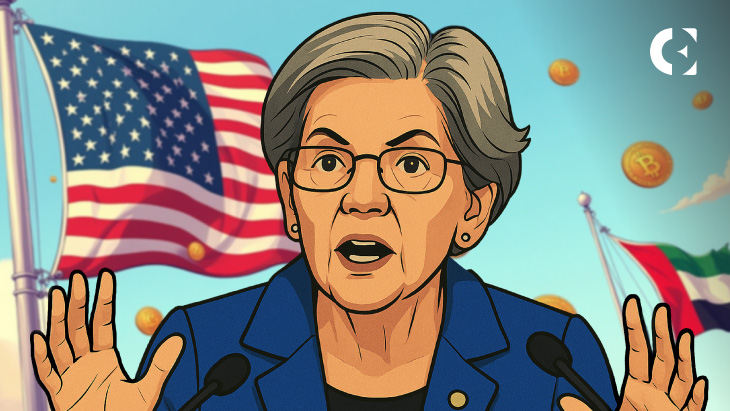
- Elizabeth Warren’s expected Senate Banking role signals tougher AI and crypto regulations.
- Democrats plan more investigations into crypto and AI companies.
- Not all Democrats oppose AI and crypto, but stronger oversight remains a priority.
The crypto and artificial intelligence (AI) industries face stricter regulations in the United States as Democrats prepare to take control of Congress in January 2027.
Sen. Elizabeth Warren is set to lead the Senate Banking Committee. Her leadership signals more investigations and tougher rules for both industries. But does this mean Democrats hate AI and crypto? Not necessarily.
Democratic lawmakers hold different positions on AI and crypto, but several prominent members are calling for stronger oversight, safety rules and ethics protections.
Elizabeth Warren’s Stance on AI and Crypto
Elizabeth Warren is one of Washington’s strongest critics of crypto and technology companies. As the expected chair of the Senate Banking Committee, she will have great authority to investigate companies, question executives, and demand important documents.
According to a November 6 report by The Washington Sun, Democrats are preparing to investigate the AI and crypto industries after taking control of Congress.
Politics is also part of the issue. Crypto-related groups spent about $180 million during the 2026 election cycle, while AI-related groups spent more than $72 million. Much of this money went toward supporting Republican candidates.
Warren has also raised concerns about the relationship between top technology companies and the Trump administration.
In September 2026, she called for a temporary pause in advanced AI development until lawmakers introduce proper safety rules. She argued that advanced AI poses serious economic, cybersecurity, and national security risks without sufficient safeguards.
While her position puts pressure on AI companies, Warren, however, does not speak for every Democrat.
Why Democrats Are Clashing With the Crypto Industry
The relationship between Democrats and the crypto industry has become complicated because of President Donald Trump’s financial connections to crypto.
Warren and other Democratic lawmakers opposed the CLARITY Act, arguing that the bill failed to adequately prevent Trump and his family from profiting from crypto businesses while he remained president.
As a result, the legislation stalled in the Senate.
So, the expected change in Senate leadership presents a challenge for crypto companies seeking favorable laws. Kristin Smith, president of the Solana Policy Institute, has expressed doubts about the industry’s chances of passing favorable legislation under Warren’s leadership.
Not All Democrats Oppose AI and Crypto
Meanwhile, several Democratic lawmakers support crypto and AI industries. For example, Sen. Mark Warner supports creating regulations for digital assets, but wants lawmakers to address Trump’s financial interests.
Sen. Angela Alsobrooks has also participated in discussions about the CLARITY Act.
Likewise, Warren has worked with Republican Sen. Jim Banks on legislation to restrict exports of advanced American AI chips to countries considered national security threats. Sen. Maria Cantwell has also supported introducing AI safety standards instead of banning the technology.
These efforts demonstrate that Democrats support AI development while also backing restrictions that protect American interests.
In other words, the disagreement centers on how AI should develop, who should control it and what safety rules companies must follow.
What Will Happen to AI and Crypto Under Democratic Control?
Democrats’ expected congressional majority will bring more investigations, public hearings, and demands for technology and crypto executives to answer questions.
Democratic lawmakers are also preparing investigations into Trump’s business interests, including crypto ventures connected to World Liberty Financial.
However, most Senate legislation requires 60 votes to advance, meaning Democrats still need Republican support. President Trump also retains the power to veto legislation.
This means Warren will have greater influence over crypto regulation and make it harder for companies to secure favorable rules, but she lacks the votes and authority to stop the industry entirely.
Related: Trump’s ‘VETO’ Post Sparks Fears: What Could It Mean for Bitcoin and US Markets?
Final Thoughts
Democrats do not all hate AI or cryptocurrency. They simply take a different approach to regulating these industries, one many companies disagree with.
With Elizabeth Warren set to lead the Senate Banking Committee, both industries face more government investigations and tougher demands. For AI and crypto companies, greater oversight could mean more hearings, compliance requirements and regulatory uncertainty. For the Democrats pushing these measures, the stated priorities include consumer protection, national security, AI safety and conflicts of interest.
Disclaimer: The information presented in this article is for informational and educational purposes only. The article does not constitute financial advice or advice of any kind. Coin Edition is not responsible for any losses incurred as a result of the utilization of content, products, or services mentioned. Readers are advised to exercise caution before taking any action related to the company.