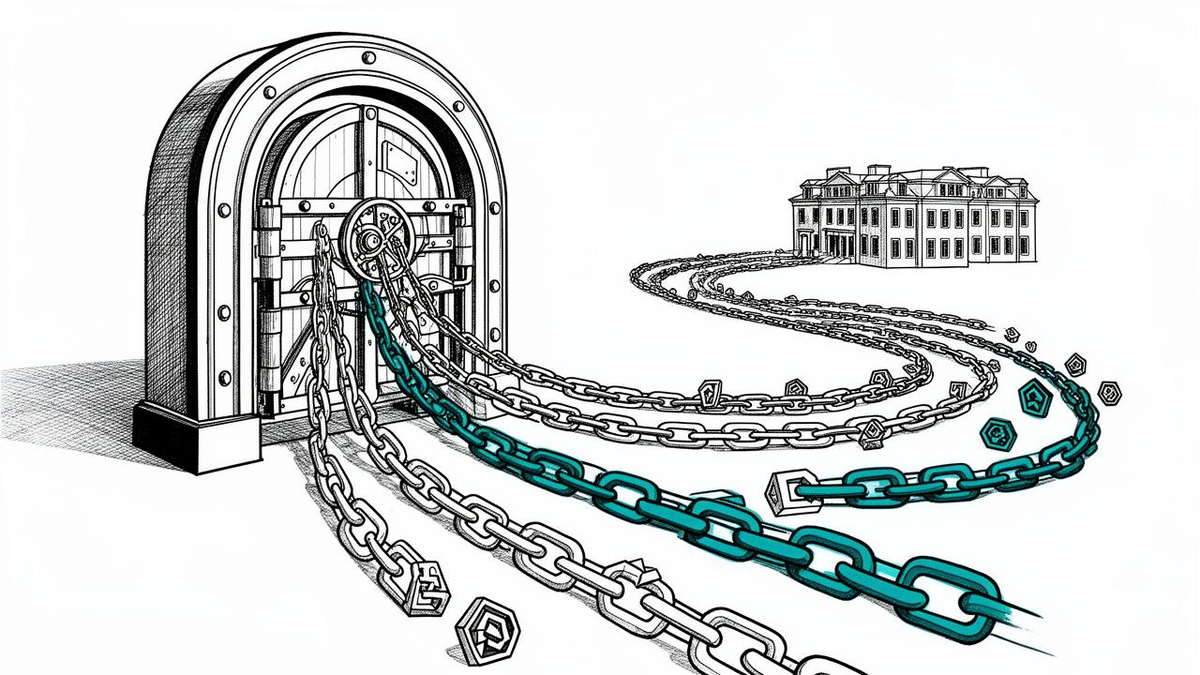
Wall Street's push into blockchain settlement is splitting into two distinct tracks, with Solana winning a place inside the industry's core clearing utility and Ripple building a parallel network anchored in regulated banking relationships.
The Depository Trust & Clearing Corporation (DTCC) said it plans to add Solana to its tokenization service in the second half of 2027, a move that would let eligible securities already held in its depository be issued in tokenized form on the network. The announcement was made on Nov. 12.
The scale of the infrastructure involved is difficult to overstate. DTCC subsidiaries cleared $4.7 quadrillion in securities transactions in 2025, and its depository business provides custody and asset servicing for more than $114 trillion in securities annually. That custody figure covers everything the depository holds, not the value that would migrate to Solana.
Solana's appeal to institutional asset managers rests on its ability to run tokenized securities alongside decentralized trading venues, on-chain lending markets, stablecoin liquidity and programmable portfolio tools. Franklin Templeton and WisdomTree already offer products on the network.
Ripple has taken a different route with the XRP Ledger, concentrating on regulated asset issuance, custody arrangements and liquidity services for banks. British asset manager Aviva Investors recently added a tokenized share class to its £22 billion (approximately $28.9 billion) liquidity fund, and Ripple said investments across Aviva's two tokenized share classes have topped £86 million (approximately $112.9 million).
The company has also widened its work with BNY, putting institutional custody in place for XRP and its RLUSD stablecoin while examining tokenized trade finance. In Brazil, the country's central securities depository, CSD BR, is working with Ripple to mirror investment fund records on the XRP Ledger.
Those efforts mark a shift for a network long associated mainly with cross-border payments toward broader asset management and back-office functions.
Note: DTCC's planned integration covers eligible securities already held in its depository; the $114 trillion custody figure is not specific to Solana.
A key question for investors is whether institutional adoption will translate into demand for the native tokens. Both networks use SOL and XRP to pay transaction fees, but securities can be held and moved using stablecoins and other digital assets, meaning asset flows may not accumulate in either token.
The DTCC's decision to connect both Solana and Stellar also points to a multi-chain future rather than a winner-take-all contest, with traditional market infrastructure being prepared for an interconnected set of networks rather than a single ledger.
Once added, BigGo Finance appears first in Google Search Top Stories, so you get the broadest, most up-to-the-minute, and most comprehensive global financial news first.