Episode 41: Weather Markets With Interactive Brokers’ Head of Climate Analytics Patrick Brown
Editor’s note: I did return from a golf trip.
Are prediction markets going to give us better weather forecasts as time goes on? Or are we going to curse out prediction markets like we do meteorologists? Patrick Brown — a meteorologist and climate scientist and Head of Climate Analytics at Interactive Brokers — joins the show to talk about the weather and exchanges.
And Daniel O’Boyle of InGame and I break down the week’s news.
If you trade on sports and event exchanges, you need EDGE Boost — the financial platform built specifically for players. Sign up and you get an EDGE Boost Visa® debit card, physical and digital with no monthly or yearly usage fees. Access your funds outside banking hours with Instant Deposits 24/7/365. Daily Deposit Limits Up To $5M per transaction, and up to $50M per day, giving you easier/faster access to YOUR capital, subject to eligibility and account review. Plus earn up to 0.5% cashback on eligible deposits.
Head to edgeboost.io and use promo code HORIZON to get a $100 deposit match on your first $100.
Show notes:
Congressional hearing on prediction markets
Kalshi in talks at $65B valuation
Louisiana vs. prediction markets
Guest: Weather prediction market accuracy
The Event Horizon briefing
A quick look at what matters most in prediction markets.
📍 The Big Story
Louisiana Judge Issues Industry-Wide TRO Banning Sports, Election Contracts (InGame): “Virtually all prediction market operators have been ordered to cease offering sports, election, and award contracts in Louisiana effective immediately, after the state won an emergency temporary restraining order Thursday.”
“The order was requested by state Attorney General Liz Murrill and issued by the 21st Judicial Court for the Parish of Tangipahoa. It applies to Kalshi, Polymarket US, Robinhood, Crypto.com, Coinbase, Underdog, Novig, ProphetX, ForecastEx, and Gemini.”
CFTC Sues Louisiana After State Court Blocks CFTC-Regulated Exchanges (press release): The Commodity Futures Trading Commission today announced it filed a lawsuit against Louisiana to block the state from prohibiting the offering of event contracts by CFTC-regulated designated contract markets, futures commission merchants, and derivatives clearing organizations.
Louisiana obtained a state court order Thursday shutting down the operation of more than 30 companies in the state connected to the trading of CFTC-regulated derivatives products without giving the defendants notice or an opportunity to be heard.
“Event contracts have traded openly in Louisiana for years, in compliance with the Commodity Exchange Act and CFTC regulations,” said Chairman Michael S. Selig. “The state’s eleventh-hour ‘emergency’ lawsuit seeking to shut down the entire prediction market industry is naked lawfare and a cynical political stunt. The Commission’s lawsuit seeks to maintain the status quo while the federal courts decide this issue in an orderly manner.”
Louisiana is the 12th state the CFTC has sued to defend its exclusive jurisdiction over derivatives markets as granted by Congress under the Commodity Exchange Act. The CFTC has also submitted amicus briefs in four federal Courts of Appeal and one state Supreme Court.
🔍 States have seen the playbook that has been run in other states by the prediction market industry (mostly Kalshi), which is:
1. States issuing a cease and desist.
2. No one complies with said cease and desist.
3. Kalshi et al. sue the states as a result.
Some states have started adjusting their strategy to avoid the same outcome; here, it was to great effect. The prediction markets appear to be upset by this turn of events, but the states are just trying to get the result they want, which is to stop sports event contracts in their states. The Supreme Court case can’t come soon enough.
The AG (who is a Republican) is not having social media sniping from the CFTC:
Other developments in Louisiana, courtesy of attorney Daniel Wallach:
🔭 What To Watch For
CFTC nomination hearings
We are already getting a congressional hearing for the nominees to join the CFTC as commissioners. It takes place on Tuesday at 3 pm Eastern. More here.
More background here from InGame.
🔥 Hot Market
Jensen Huang is the third favorite!
Related:
Traders Turn to Kalshi Stock ‘Perps’ on Nvidia and SpaceX as Leverage Fears Grow (Bloomberg): A new way for traders to place leveraged bets on stock prices is growing in popularity as questions around the outlook for AI following the US midterm elections spur demand for hedging. … Kalshi has begun by offering perps, as they are known, on 50 large stocks, after previously rolling out similar contracts tied to the prices of commodities and crypto tokens. The trading volume on Kalshi’s Nvidia Corp. perps jumped to over $100 million in the past 24 hours on Thursday, boosted by volatility around the ouster of chief executive Jensen Huang.”
📝 New Markets
New certifications listed with the Commodity Futures Trading Commission:
Weather, pickleball, real estate at Kalshi:
Weather, pickleball, real estate at Kalshi:
Underdog sports markets:
Underdog sports markets:
💬 Quote Of The Day
“The future or success of Gemini predictions will not rise and fall on one category alone.”
“The future or success of Gemini predictions will not rise and fall on one category alone.”
“The future or success of Gemini predictions will not rise and fall on one category alone.”
—CEO Tyler Winklevoss, NEXTPredict
📊 Volume Tracking For Saturday, Nov. 14
Kalshi volume: $5.32 billion
Parlays: 73% of volume
Sports: 16.4% of volume
Crypto: 10.1% of volume
Kalshi volume: $5.32 billion
Parlays: 73% of volume
Sports: 16.4% of volume
Crypto: 10.1% of volume
Parlays: 73% of volume
Sports: 16.4% of volume
Crypto: 10.1% of volume
Trend line:
Seven-day (ending Nov. 14) trailing volume on exchanges (designated contract markets only):
Kalshi: $27.7 billion
Polymarket US: $3.73 billion
DraftKings’ DKeX: $1.46 billion
Underdog: $902.1 million
Crypto.com/NADEX: $857.8 million
Novig: $851.9 million
Rothera: $423.1 million
ProphetX: $51 million
Kalshi: $27.7 billion
Polymarket US: $3.73 billion
DraftKings’ DKeX: $1.46 billion
Underdog: $902.1 million
Crypto.com/NADEX: $857.8 million
Novig: $851.9 million
Rothera: $423.1 million
ProphetX: $51 million
Underdog has a data site that includes both its own exchange and volume that flows through it via other exchanges. You can see it here.
Data is provided by TickerTracker.
News roundup
Everything else important that happened in or was written about prediction markets:
🚨 Important stuff
Meta Testing New Prediction-Market App With Employees (WSJ): “Meta Platforms employees have begun testing a prediction-market app under development, according to people familiar with the matter, a step the company often takes ahead of a public release.”
“On the app, which is currently called Takes, employees can wager on the outcome of questions or events using ‘cred',’ short for credibility, the people said. Unlike other prediction markets operated by Kalshi and Polymarket, Meta’s app doesn’t allow users to wager real money.”
House Oversight Committee Releases Memorandum on Insider Trading Risks in Prediction Markets (press release): The House Committee on Oversight and Government Reform released a staff memorandum on its investigation into insider trading activity among government officials, military personnel, and individuals with security clearances who have been making trades on prediction market platforms using non-public information for personal profit. As part of the Committee’s investigation, it obtained nearly 1,700 pages of documents and communications and received five bipartisan staff briefings from prediction market platforms on their efforts to detect and report suspicious activity linked to insider trading.
“Americans are rightly concerned about public corruption. Congress has a duty to ensure our laws adequately prevent insider trading, hold bad actors accountable, and prohibit government officials and employees from profiting from nonpublic information. We launched an investigation into insider trading on prediction market platforms and are encouraged by their efforts to prevent, detect, and report illegal activity. Congress must consider additional reforms to prevent public corruption and restore the American people’s trust in government,” said Chairman James Comer (R-Ky.).
Below are key findings and recommendations from the memorandum:
It is paramount that individuals with security clearances or access to non-public government information are prohibited from exploiting prediction markets for personal gain: Prediction markets have discovered suspicious trading activity on their platforms indicative of insider trading. Political candidates and those close to major policy decisions have also engaged in potential insider trading on prediction market platforms.
Insider trading laws apply to contracts on prediction markets: Current federal insider trading laws and regulations apply to prediction markets just as they would securities and derivatives. In 2010, Congress amended the Commodity Exchange Act (CEA) to prohibit fraud and manipulation in derivatives markets. Section 4c(a)(3) of the CEA, as amended by the Stop Trading on Congressional Knowledge (STOCK) Act, prohibits federal agency employees, Members of Congress, congressional employees, and judicial officers and employees from using nonpublic information derived from their positions to trade commodity futures, options, or swaps. Section 4c(a)(4) of the statute also prohibits a covered individual from providing insider information to non-covered third parties who assist or enter into such trades.
Prediction markets play a key role in detecting and preventing suspicious trades and ensuring market integrity: Four of the five platforms provided substantial documentation and/or briefed the Committee on internal control structures and sophisticated proprietary technologies designed to detect and prevent insider trading through suspicious trade patterns. Most of the reported incidents of insider trading within prediction markets were initially detected and reported to regulators and law enforcement by the markets themselves.
Prediction market platforms Polymarket and Kalshi have continually made robust improvements to their insider trading surveillance detection protocols: Polymarket recently hired a former law enforcement expert to oversee a team of employees to manage insider trading prevention detection efforts and implemented a sophisticated surveillance software protocol known as “PolyGraph,” in partnership with the analytics company Chainalysis.
Further statutory restrictions on federal government personnel are necessary: Whether it is an outright prohibition on trading on prediction markets or restrictions on some subset of contracts like government-related contracts, applying these restrictions to officials in all branches of government would strengthen ethical expectations that government personnel should not personally and financially benefit from access to non-public information associated with their work as government servants, and would eliminate even the appearance that government personnel are exploiting non-public information received in an official capacity for financial gain.
Congress should consider further reforms to prevent public corruption and restore public trust: Congress should consider legislation that further restricts the types of event contract markets that federal government personnel, Members of Congress, and congressional staff can participate in, regardless of whether they are trading on insider information. The Committee also recommends that Congress encourage prediction market platforms and regulatory agencies to share information necessary to enforce restrictions on insider trading, enabling the markets to continue to detect and prevent it.
Read the staff memorandum here.
Congressional interest in prediction markets is not going away: From a Democrat in the Senate…
 Richard Blumenthal@SenBlumenthalMore strong signs that the CFTC is in prediction market pockets—as it approves sweeping new gambling on stock prices, cryptocurrencies, & more. It puts the public in deep peril, setting consumer protection way below industry profits in priority. Time for Congress to act.…3:34 PM · Nov 14, 2026 · 9.38K Views
37 Replies · 43 Reposts · 124 LikesLawmakers, lawyers, lobbyists hone in on prediction markets as wager mania expands into ‘everything’ (Washington Times): “Sen. Ted Cruz of Texas, a potential 2028 Republican presidential contender, is preparing legislation that would prevent federally regulated prediction markets from offering gambling-related contracts, including sports betting, unless they receive approval from state or tribal authorities.”
“I think prediction markets, for sports betting, are a thinly veiled way to get around state laws regulating gambling,” Mr. Cruz told The Washington Times. “I think it ought to be up to the states to decide whether and how to regulate sports gambling, rather than a federal back door that circumvents state regulation.”
Meta Testing New Prediction-Market App With Employees (WSJ): “Meta Platforms employees have begun testing a prediction-market app under development, according to people familiar with the matter, a step the company often takes ahead of a public release.”
“On the app, which is currently called Takes, employees can wager on the outcome of questions or events using ‘cred',’ short for credibility, the people said. Unlike other prediction markets operated by Kalshi and Polymarket, Meta’s app doesn’t allow users to wager real money.”
“On the app, which is currently called Takes, employees can wager on the outcome of questions or events using ‘cred',’ short for credibility, the people said. Unlike other prediction markets operated by Kalshi and Polymarket, Meta’s app doesn’t allow users to wager real money.”
House Oversight Committee Releases Memorandum on Insider Trading Risks in Prediction Markets (press release): The House Committee on Oversight and Government Reform released a staff memorandum on its investigation into insider trading activity among government officials, military personnel, and individuals with security clearances who have been making trades on prediction market platforms using non-public information for personal profit. As part of the Committee’s investigation, it obtained nearly 1,700 pages of documents and communications and received five bipartisan staff briefings from prediction market platforms on their efforts to detect and report suspicious activity linked to insider trading.
“Americans are rightly concerned about public corruption. Congress has a duty to ensure our laws adequately prevent insider trading, hold bad actors accountable, and prohibit government officials and employees from profiting from nonpublic information. We launched an investigation into insider trading on prediction market platforms and are encouraged by their efforts to prevent, detect, and report illegal activity. Congress must consider additional reforms to prevent public corruption and restore the American people’s trust in government,” said Chairman James Comer (R-Ky.).
Below are key findings and recommendations from the memorandum:
It is paramount that individuals with security clearances or access to non-public government information are prohibited from exploiting prediction markets for personal gain: Prediction markets have discovered suspicious trading activity on their platforms indicative of insider trading. Political candidates and those close to major policy decisions have also engaged in potential insider trading on prediction market platforms.
Insider trading laws apply to contracts on prediction markets: Current federal insider trading laws and regulations apply to prediction markets just as they would securities and derivatives. In 2010, Congress amended the Commodity Exchange Act (CEA) to prohibit fraud and manipulation in derivatives markets. Section 4c(a)(3) of the CEA, as amended by the Stop Trading on Congressional Knowledge (STOCK) Act, prohibits federal agency employees, Members of Congress, congressional employees, and judicial officers and employees from using nonpublic information derived from their positions to trade commodity futures, options, or swaps. Section 4c(a)(4) of the statute also prohibits a covered individual from providing insider information to non-covered third parties who assist or enter into such trades.
Prediction markets play a key role in detecting and preventing suspicious trades and ensuring market integrity: Four of the five platforms provided substantial documentation and/or briefed the Committee on internal control structures and sophisticated proprietary technologies designed to detect and prevent insider trading through suspicious trade patterns. Most of the reported incidents of insider trading within prediction markets were initially detected and reported to regulators and law enforcement by the markets themselves.
Prediction market platforms Polymarket and Kalshi have continually made robust improvements to their insider trading surveillance detection protocols: Polymarket recently hired a former law enforcement expert to oversee a team of employees to manage insider trading prevention detection efforts and implemented a sophisticated surveillance software protocol known as “PolyGraph,” in partnership with the analytics company Chainalysis.
Further statutory restrictions on federal government personnel are necessary: Whether it is an outright prohibition on trading on prediction markets or restrictions on some subset of contracts like government-related contracts, applying these restrictions to officials in all branches of government would strengthen ethical expectations that government personnel should not personally and financially benefit from access to non-public information associated with their work as government servants, and would eliminate even the appearance that government personnel are exploiting non-public information received in an official capacity for financial gain.
Congress should consider further reforms to prevent public corruption and restore public trust: Congress should consider legislation that further restricts the types of event contract markets that federal government personnel, Members of Congress, and congressional staff can participate in, regardless of whether they are trading on insider information. The Committee also recommends that Congress encourage prediction market platforms and regulatory agencies to share information necessary to enforce restrictions on insider trading, enabling the markets to continue to detect and prevent it.
Read the staff memorandum here.
Congressional interest in prediction markets is not going away: From a Democrat in the Senate…
Richard Blumenthal@SenBlumenthalMore strong signs that the CFTC is in prediction market pockets—as it approves sweeping new gambling on stock prices, cryptocurrencies, & more. It puts the public in deep peril, setting consumer protection way below industry profits in priority. Time for Congress to act.…3:34 PM · Nov 14, 2026 · 9.38K Views
37 Replies · 43 Reposts · 124 LikesLawmakers, lawyers, lobbyists hone in on prediction markets as wager mania expands into ‘everything’ (Washington Times): “Sen. Ted Cruz of Texas, a potential 2028 Republican presidential contender, is preparing legislation that would prevent federally regulated prediction markets from offering gambling-related contracts, including sports betting, unless they receive approval from state or tribal authorities.”
“I think prediction markets, for sports betting, are a thinly veiled way to get around state laws regulating gambling,” Mr. Cruz told The Washington Times. “I think it ought to be up to the states to decide whether and how to regulate sports gambling, rather than a federal back door that circumvents state regulation.”
“Americans are rightly concerned about public corruption. Congress has a duty to ensure our laws adequately prevent insider trading, hold bad actors accountable, and prohibit government officials and employees from profiting from nonpublic information. We launched an investigation into insider trading on prediction market platforms and are encouraged by their efforts to prevent, detect, and report illegal activity. Congress must consider additional reforms to prevent public corruption and restore the American people’s trust in government,” said Chairman James Comer (R-Ky.).
Below are key findings and recommendations from the memorandum:
It is paramount that individuals with security clearances or access to non-public government information are prohibited from exploiting prediction markets for personal gain: Prediction markets have discovered suspicious trading activity on their platforms indicative of insider trading. Political candidates and those close to major policy decisions have also engaged in potential insider trading on prediction market platforms.
Insider trading laws apply to contracts on prediction markets: Current federal insider trading laws and regulations apply to prediction markets just as they would securities and derivatives. In 2010, Congress amended the Commodity Exchange Act (CEA) to prohibit fraud and manipulation in derivatives markets. Section 4c(a)(3) of the CEA, as amended by the Stop Trading on Congressional Knowledge (STOCK) Act, prohibits federal agency employees, Members of Congress, congressional employees, and judicial officers and employees from using nonpublic information derived from their positions to trade commodity futures, options, or swaps. Section 4c(a)(4) of the statute also prohibits a covered individual from providing insider information to non-covered third parties who assist or enter into such trades.
Prediction markets play a key role in detecting and preventing suspicious trades and ensuring market integrity: Four of the five platforms provided substantial documentation and/or briefed the Committee on internal control structures and sophisticated proprietary technologies designed to detect and prevent insider trading through suspicious trade patterns. Most of the reported incidents of insider trading within prediction markets were initially detected and reported to regulators and law enforcement by the markets themselves.
Prediction market platforms Polymarket and Kalshi have continually made robust improvements to their insider trading surveillance detection protocols: Polymarket recently hired a former law enforcement expert to oversee a team of employees to manage insider trading prevention detection efforts and implemented a sophisticated surveillance software protocol known as “PolyGraph,” in partnership with the analytics company Chainalysis.
Further statutory restrictions on federal government personnel are necessary: Whether it is an outright prohibition on trading on prediction markets or restrictions on some subset of contracts like government-related contracts, applying these restrictions to officials in all branches of government would strengthen ethical expectations that government personnel should not personally and financially benefit from access to non-public information associated with their work as government servants, and would eliminate even the appearance that government personnel are exploiting non-public information received in an official capacity for financial gain.
Further statutory restrictions on federal government personnel are necessary: Whether it is an outright prohibition on trading on prediction markets or restrictions on some subset of contracts like government-related contracts, applying these restrictions to officials in all branches of government would strengthen ethical expectations that government personnel should not personally and financially benefit from access to non-public information associated with their work as government servants, and would eliminate even the appearance that government personnel are exploiting non-public information received in an official capacity for financial gain.
Congress should consider further reforms to prevent public corruption and restore public trust: Congress should consider legislation that further restricts the types of event contract markets that federal government personnel, Members of Congress, and congressional staff can participate in, regardless of whether they are trading on insider information. The Committee also recommends that Congress encourage prediction market platforms and regulatory agencies to share information necessary to enforce restrictions on insider trading, enabling the markets to continue to detect and prevent it.
Congress should consider further reforms to prevent public corruption and restore public trust: Congress should consider legislation that further restricts the types of event contract markets that federal government personnel, Members of Congress, and congressional staff can participate in, regardless of whether they are trading on insider information. The Committee also recommends that Congress encourage prediction market platforms and regulatory agencies to share information necessary to enforce restrictions on insider trading, enabling the markets to continue to detect and prevent it.
Read the staff memorandum here.
Congressional interest in prediction markets is not going away: From a Democrat in the Senate…
Lawmakers, lawyers, lobbyists hone in on prediction markets as wager mania expands into ‘everything’ (Washington Times): “Sen. Ted Cruz of Texas, a potential 2028 Republican presidential contender, is preparing legislation that would prevent federally regulated prediction markets from offering gambling-related contracts, including sports betting, unless they receive approval from state or tribal authorities.”
“I think prediction markets, for sports betting, are a thinly veiled way to get around state laws regulating gambling,” Mr. Cruz told The Washington Times. “I think it ought to be up to the states to decide whether and how to regulate sports gambling, rather than a federal back door that circumvents state regulation.”
“I think prediction markets, for sports betting, are a thinly veiled way to get around state laws regulating gambling,” Mr. Cruz told The Washington Times. “I think it ought to be up to the states to decide whether and how to regulate sports gambling, rather than a federal back door that circumvents state regulation.”
⚖️ Legal and regulatory
CFTC Files Lawsuit Against Arkansas as the Agency Defends its Federal Jurisdiction Over Prediction Markets (press release): The Commodity Futures Trading Commission today announced that it has filed a lawsuit against Arkansas to block the state’s attempts to halt event-contract trading and impose up to hundreds of millions of dollars in civil penalties on CFTC-registered exchanges.
Arkansas is bringing a civil enforcement against Kalshi in state court, a CFTC-designated contract market. Arkansas’s efforts to obstruct the functions of CFTC-registered exchanges operating lawfully under the Commodity Exchange Act are preempted by federal law.
“As prediction markets continue to prove their value in being useful for risk management and providing the public with valuable information about the future, Arkansas seeks to shut down event contracts ranging from sports and politics to other important world events,” said Chairman Michael S. Selig. “The CFTC will continue to defend its sole jurisdiction over these federally regulated markets as granted by Congress under the Commodity Exchange Act, and the Commission will not let state interference thwart its regulatory efforts and destroy federally regulated markets.”
Arkansas is the 11th state the CFTC has sued to vindicate federal sovereign interests. The CFTC has also submitted amicus briefs in four federal Courts of Appeal and one state Supreme Court.
📣 Industry news
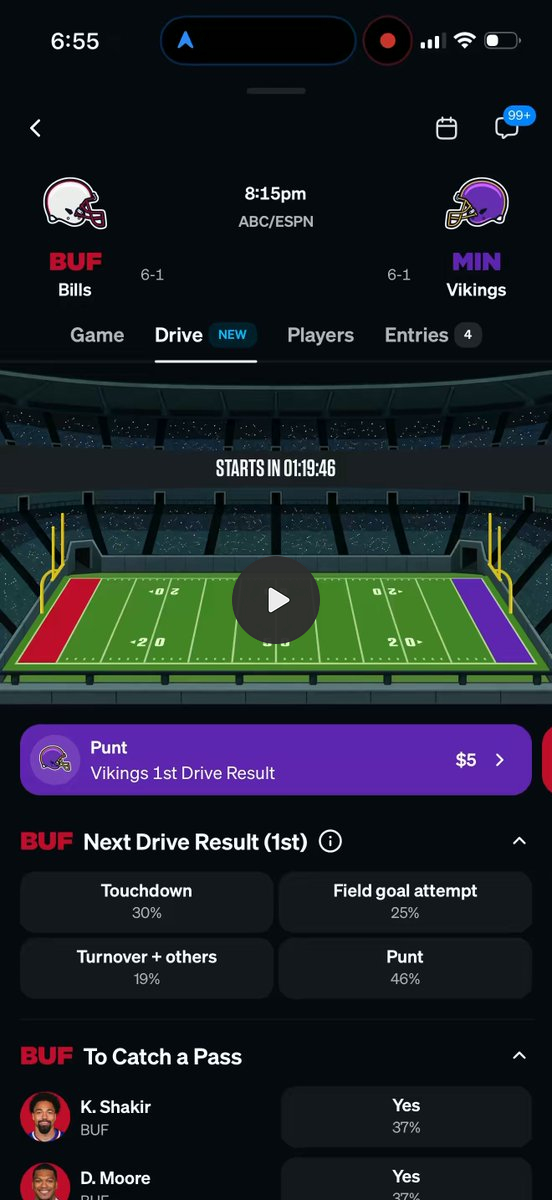
Drive-by-drive predictions in football:
 Harry Raymond@harryraymondTo my knowledge, @Underdog is the first to offer live, drive-by-drive predictions.
Touchdown, turnover, punt, field goal…every drive is a game within a game.
Excited to bring these fast-moving markets to more fans. Trust me, Monday Night Football has never been this fun.
 1:03 AM · Nov 10, 2026 · 86.8K Views
36 Replies · 4 Reposts · 90 LikesUnderdog and Plaee Partner to Power New Prediction Market Venues (press release): Underdog and Plaee today announced a strategic technology partnership bringing together Underdog’s CFTC-regulated exchange, with Plaee’s turnkey prediction market infrastructure. Through the partnership, operators can now launch a regulated prediction market business in weeks, streamlining the build-out of the required technology and regulatory stack.
Through a single integration with Plaee, Underdog has a scalable path to onboarding operators to their CFTC-regulated exchange. Plaee provides operators a turnkey tech stack: white-label trading experience, exchange connectivity, and back-office tools to manage funding flows, trader retention and monetization. Together, the companies give operators a seamless path onto Underdog’s Exchange.
Operators using Plaee’s infrastructure can add CFTC-regulated event contracts to their existing trading platform, or stand up a new prediction market brand, on timelines measured in weeks rather than months.
“We’re proud to partner with Plaee, bringing together their prediction market infrastructure with our exchange,” said Nick Lundgren, Chief Legal Officer at Underdog. “Our strategic partnership aims to accelerate our B2B business, by increasing the speed and ease with which operators can launch their own prediction markets.”
“We created Plaee to help operators quickly launch prediction markets while avoiding the long product and regulatory build-out” said Leon Okun, co-founder and CEO of Plaee. “Our partnership with Underdog gives operators a proven, regulated exchange partner integrated with our turnkey infrastructure, allowing them to launch a complete prediction markets business in weeks, not months.”
DraftKings CEO on podcast:
 Business of Betting Podcast@BettingPod🚨 New episode alert!
@jeffedelstein is joined by @DraftKings founder and CEO @JasonDRobins to discuss the company’s growing prediction markets business, its long-term strategy, and the challenges facing the sports betting industry.
 3:29 PM · Nov 12, 2026 · 7.78K Views
3 Replies · 3 Reposts · 13 Likes
Drive-by-drive predictions in football:
Underdog and Plaee Partner to Power New Prediction Market Venues (press release): Underdog and Plaee today announced a strategic technology partnership bringing together Underdog’s CFTC-regulated exchange, with Plaee’s turnkey prediction market infrastructure. Through the partnership, operators can now launch a regulated prediction market business in weeks, streamlining the build-out of the required technology and regulatory stack.
Through a single integration with Plaee, Underdog has a scalable path to onboarding operators to their CFTC-regulated exchange. Plaee provides operators a turnkey tech stack: white-label trading experience, exchange connectivity, and back-office tools to manage funding flows, trader retention and monetization. Together, the companies give operators a seamless path onto Underdog’s Exchange.
Operators using Plaee’s infrastructure can add CFTC-regulated event contracts to their existing trading platform, or stand up a new prediction market brand, on timelines measured in weeks rather than months.
“We’re proud to partner with Plaee, bringing together their prediction market infrastructure with our exchange,” said Nick Lundgren, Chief Legal Officer at Underdog. “Our strategic partnership aims to accelerate our B2B business, by increasing the speed and ease with which operators can launch their own prediction markets.”
“We created Plaee to help operators quickly launch prediction markets while avoiding the long product and regulatory build-out” said Leon Okun, co-founder and CEO of Plaee. “Our partnership with Underdog gives operators a proven, regulated exchange partner integrated with our turnkey infrastructure, allowing them to launch a complete prediction markets business in weeks, not months.”
DraftKings CEO on podcast:
📖 Everything else
FAA/ground stop markets: The issues with the Federal Aviation Administration and the grounding of flights was big news on Friday. And big on prediction markets. Kalshi got markets up around the ground stop very quickly, without having to do new self-certifications.
How did that happen? It’s because Kalshi has some generic templates like “EVENTCONFIRMED” that can be used with no more paperwork. The contract template can be used for a wide range of events where there is “confirmation.”
What caused the ground stop is one of the markets that uses this rule at Kalshi:
I am not saying Kalshi did anything wrong with these markets, but it is interesting to note the CFTC put this out this summer: The advisory addresses concerns about the practice of submitting broad, template-style certifications that combine many potential event contract variations into a single certification.
As detailed in the advisory, this approach limits DMO’s ability to determine whether a DCM has provided all the information, explanation, and analysis required by Commission Regulation § 40.2, and whether it has adequately evaluated the settlement methodology, data sources, and core-principles compliance of any contract it intends to list on the DCM.
The guidance reiterates that broad, template-style certifications should not be submitted. It also explains when closely related event contracts may be certified as a class or submitted for approval under Commission Regulations §§ 40.2(d) or 40.3.
Treat prediction markets like futures trading (Financial Times, Kalshi co-founder Luana Lopes Lara): “A century ago, the US bet that well-structured exchanges could distinguish speculation from gambling. The same holds true today. As novel industries and technologies emerge, derivatives markets have expanded to meet new risk management needs — not just prices for wheat or corn but intangible things like stock indices, sports events, interest rates or political shifts that affect our lives and our economy.”
🔍 This becomes a better argument if you get rid of 400-leg parlays and betting on point spreads, if we’re being honest.
Health is wealth? Polymarket and Kalshi now host bets on measles and other US health crises (The Guardian): “The sign was pasted on a construction fence next to an elementary school in the Brooklyn borough of New York City. ‘Vaccines,’ it proclaimed in bold capital letters against a blue star-spangled background – appearing, at first glance, to be like any other public health message on the importance of getting vaccinated.”
But at the bottom of the sign, in smaller letters, it read: ‘Will any state end vaccine markets?’ It was accompanied by the logo for Polymarket, an online prediction market where users can log in to wager on the outcomes of nearly any event – including, now, public health.”
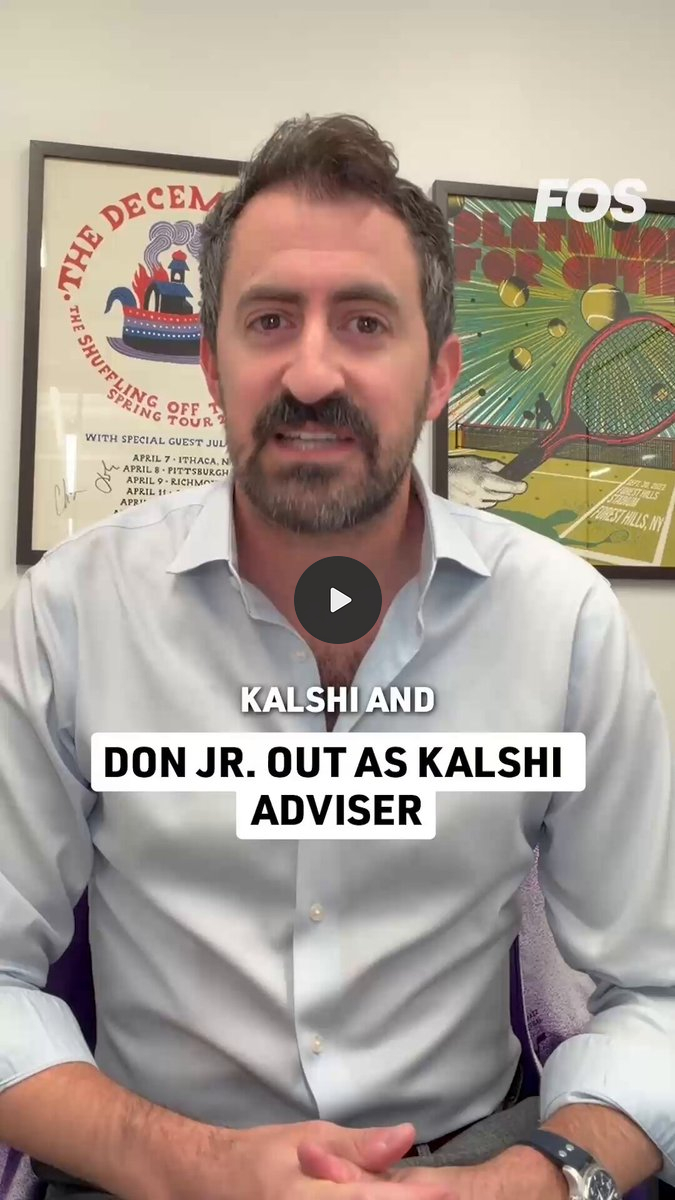
I think everyone is looking at the Kalshi/Trump Jr. split cynically:
 Daniel Roberts@readDanwriteKalshi breaks up with Don Jr., 1 week after the blue wave. cited his venture firm's investment in "a competitor" (Polymarket) "this past summer" but Don Jr first invested in Polymarket summer *2025* and it wasn't an issue before.... @FOS
 3:52 PM · Nov 14, 2026 · 8.75K Views
2 Reposts · 14 LikesOh well…
 Kalshi@KalshiJUST IN: LinkedIn just banned our GTA VI Researcher job posting for being “illegitimate."
Strategy consulting is a real job, but playing GTA VI isn’t?
We will not stand for this blatant discrimination against gamers.
@elonmusk we need X jobs back ASAP
 9:11 PM · Nov 13, 2026 · 395K Views
96 Replies · 82 Reposts · 1.06K Likes
FAA/ground stop markets: The issues with the Federal Aviation Administration and the grounding of flights was big news on Friday. And big on prediction markets. Kalshi got markets up around the ground stop very quickly, without having to do new self-certifications.
How did that happen? It’s because Kalshi has some generic templates like “EVENTCONFIRMED” that can be used with no more paperwork. The contract template can be used for a wide range of events where there is “confirmation.”
How did that happen? It’s because Kalshi has some generic templates like “EVENTCONFIRMED” that can be used with no more paperwork. The contract template can be used for a wide range of events where there is “confirmation.”
What caused the ground stop is one of the markets that uses this rule at Kalshi:
I am not saying Kalshi did anything wrong with these markets, but it is interesting to note the CFTC put this out this summer: The advisory addresses concerns about the practice of submitting broad, template-style certifications that combine many potential event contract variations into a single certification.
As detailed in the advisory, this approach limits DMO’s ability to determine whether a DCM has provided all the information, explanation, and analysis required by Commission Regulation § 40.2, and whether it has adequately evaluated the settlement methodology, data sources, and core-principles compliance of any contract it intends to list on the DCM.
The guidance reiterates that broad, template-style certifications should not be submitted. It also explains when closely related event contracts may be certified as a class or submitted for approval under Commission Regulations §§ 40.2(d) or 40.3.
Treat prediction markets like futures trading (Financial Times, Kalshi co-founder Luana Lopes Lara): “A century ago, the US bet that well-structured exchanges could distinguish speculation from gambling. The same holds true today. As novel industries and technologies emerge, derivatives markets have expanded to meet new risk management needs — not just prices for wheat or corn but intangible things like stock indices, sports events, interest rates or political shifts that affect our lives and our economy.”
🔍 This becomes a better argument if you get rid of 400-leg parlays and betting on point spreads, if we’re being honest.
🔍 This becomes a better argument if you get rid of 400-leg parlays and betting on point spreads, if we’re being honest.
Health is wealth? Polymarket and Kalshi now host bets on measles and other US health crises (The Guardian): “The sign was pasted on a construction fence next to an elementary school in the Brooklyn borough of New York City. ‘Vaccines,’ it proclaimed in bold capital letters against a blue star-spangled background – appearing, at first glance, to be like any other public health message on the importance of getting vaccinated.”
But at the bottom of the sign, in smaller letters, it read: ‘Will any state end vaccine markets?’ It was accompanied by the logo for Polymarket, an online prediction market where users can log in to wager on the outcomes of nearly any event – including, now, public health.”
But at the bottom of the sign, in smaller letters, it read: ‘Will any state end vaccine markets?’ It was accompanied by the logo for Polymarket, an online prediction market where users can log in to wager on the outcomes of nearly any event – including, now, public health.”
I think everyone is looking at the Kalshi/Trump Jr. split cynically:
Oh well…
Thanks for reading The Event Horizon! Subscribe for free to receive new posts and support my work.