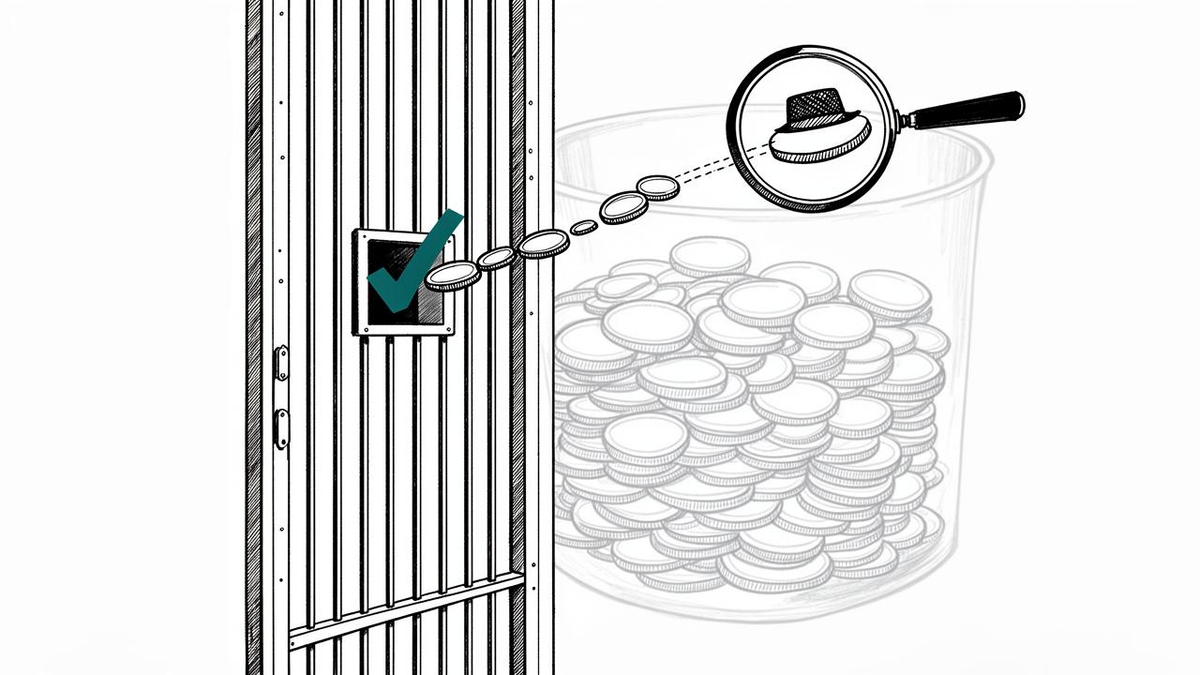
Ethena said it has never allowed unrestricted access to its USDe minting contract, pushing back on questions about its controls after a blockchain forensics firm tied roughly $101.9 million in swaps through a rival stablecoin system to North Korean actors.
In a statement dated Nov. 19, the issuer said direct minting and redemption of USDe has been limited since launch to a vetted list of counterparties, a design it says is intended to keep illicit funds out of shared collateral pools and to satisfy obligations to regulated custodians holding its reserves.
The disclosure followed a report by blockchain intelligence firm Inca Digital, which examined $518 million in swaps routed through Sky's Peg Stability Module, or PSM, across 422 wallets linked to hacks, phishing campaigns, sanctions designations or prior blacklisting by stablecoin issuers. Inca attributed about $101.9 million of that total to wallets connected to North Korea, including $91.5 million that moved through the module in the 10 days after the February 2025 Bybit breach, according to the report.
Ethena said the inquiries it received concerned the design of its own mint and redeem mechanism rather than any finding about USDe itself. The company said market makers and other clients seeking direct access must clear identity or business verification along with sanctions and anti-money-laundering screening that covers activity both on and off the blockchain. Approved counterparties send eligible backing assets to the protocol to create USDe; on redemption, the protocol burns the tokens and returns the collateral.
Users outside that approved list can still obtain USDe from external liquidity pools, including swaps routed through Ethena's app, which shows its direct minting tab only to vetted users. The company's terms reserve direct redemption with Ethena BVI for approved mint users and make it subject to their agreements and any action by authorities that restricts redemption.
Ethena acknowledged that permissioned minting has at times been a "competitive disadvantage for USDe," but argued that restricting who can call the contract lowers security risk and helps it meet commitments to regulated custodians. It pointed specifically to the danger of illicit funds entering shared collateral pools once assets received through the contract are deployed into regulated products.
Sky disputes scale of flagged activity
Sky's PSM lets users swap USDC for DAI or USDS and back at a fixed rate, a mechanism that helps hold the tokens near their dollar peg using a pool of previously minted coins. Sky Frontier Foundation said most of the flagged activity by value dated from 2021 to mid-2024 and accounted for less than 0.06% of cumulative PSM volume. The foundation said it screens wallets on its own websites and that almost all flagged transactions appeared to have arrived through third-party trading services, adding that activity by a flagged wallet can include funds unconnected to any specific theft.
That distinction matters because the smart contracts remain reachable through independent applications even where the official interfaces apply wallet screening and geographic limits. Inca said about 95% of the flagged transactions reached the PSM through third-party decentralized trading aggregators.
The scrutiny also lands on the reserves sitting inside the module. According to the forensics report, roughly $2.7 billion in USDC is concentrated in a single Ethereum wallet associated with the PSM. Circle, the issuer of USDC, can block specific addresses and may be required to freeze tokens or surrender the corresponding dollars under a valid legal order. A freeze on that wallet would not by itself mean USDS or DAI had lost backing, but it could disrupt the conversion mechanism the PSM provides and tighten redemption liquidity.
Why the screening question matters
The dispute turns on a structural difference between the two models. USDC holders rely on an issuer that can freeze balances at a legal order, while DAI and USDS holders rely on a protocol whose contracts cannot be frozen but whose reserves may sit in assets that can be. Ethena's approach moves the control point earlier, to the gate where new USDe is created.
The scale of the flagged flows drew attention because of their timing. Inca identified $91.5 million entering the module in the days after the Bybit theft, with nearly $30 million of that arriving after the FBI publicly attributed the roughly $1.5 billion loss to North Korea on Feb. 26, 2025. The bureau's alert urged exchanges, bridges and decentralized finance services to block transactions tied to the stolen assets. The forensics firm also flagged $49.5 million connected to the February 2025 Infini exploit and $26.1 million tied to the FTX Accounts Drainer in November 2022.
Those figures measure activity involving attributed wallets, not confirmed losses at Sky and not proof that every dollar originated from crime.
Note: Figures come from Inca Digital's review and Sky Frontier Foundation's response. The totals reflect activity by attributed wallets, not losses booked by Sky.
Market and institutional implications
For USDe holders, the practical effect of Ethena's statement is reassurance that the token's creation channel was never open, even as the episode highlights how much of the stablecoin market's liquidity depends on permissionless rails that compliance teams do not control. Ethena's concession that gated access carries a competitive cost cuts to the trade-off facing every issuer that wants both institutional backing and open onchain distribution.
For Sky, the exposure is less about the historical volume than about reserve accessibility. The protocol has been expanding through institutional channels, including a tokenized collateralized loan obligation anchored by a $50 million allocation from Grove, a credit protocol operating within Sky, and a commercial arrangement under which Coinbase pays rewards on balances tied to the PSM's self-custodial wallet infrastructure. Public-market exposure runs through Stablecoin Development Corp. (SDEV), which disclosed holdings of about 2.34 billion SKY tokens as of Nov. 11, roughly 10% of the governance token's supply, in a November 2026 SEC filing.
Regulatory guidance has been moving toward the view that decentralized arrangements can fall within virtual asset standards when identifiable parties exercise control or sufficient influence, a position the Financial Action Task Force restated in July 2026. Sky governance retains levers to change or restrict protocol operations, though the investigation does not establish that the foundation, governance participants or institutional partners breached sanctions law.
Bybit, meanwhile, has sued North Korea and the Lazarus Group in U.S. federal court, and a judge granted expedited discovery to help the exchange trace records connected to the theft.
Once added, BigGo Finance appears first in Google Search Top Stories, so you get the broadest, most up-to-the-minute, and most comprehensive global financial news first.