- live LIVE: Wall Street crashes and rebounds after Democrats snatch US House and Senate in historic midterms election 5 hours ago Live Updates
- Ethereum researcher gives devs 24 months to ship three forks 5 minutes ago News
- Google backs TeraWulf financing for $19 billion Anthropic lease 24 minutes ago Business
- THORChain swaps return, but Solana and BSC stay frozen 39 minutes ago News
- Google backs TeraWulf financing for $19 billion Anthropic lease 24 minutes ago Business
- THORChain swaps return, but Solana and BSC stay frozen 39 minutes ago News
- Big players to dominate Russia’s crypto trade when it starts in December 3 hours ago Economy
- Justin Drake hopes Ethereum finishes its post-quantum and post-AI transition by December 2028.
- Hitting this goal leaves developers with 24 months to ship three hard forks after Glamsterdam.
- The foundation’s official December 2029 deadline stays in place until a January 2027 reassessment.
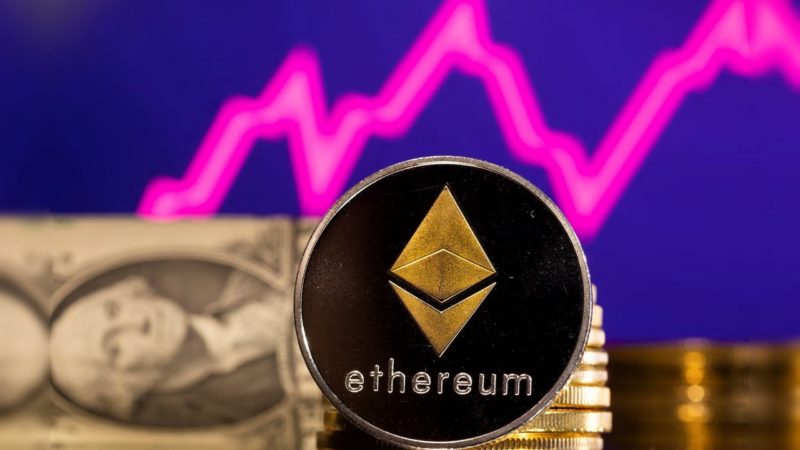
According to Ethereum Foundation researcher Justin Drake, developers have 24 months from Glamsterdam to implement three hard forks in order to complete the network’s transition to post-quantum and post-AI by December 2028.
Drake made these remarks during Devcon 8 in Mumbai on Tuesday.
The foundation’s official deadline is December 2029, so the goal is a year early.
“Our hope is that by December 2028 we’ll be able to wrap up the full post-quantum and post-AI transition,” Drake said at the start of the event.
The Ethereum Foundation keeps December 2029 as its official goal
The official date is derived from the foundation’s September 7 post on protocol priorities. According to the post, the Protocol cluster aims to make all of Ethereum’s execution, consensus, and data layers resistant to quantum computing by December 2029.
The Ethereum Foundation team promised that the December 2029 deadline is “non-negotiable at least until January 2027.” The team plans to recheck quantum progress with outside experts in January 2027.
The schedule for 2029 was already described as “quite aggressive” in the September post. Full post-quantum readiness requires five hard forks after the Glamsterdam upgrade.
If Glamsterdam ships in December 2026 and the fifth fork arrives in December 2029, forks would need to come at an average rate of one every 7.2 months. Drake’s plan has three forks in 24 months, or one every eight months.
A minimum viable post-quantum milestone can be achieved by December 2029 using a 12-month fork cadence.
Hash-based signatures to replace today’s keys by 2028
In August, Drake said leanVM technology would be ready for real use in 2027. He said quantum-safe upgrades would then reach all three parts of the network in 2028.
The plan relies on hash-based signatures, which quantum computers are not expected to break. One of them, leanSPHINCS, would be used to sign transactions.
Currently, Ethereum uses BLS signatures for validators and ECDSA for user accounts. A very large quantum computer could break both of these elliptic-curve methods.
Validators also have a setting that instructs Ethereum where to send their staked ETH when they withdraw, and some of these settings still use BLS keys. EIP-8365 begins phasing them out now, before the entire quantum-safe design for validators is completed.
Ethereum co-founder Vitalik Buterin warned in October that progress in AI-driven math could weaken lattice cryptography, which is the primary candidate to replace today’s signatures. This could happen within two years, according to Buterin. He still advised crypto holders not to rush to transfer their money to new wallets.
After auditors discovered gas-accounting flaws in two of Glamsterdam’s proposals, its activation on the Hoodi testnet, scheduled for October 26, was postponed. This reduces the likelihood that the fork will occur on the mainnet in December.
Don’t just read crypto news. Understand it. Subscribe to our newsletter. It's free.
FAQs
What did Justin Drake announce at Devcon 8?
Drake said he hopes to finish Ethereum's post-quantum and post-AI transition by December 2028, leaving 24 months to ship three forks.
How does the 2028 target compare to Ethereum's official roadmap?
Drake's goal is a year earlier than the foundation's December 2029 deadline, which stays in place.
How much Ether is exposed to a potential quantum attack?
User accounts secured by ECDSA and validators using BLS signatures are exposed, since a large quantum computer could break both schemes.
Disclaimer. The information provided is not trading advice. Cryptopolitan.com holds no liability for any investments made based on the information provided on this page. We strongly recommend independent research and/or consultation with a qualified professional before making any investment decisions.
Randa Moses
Randa Moses is an editor and reporter at Cryptopolitan covering tech, AI, robotics, crypto, scams, and hacks. She has worked in the crypto space since 2017. She held roles at Forward Protocol, AmaZix, and Cryptosomniac. Randa holds a degree in Electrical and Electronics Engineering from the University of Bradford.
5 Ingenious Applications of ChatGPT And What You Should Do About Them
93% Business Leaders Favor AI-Powered Solutions for Brand Sustainability Management, Reuters
Here’s How Macron Supports France’s Vibrant and Productive AI Ecosystem
Bloomberg Estimates the Generative AI Market to Reach $1.3 Trillion by 2032
- Bitcoin ETF vs. Ethereum ETF: What’s the Difference? November 5, 2025 Learn Crypto: Beginner Guides
- What Is Base? The Ethereum Layer-2 Network Launched by Coinbase October 21, 2025 Learn Crypto: Beginner Guides
- Dogecoin vs. Bitcoin: Key Technical Differences October 20, 2025 Learn Crypto: Beginner Guides
- What Is TVL (Total Value Locked) in Crypto? October 14, 2025 Learn Crypto: Beginner Guides
- How to Read a Crypto Whitepaper? October 13, 2025 Learn Crypto: Beginner Guides
- Ripple vs. XRP vs. XRP Ledger: What’s the Difference? October 13, 2025 Learn Crypto: Beginner Guides