Key Points
- Ethereum's Vitalik Buterin believes the coin should be considered a store of value.
- That stands in contrast to another perspective, that the coin should be considered a fee-generating system.
- Investors holding the coin with an investment thesis based on the second perspective may thus end up disappointed.
In a Nov. 8 thread on X (formerly Twitter), Vitalik Buterin, co-founder of Ethereum (ETH -1.64%), said he wants investors to judge it as a store of value, and to stop expecting the activity of its blockchain to lift Ethereum’s price.
That statement turns several years of investor narrative on its head, which no doubt stings for the coin's investors who were believers in the "ultrasound money" thesis. That slogan called for higher Ethereum prices over time, resulting from the constant reduction of its outstanding supply via token burns powered by the network's transaction fees. Some people should probably think about selling the coin. Here's what Buterin was getting at and why it's essential to understand what he meant if you plan to buy or hold Ethereum.
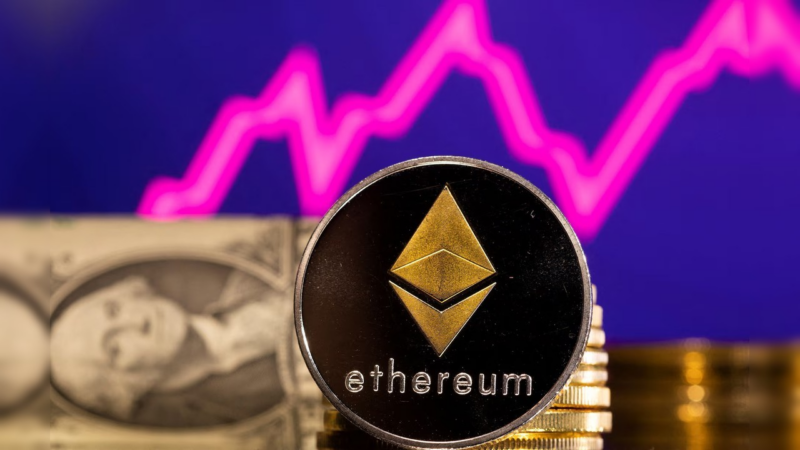
Image source: Getty Images.
Less and less of this coin is being taken out of the supply over time
Ethereum destroys, or "burns," part of every transaction fee incurred for using its blockchain.
At the same time, the chain issues a small amount of the token to its validators, who are compensated for locking up their Ethereum to secure the network. The breakeven point is thus where the average pace of burning matches the pace of issuance. As of Nov. 9, the coin's supply was expanding at a pace of close to 0.9% annually, which is approximately the same as the last couple of years, so new issuance is consistently outweighing the pace of the burns, leading investors to see their holdings diluted over time.
Buterin argued the burn was never a true price floor, because most of its revenue came from crypto activity that shrinks when the coin's price falls. He elaborated that most of the burns from the network's heyday in 2021 to 2023 came from crypto-specific frenzies like non-fungible tokens (NFTs) whose fees shrank in lockstep with Ethereum's price at the end of the speculative boom. His chosen example, a 2022 Bored Ape Yacht Club NFT sale, saw buyers spend almost $180 million on fees during the sale, and he's correct that such speculative conditions are unlikely to recur anytime soon.
Still, the difference between that era and now is stark. Ethereum burned 1.5 million ETH in 2022, versus 19,200 ETH in 2026 so far. So why not raise fees?
ETH - Ethereum
CRYPTO · As of 10:02 AM ET 11/11/26
Key data points
I'd offer another explanation for Buterin's position. Raising fees could be counterproductive, given the numerous network upgrades over the last few years that were devoted to reducing fees and scaling up throughput capacity and chain performance during peak times. It'd also make the network more expensive to use, which might ultimately reduce its overall usage.
Plus -- and this is an important point -- Buterin claims that valuing Ethereum on the basis of its fees alone would result in it having a much lower market cap than it does now, assuming that the same rigor was applied as what one would use when valuing a major business.
Therefore, if network activity and token burns were part of your investment thesis for what makes this cryptocurrency valuable, understand that Ethereum's co-founder won't push the network to maximize those metrics.
Is Ethereum actually a good store of value?
Buterin's argument for Ethereum as a store of value worth owning is based on its technology, which, of course, he helped build.
His view is that the chain’s properties, like censorship and capture resistance, open source, privacy, and security. As a group, he refers to them as CROPS. These traits are valuable even to financial institutions, Buterin says. And because of that value, Ethereum is positioned to benefit from institutional trends, such as real-world asset (RWA) tokenization. From this perspective, the fact that Ethereum hosts $15.1 billion worth of tradeable tokenized RWAs right now is proof that the technology itself is valuable, which would remain the case even if there isn't much network activity or fees being generated by the assets themselves.
But it's hard to see the store-of-value thesis being taken seriously right now, as Ethereum's price is down by 55% over the last five years. Its constantly inflating supply is an additional barrier. So in many ways, Buterin's post was an acknowledgment of the existing state of affairs over the last couple of years, but branded differently.
In any case, investors may have little choice if they want to continue holding the coin, so holders who bought it on the activity-based burning thesis should consider selling. Building out those CROPS features even more is the main focus of the coin's development road map, and cutting transaction fees even further is also on the docket. If that actually happens, Ethereum could indeed become a better store of value.
Still, as a holder, I'm left wondering whether the store-of-value strategy will really pay off in the long term, if it hasn't already.
Where to invest $1,000 right now
When our analyst team has a stock tip, it can pay to listen. After all, Stock Advisor's total average return is 852%* — a market-crushing outperformance compared to 208% for the S&P 500.
They just revealed what they believe are the 10 best stocks for investors to buy right now, available when you join Stock Advisor.
*Stock Advisor returns as of November 11, 2026.
Read Next
About the Author
Stocks Mentioned
Motley Fool Stock Advisor’s Latest Pick
*Average returns of all recommendations since inception. Cost basis and return based on previous market day close.