Summary
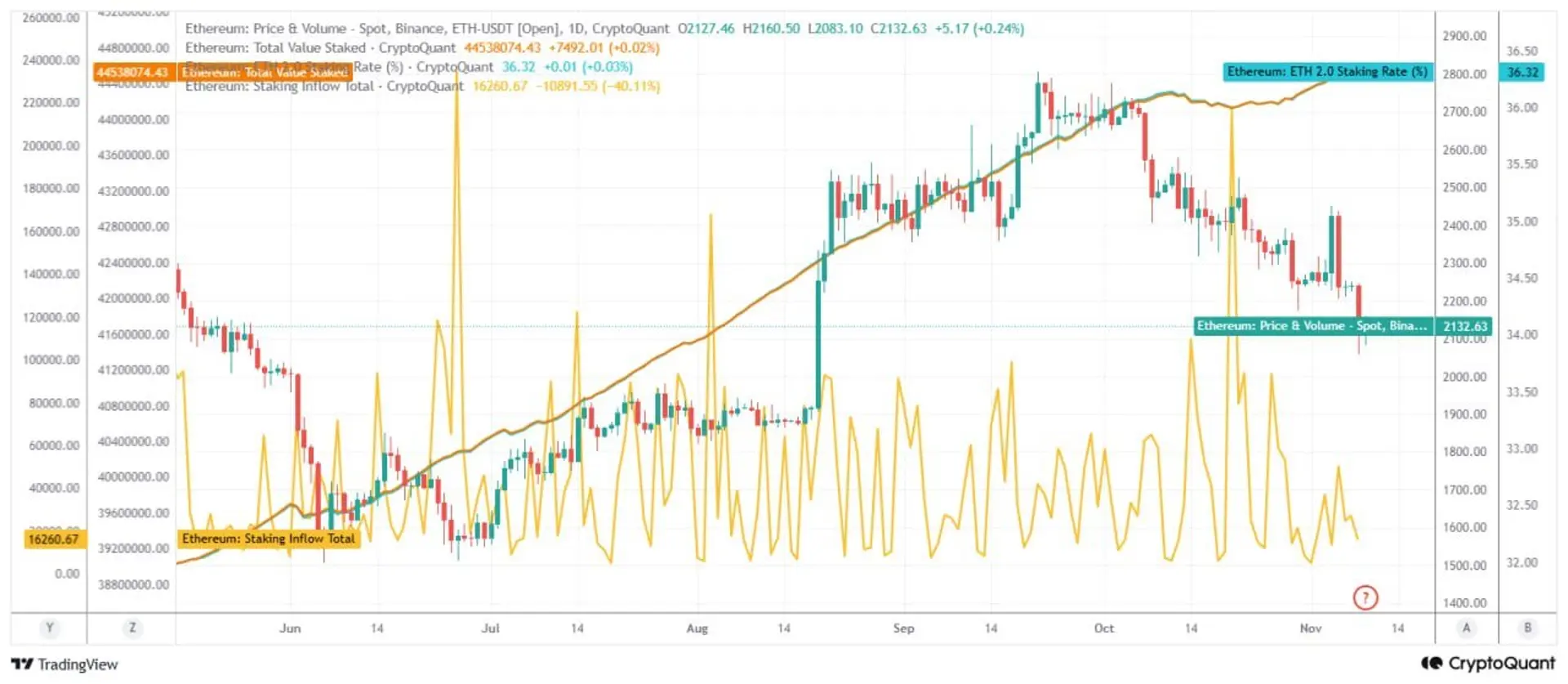
- Ethereum’s price has fallen, but the staking ratio of 36.32% has continued to rise, indicating that investors’ willingness to hold for the long term remains intact.
- The high staking ratio could help support prices by reducing the amount of ETH supply immediately available for trading.
- Even though recent staking inflows fell 40.11%, the staking ratio kept rising, which Ay said could help limit growth in tradable supply over the medium to long term.
Forecast Trend Report by Period
Ethereum’s staking ratio continued to rise even as the price of ETH fell, suggesting investors remain committed to holding the token for the long term.
Pelin Ay, a CryptoQuant contributor, wrote in a post on X on November 10 that Ethereum’s staking ratio has climbed about 4.32% since May. About 36.32% of the total ETH supply is now locked in staking.
Over the same period, Ethereum fell to $2,132 from about $2,800 in October on Binance. The increase in staking participation despite weaker prices suggests investors are continuing to deposit their holdings into the network rather than sell them into the market.
Ay said the high staking ratio could support prices by reducing the amount of ETH immediately available for trading. Still, the staked supply is not permanently removed from circulation because validators can exit staking at any time.
Meanwhile, recent staking inflows have fallen 40.11%. Ay wrote that the drop in daily new staking inflows should be viewed separately from the rise in the overall staking ratio.
“The key point is that the staking ratio keeps rising even while ETH prices are falling,” Ay wrote, adding that this could limit growth in tradable supply over the medium to long term.
Minseung Kang


