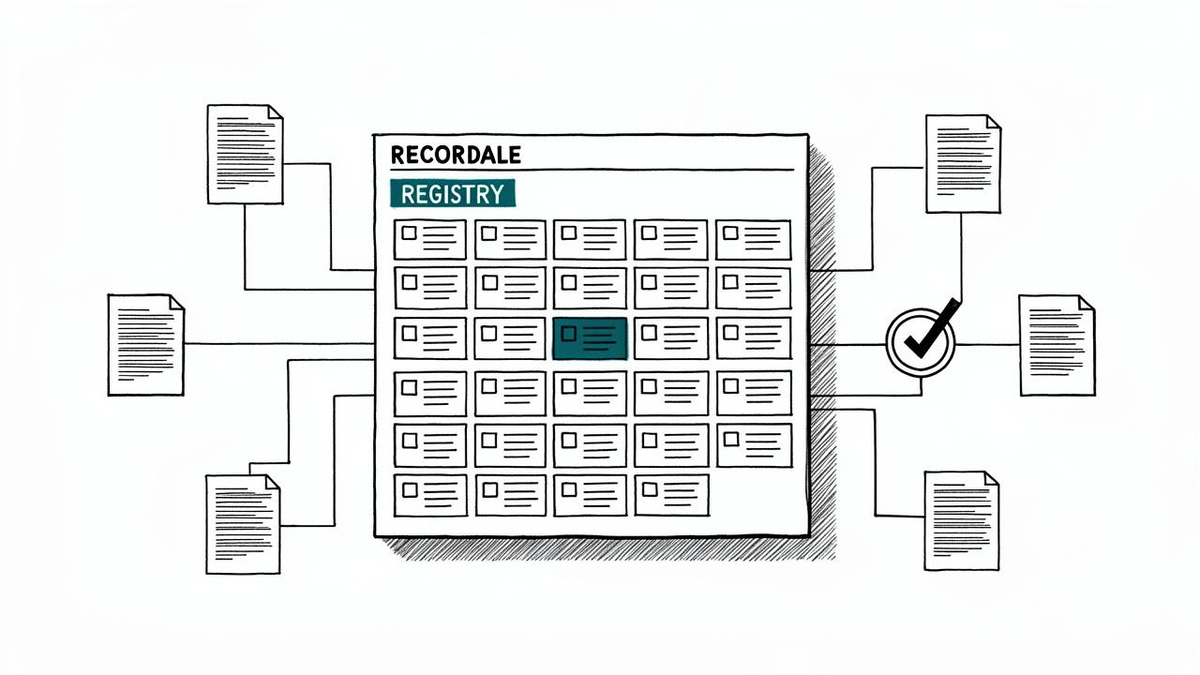
The European Union's securities regulator is preparing to replace its interim cryptocurrency registry with a searchable online platform around the middle of 2027, a shift that would move the bloc's public record of licensed digital-asset firms from emailed spreadsheets to a structured, machine-readable database.
The European Securities and Markets Authority said national financial regulators would enter and update information about crypto businesses and token issuers through a dedicated web interface, replacing the current process in which data is consolidated manually and republished at weekly intervals. That lag means changes to a company's authorization status can take days to surface in the EU-level database.
Under the planned system, automated checks would flag discrepancies in submitted records by cross-referencing them against external databases, including the Global Legal Entity Identifier Foundation's registry of standardized corporate identifiers. Members of the public would be able to search the register, download data in CSV format and pull records through application programming interfaces. ESMA has not disclosed the complete feature list.
"The new IT system will replace the current manual email-based submission and consolidation process with a structured web-based interface through which national competent authorities can provide and update information for their relevant entities/white papers," an ESMA spokesperson said.
The interim register, launched in December 2024, currently publishes information across five downloadable files covering authorized crypto service providers, non-compliant entities, issuers of asset-referenced tokens and electronic money tokens, and white papers for other cryptocurrencies.
White papers move onto the platform
The most visible change for investors concerns how crypto white papers are accessed. The interim system relies largely on links to documents hosted on companies' own websites. The new platform would store the papers directly and keep prior versions on file.
"The future register will not rely solely on links to white papers hosted on an entity's website as is currently the case with the interim solution," the spokesperson said. "In the new IT solution, the white papers will be available directly on the register platform."
The archiving requirement stems from Article 109 of the Markets in Crypto-Assets Regulation, which calls for superseded white papers to be kept separately and clearly labeled. Automated technical checks would verify that submissions contain mandatory disclosures and meet ESMA's standardized formatting rules, which took effect on Dec. 23, 2025 and require white papers to use Inline XBRL so that the contents can be read by both people and computer systems.
ESMA notes on its website that inclusion in the register does not amount to regulatory approval of a white paper, with responsibility for its contents remaining with the issuer or offeror.
Note: Based on ESMA's description of the interim and planned systems.
Timeline tied to engineering, not deadlines
The overhaul is being prepared months after MiCA's final transitional period expired on July 1, which required unauthorized crypto businesses to wind down regulated operations in the European market or face enforcement. The interim register became the public reference point for checking whether a firm holds a license in the bloc.
A spokesperson said the schedule is unrelated both to the end of the transitional provisions and to the European Commission's ongoing review of the regulation. "The timeline is driven entirely by technical development," the spokesperson said.
That framing casts the project as an infrastructure upgrade rather than a response to a regulatory deadline, leaving the interim register as the immediate public reference point until the new system goes live.
The work sits alongside other supervisory efforts. In September, ESMA outlined 2027 priorities that include operational resilience, outsourcing arrangements, liquidity management and whether authorized crypto firms maintain sufficient operations within the EU. The authority expects to introduce common risk indicators and reporting standards for national supervisors, together with the first phase of its crypto market surveillance system, known as MIDAS.
Private efforts have also emerged to make licensing data easier to navigate. The MiCA Crypto Alliance introduced a searchable directory in August that lets users filter authorized businesses by jurisdiction, supervising authority, licensing date and permitted services.
What it means for compliance teams
For investors, auditors and compliance providers, the change points toward a more auditable registry, with stronger data checks and fewer dependencies on company websites for core disclosures. Reliable legal-entity identifiers and consistent entity details are foundational for verifying that a regulated offering corresponds to the correct corporate entity.
The main uncertainty is the full scope of features beyond CSV downloads and API access. How quickly updated information appears, how version history is presented and whether ESMA widens API functionality to support automated monitoring will determine how useful the platform proves for firms that track authorization status at scale.
Tighter technical validation of white papers could also affect how quickly documents are accepted and updated by authorized entities, a consideration for issuers preparing disclosures under the standardized format.
Once added, BigGo Finance appears first in Google Search Top Stories, so you get the broadest, most up-to-the-minute, and most comprehensive global financial news first.