- live LIVE: Wall Street crashes and rebounds after Democrats snatch US House and Senate in historic midterms election November 4, 2026 Live Updates
- FATF calls crypto a core laundering channel for scam compounds 4 minutes ago News
- Coincheck halts crypto withdrawals, blames outside service outage not a hack 59 minutes ago News
- Ukraine’s central bank warns crypto bill opens the door to monopoly and corruption 3 hours ago Regulation
- Coincheck halts crypto withdrawals, blames outside service outage not a hack 59 minutes ago News
- Ukraine’s central bank warns crypto bill opens the door to monopoly and corruption 3 hours ago Regulation
- Why did the S&P 500 lose over $2 trillion in 40 minutes today? 3 hours ago News
- The FATF has published a report naming virtual assets a central money laundering channel for industrial scam compounds in Southeast Asia.
- The report says 120,000 people are forced to run scams in Myanmar alone.
- The FATF wants enforcement aimed at the criminal networks and their financial infrastructure.
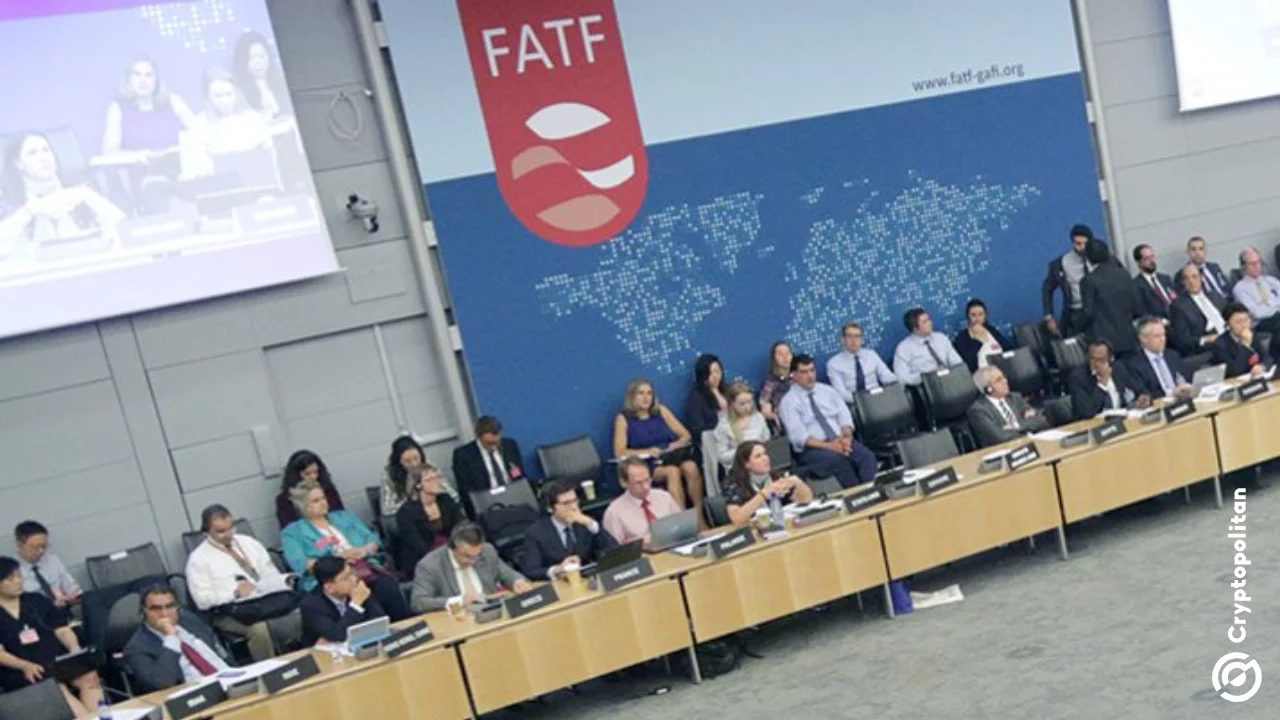
The Financial Action Task Force (FATF) said in a report published today that virtual assets are used to launder money for scam compounds in Southeast Asia.
The report suggests that governments should fight scam and fraudulent activities by going after the criminal networks behind the compounds.
How do scam compounds use crypto to move dirty money?
FATF is a Paris-based group that writes the world’s rules against money laundering. Its new report looks at how scam money is made and laundered.
The report explains that time is the biggest problem for victims. Stolen money can leave an account and reach an exit point in as little as two to five minutes. Victims, on average, do not notice the theft for about 20 hours.
Fast payment systems help criminals move money this way too.
The report states that the laundering process is split into seven stages, and it starts with social media. Fraudsters use messaging apps and social accounts to set up operations, hire workers, and find victims. Then the scam is carried out during the “payment window.”
Prior to the report, the FATF released its seventh update on virtual assets. That update found that most of the illegal activity tracked on blockchains now goes through stablecoins.
A Cambodia-based group that laundered at least $4 billion between 2021 and 2025, for both fraud schemes and North Korean cyber theft, is mentioned in the update. That group is Huione Group.
The group’s platform has been referred to as the largest illegal online marketplace ever recorded, with linked wallets receiving at least $24 billion.
In 2025, the US Treasury’s FinCEN moved to cut Huione off from the American financial system. It flagged Huione’s “unfreezable” USDH stablecoin, which was built to avoid the freeze tools most issuers have.
What does the FATF suggest governments do?
The task force suggests that countries should disrupt illegal money flows from start to finish. Banks, phone companies and tech firms should share information with one another. Authorities should also act within the first 24 to 72 hours after a scam is found, when funds can still be frozen.
FATF President Giles Thomson said that criminals are now “weaponising AI and other technologies” to run their scam operations, and so in turn the government and authorities need to “urgently modernise and accelerate our response.”
People from at least 80 jurisdictions have been traced to scam compounds in Southeast Asia, and many of them are trafficking victims. The report says an estimated 120,000 people are forced to run online scams in Myanmar alone.
Don’t just read crypto news. Understand it. Subscribe to our newsletter. It's free.
FAQs
What did FATF say about crypto's role in scam compounds?
FATF called virtual assets a "central money laundering channel" and found over-the-counter exchange desks operating inside scam compounds to swap crypto and move funds.
How fast can scam proceeds leave the financial system?
FATF said illicit funds can move from a victim's account to an exit point in three to five minutes, and sometimes two, while victims take around 20 hours on average to realise they have been scammed.
Why does FATF point to stablecoins specifically?
Its 16 July 2026 targeted update found most identified on-chain illicit activity now involves stablecoins, citing a Cambodia-based network that laundered at least $4 billion between 2021 and 2025.
Disclaimer. The information provided is not trading advice. Cryptopolitan.com holds no liability for any investments made based on the information provided on this page. We strongly recommend independent research and/or consultation with a qualified professional before making any investment decisions.
Hannah Collymore
Hannah is a writer and editor with nearly a decade of blog writing and event reporting experience in the crypto space. At Cryptopolitan, Hannah contributes to the news page, reporting and analyzing the latest developments in DeFi, RWA, crypto regulation, AI and frontier tech industries. She graduated from Arcadia university with a degree in Business Administration.
5 Ingenious Applications of ChatGPT And What You Should Do About Them
93% Business Leaders Favor AI-Powered Solutions for Brand Sustainability Management, Reuters
Here’s How Macron Supports France’s Vibrant and Productive AI Ecosystem
Bloomberg Estimates the Generative AI Market to Reach $1.3 Trillion by 2032
- Bitcoin ETF vs. Ethereum ETF: What’s the Difference? November 5, 2025 Learn Crypto: Beginner Guides
- What Is Base? The Ethereum Layer-2 Network Launched by Coinbase October 21, 2025 Learn Crypto: Beginner Guides
- Dogecoin vs. Bitcoin: Key Technical Differences October 20, 2025 Learn Crypto: Beginner Guides
- What Is TVL (Total Value Locked) in Crypto? October 14, 2025 Learn Crypto: Beginner Guides
- How to Read a Crypto Whitepaper? October 13, 2025 Learn Crypto: Beginner Guides
- Ripple vs. XRP vs. XRP Ledger: What’s the Difference? October 13, 2025 Learn Crypto: Beginner Guides