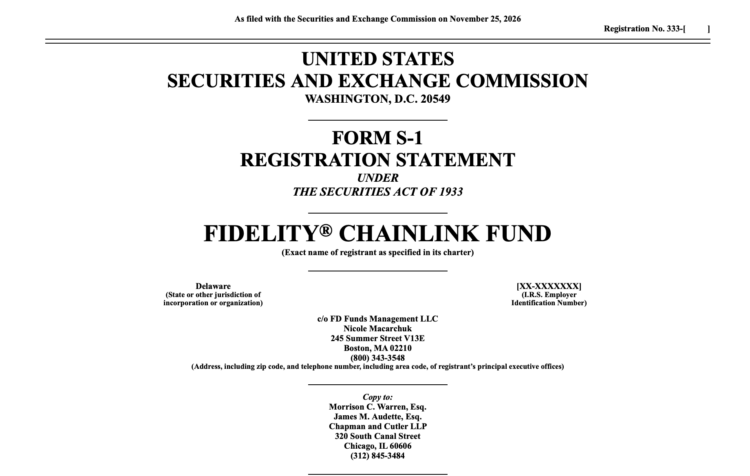
Fidelity has filed a preliminary registration statement for the Fidelity Chainlink Fund, an exchange-traded product that would hold LINK directly and trade on Nasdaq under the ticker FLNK if approved. The filing does not include a launch date or final sponsor fee.
- The fund would track LINK’s performance in U.S. dollars, less expenses and liabilities, using custodians Anchorage Digital Bank, BitGo Bank & Trust and Coinbase Custody, with LINK held on Ethereum.
- Pricing would rely on a reference rate built from eligible LINK spot markets, calculated as a volume-weighted median every 15 seconds from rolling 60‑minute data, which values the assets but does not ensure shares always trade at net asset value.
- The trust would not stake its LINK. Investors in FLNK would receive price exposure only, without staking rewards or direct access to Chainlink services.
- Fidelity’s use of Chainlink infrastructure in other products, such as the tokenized FILQ fund, is separate from this proposal and does not itself indicate increased demand for Chainlink’s oracle services or LINK purchases.
Existing Market For LINK Exposure
FLNK would enter a market where investors already access LINK through regulated products. Grayscale’s Chainlink Trust ETF, GLNK, operates a share creation and redemption program, and Bitwise’s Chainlink ETF, CLNK, is listed on Nasdaq. Charles Schwab offers direct LINK trading to eligible crypto clients. These channels show that access through traditional brokerage and trust structures is already established.
Fidelity’s main potential edge is distribution through its brokerage relationships, which may reach investors who do not use crypto exchanges or self-custody wallets. However, the preliminary prospectus leaves the sponsor’s annual fee unspecified. Without that figure, cost comparisons with GLNK, CLNK and direct trading are incomplete, and fees, spreads and share price deviations from net asset value remain key variables for investors choosing among wrappers on the same asset.
Impact On Actual LINK Demand
The trust would create and redeem large share blocks through authorized participants using cash or LINK. Secondary-market trading between investors would occur on Nasdaq, separate from primary creations and redemptions. A share trade between two investors does not force the trust to buy or sell LINK. Only sustained net creations increase the trust’s token holdings; net redemptions reduce them.
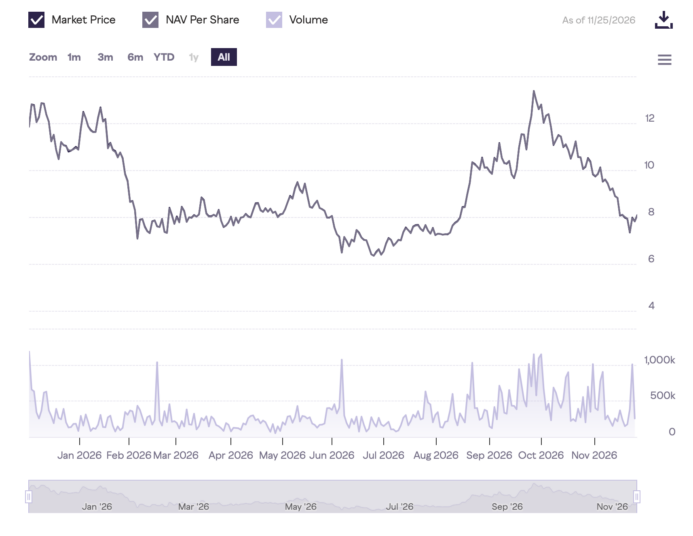
A higher FLNK share price can reflect a higher LINK market price without new LINK entering custody. The S-1 filing indicates intention and structure but does not show committed capital, the extent of switching from rival products or investor resilience through market cycles.
A reasonable counterpoint is that Fidelity’s client base might add incremental demand instead of reallocating existing holdings. The filing opens a route for that outcome but does not measure it.
Data That Will Clarify The Effect
The next relevant steps are:
- Effectiveness of the registration statement and confirmation of the Nasdaq listing.
- Publication of the final prospectus, including the sponsor fee and operational details.
If FLNK launches, the indicators that will show whether it brings new LINK demand include: LINK held in custody by the trust, changes in shares outstanding, persistent net creations or redemptions, trading liquidity and premiums or discounts to net asset value. Comparing these figures with GLNK, CLNK and other access routes will help distinguish incremental inflows from asset shifts across products.
Until such data is available, the conclusion is limited: Fidelity aims to offer LINK exposure through a standard brokerage ETF-like format. The effect on LINK’s overall market demand remains uncertain.
Authors credited by the source: Andrei Belov
Published by Holder based on an external source.