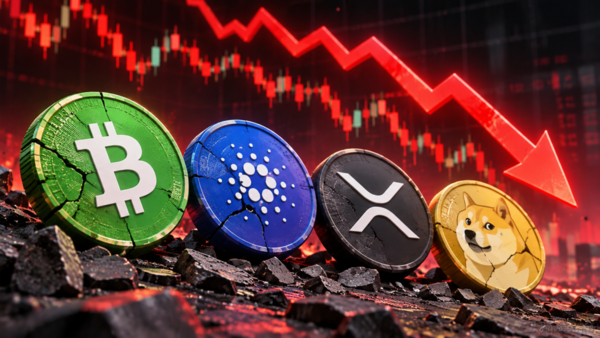
Bitcoin Cash (BCH), Cardano (ADA), XRP and Dogecoin (DOGE) are among the altcoins showing notable declines in the altcoin market this year. Many major altcoins are down 30 to 60 percent since the start of the year, weighing on overall investor sentiment.
U.Today, a blockchain outlet, reported on Nov. 10 that crypto exchange Gemini released 10 altcoins with the weakest performance based on returns since the start of 2026.
Bitcoin Cash (BCH) posted the biggest decline. It is down 61.76 percent since the start of the year, the worst return among those surveyed. Polkadot (DOT) followed, down 53.03 percent, while Cardano (ADA) fell 48.04 percent, the third-largest drop.
XRP and Dogecoin (DOGE) also could not avoid weakness. XRP is down 43.43 percent since the start of the year and Dogecoin has fallen 42.38 percent. Sui (SUI) is down 42.08 percent, Hedera (HBAR) 38.13 percent, Solana (SOL) 34.02 percent, Avalanche (AVAX) 33.40 percent and Kaspa (KAS) 30.75 percent.
Gemini cited weaker speculative demand, fading interest from institutional investors and macroeconomic uncertainty as reasons behind the poor performance of major altcoins. As market liquidity declined, less money flowed into altcoins overall, and expectations for growth in individual projects were no longer enough to defend prices, it said.
Factors fueling weakness also stand out by token. Cardano faced pressure from sluggish decentralized finance (DeFi) activity in its ecosystem. Gemini said that as of Nov. 9, total value locked (TVL) in the Cardano ecosystem fell below $50 million. With limited funds and usage in the network, it said, the momentum to draw investment demand also weakened.
A disconnect stands out between Ripple’s business expansion and the token price for XRP. Ripple is expanding into areas including institutional payments, stablecoins and real-world asset tokenisation, but those achievements have not translated into buying for XRP itself. Spot trading volume for XRP fell 53.5 percent and perpetual futures volume dropped 44 percent. Despite ecosystem expansion, actual demand for token trading has weakened.
Dogecoin took a direct hit from fading speculative demand in the memecoin market. In a market structure dependent on retail investor interest, inflows of institutional money have also been weak, leaving few factors to support the price. Bitwise also announced in September that it would shut down a Dogecoin exchange-traded fund (ETF) due to a lack of investor demand.
Bitcoin Cash, which recorded the biggest drop, is moving in the opposite direction from last year. After rising about 38 percent in 2025, Bitcoin Cash has given back much of those gains this year. In May and June in particular, it fell more than 30 percent in each of the two months, concentrating selling pressure.
In September it tried to rebound on news of CME Group’s planned launch of Bitcoin Cash futures, but it was not enough to reverse the downtrend. Even positive news such as the launch of an institutional investment product failed to offset overall selling pressure.
Altcoin market weakness this year is seen as the result of shrinking liquidity combined with weak real demand for individual projects, beyond a simple price correction. Even projects that continue ecosystem expansion or technical development, such as XRP and Cardano, have not been able to translate that into a rebound in token prices. In the market, actual usage demand and whether funds flow in are emerging as more important evaluation criteria.