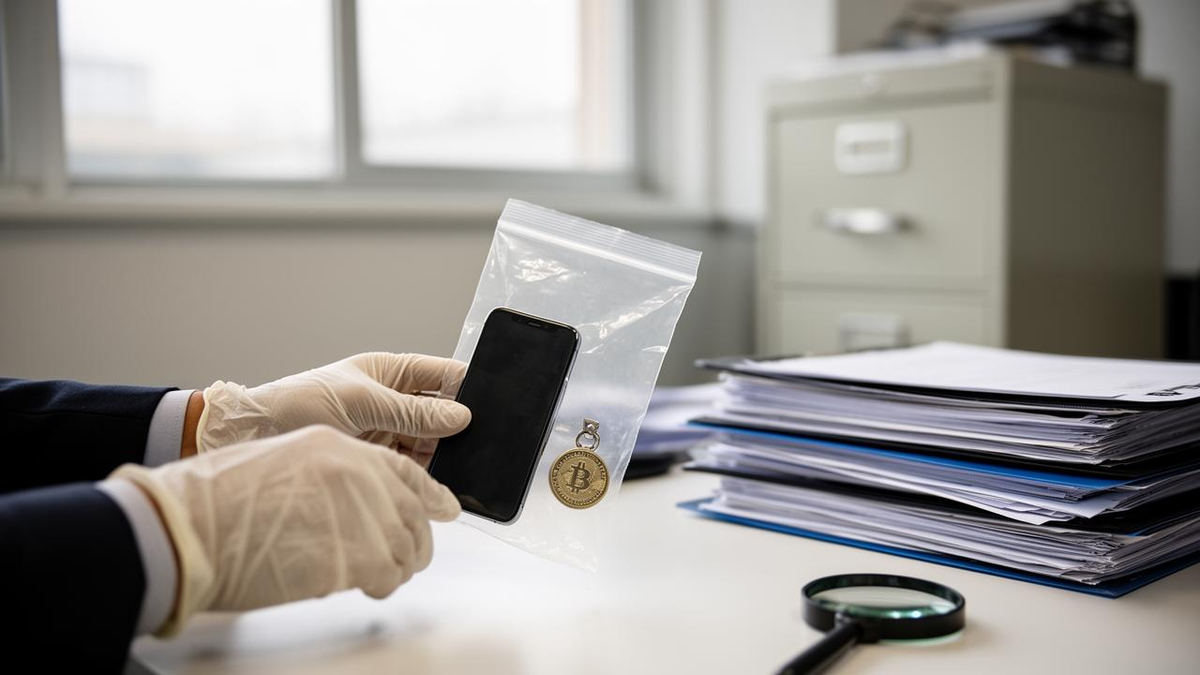
Germany's lower house of parliament has voted to let customs officers freeze cryptocurrency and other assets worth more than €100,000 (approximately $110,000) when their lawful origin looks doubtful, without first opening a criminal case. The Bundestag approved the measure on Nov. 12 as part of a wider package aimed at money laundering and organized crime, but the bill still needs the consent of the upper Bundesrat chamber before it can take effect, with the government targeting Jan. 1, 2027.
The legislation is not limited to digital assets. It covers cash, real estate and other holdings, with registered property such as vehicles and buildings caught at a lower threshold of €50,000 (approximately $55,000). Cryptoassets defined under the European Union's Markets in Crypto-Assets regulation, known as MiCA, are expressly included, along with comparable digital representations of value or rights.
Under the proposed framework, customs would need factual indications that assets may lack a legitimate origin. Qualifying holdings could be secured for an initial 30 days while investigators examine their provenance, and a finance court could grant a single extension of up to 150 days, putting the maximum temporary detention period at 180 days. Freezing an asset would not transfer ownership: permanent confiscation would require a separate finance court ruling that the assets were unlawfully obtained. The finance committee also stripped out a provision that would have let a single judge decide routine confiscation applications, handing those final decisions to a judicial panel instead.
The vote split the chamber. The governing coalition and the far-right Alternative for Germany backed the bill, The Left opposed it and The Greens abstained, according to the parliamentary record.
Germany's legal profession has come out against the plan. The Federal Bar Association, known as BRAK, said in an Oct. 28 statement that the draft defines unlawful origin too loosely and leaves authorities excessive room to question how assets were acquired. It pointed to inherited property whose acquisition records may no longer exist and argued that missing paperwork should not by itself be read as proof of illegal activity. The association also noted that the draft imposes no general duty on holders to cooperate with ownership inquiries, complicating any suggestion that the burden of proof is automatically reversed.
The German Bar Association, or DAV, likewise rejected the proposal. In a November statement it said authorities could step in whenever an asset's lawful origin appears "not plausible," and it criticized both the expansion of customs powers and the shift of police functions to the customs service.
The government counters that people holding substantial assets should generally be able to explain where they came from, and that conventional investigative methods often fail to establish illicit origins. The reform also proposes specialist money-laundering units and tighter cross-border monitoring of digital payment channels.
"The practical question for crypto holders is what will count as proof of lawful origin, which is a question for national (ie German) finance courts rather than EU (European Union) crypto regulation," Andrew Withworth, founder and director of London-based regulatory advisory firm Global Policy, told CoinDesk.
For the crypto industry, the measure adds a compliance dimension that sits outside the bloc's licensing regime. MiCA governs how exchanges and custodians operate across the EU, but the German bill would put the burden of demonstrating provenance on asset holders themselves, and it would do so through administrative rather than criminal proceedings. That distinction matters for investors who acquired coins years ago through channels that left thin records, and for heirs who may hold tokens without documentation of the original purchase.
Trading venues and custodians regulated in Germany will be watching how customs and the finance courts interpret "factual indications" once the law is in force. A low evidentiary bar for a 30-day freeze could expose clients to disruption long before any court rules on ownership, while a high one would blunt the tool's usefulness to investigators. The Bundesrat's review is the next hurdle, and its outcome will determine whether the Jan. 1 start date holds.
Once added, BigGo Finance appears first in Google Search Top Stories, so you get the broadest, most up-to-the-minute, and most comprehensive global financial news first.