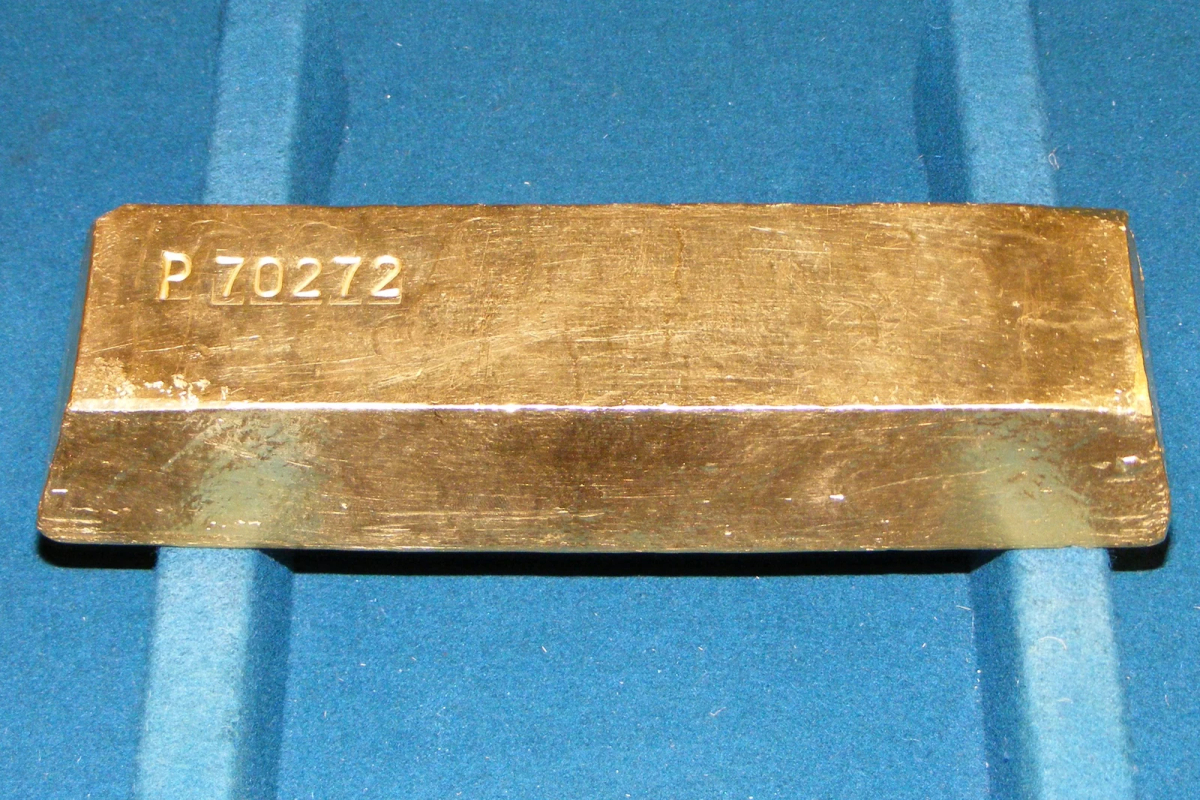
Gold and silver have surrendered roughly $15 trillion in combined market value since their records earlier this year, a selloff that has dragged the two traditional havens into the same liquidation wave that has hammered Bitcoin and equities.
Bullion slipped below $3,550 an ounce and silver dropped under $42, according to market commentary published at the close of the business week. Gold's retreat from its January 29 peak of $5,600 an ounce has been the more closely watched move, wiping out about 37% of its value and leaving the metal at $3,500 on Friday. The week alone cost gold 8%, its steepest weekly loss in eight months.
Silver's fall has been deeper in percentage terms. The metal, which traded below $30 an ounce in April 2025 before surging past $122 in late January, has shed about 65% from that high.
The damage extends beyond metals. Bitcoin slid from $81,000 earlier this month to $55,000 on Saturday, evidence that investors are raising cash rather than rotating between asset classes. The pattern points to a market-wide scramble for liquidity as an AI-driven equity rout intensifies.
Note: Gold and silver peaks are from late January 2026; Bitcoin's reference point is early November 2026. Combined losses across gold and silver are estimated at about $15 trillion.
Central banks keep buying, and it is not enough
The striking feature of gold's collapse is that official-sector demand has not faded. Central banks bought 321 tonnes in the third quarter, 42% more than a year earlier and the strongest quarterly total since the final three months of 2024. Purchases for the year to date reached 675 tonnes, 6% above the same stretch of 2025, with China and Poland among the largest accumulators.
The World Gold Council still expects these institutions to remain substantial buyers, citing diversification and risk management. That bid, however, has been overwhelmed by macro forces.
A firmer dollar, rising Treasury yields and expectations of further Federal Reserve tightening have combined to punish assets that pay no income. Markets now price roughly a 90% chance of a December rate increase. The Fed's benchmark stands at 3.75% to 4.00% after a quarter-point hike, and September inflation of 3.7%, up from 3.4% a month earlier, has reinforced the case for tighter policy.
"There seems to be a bit of forced liquidation going on across the market in general, with expectations of imminent U.S. rate hikes and inflation that could be persistent, leading to high yields and a higher U.S. dollar as a result, pressuring gold," Kyle Rodda, a senior financial market analyst at Capital.com, told Reuters.
Market participants have also described investors selling gold positions to cover losses elsewhere, a dynamic that turns the haven into a source of cash when portfolios elsewhere need propping up.
A weaker floor under prices
Fergal O'Connor, an economist at University College Cork, pointed to a second force: the slowdown in official buying. "Record central bank purchases from 2022 onwards supported gold through a challenging rising interest rate environment," he said. "However, as this trend in central bank gold purchases has moderated, that support has weakened."
The result is a reassertion of gold's long-standing inverse relationship with real interest rates. With cash and government bonds now offering competitive returns, the opportunity cost of holding metal has climbed.
Gold's slide from just under $4,600 an ounce in early May to about $3,580 marks a decline of roughly 22%, a figure that conceals sharp swings. Prices dropped to around $4,000 in July, recovered above $4,600 in August, then turned steadily lower.
The exposure is broad. State Street Investment Management data show 27% of client portfolios held physically backed gold products in 2025, up from 12% a year earlier, while average commodity allocations rose from 3.1% to nearly 8%, with gold at about 4.5%. Mining shares have suffered alongside the metal: the VanEck Gold Miners ETF (GDX) is down 14.7% over the past month and 23.1% over three months.
Gold-backed ETFs took in $2.7 billion of net inflows in October even as prices fell, though assets under management shrank 6% to $542 billion as valuation losses outpaced new money.
What it means for markets
The episode complicates the case for gold as a portfolio hedge. Its simultaneous decline with equities suggests investors are treating liquidity, not safety, as the priority during stress. For households with retirement accounts tied to the metal, the drawdown is a direct hit, and for those near retirement, there is little time to recoup losses.
Still, O'Connor argued the haven status endures. "Gold does regularly sell off during early market turbulence, providing a source of liquidity to holders," he said. "But gold's appeal is a 6,000-year-old human obsession, and were a crash to occur, particularly at these already lower prices, I would expect investors to revert to type and send inflows into an established safe haven such as gold."
The immediate question for investors is whether the twin pressures of a strong dollar and a hawkish Fed continue to dominate flows, or whether the official-sector bid and bargain hunting at lower prices rebuild the floor that gave way this month.
Once added, BigGo Finance appears first in Google Search Top Stories, so you get the broadest, most up-to-the-minute, and most comprehensive global financial news first.