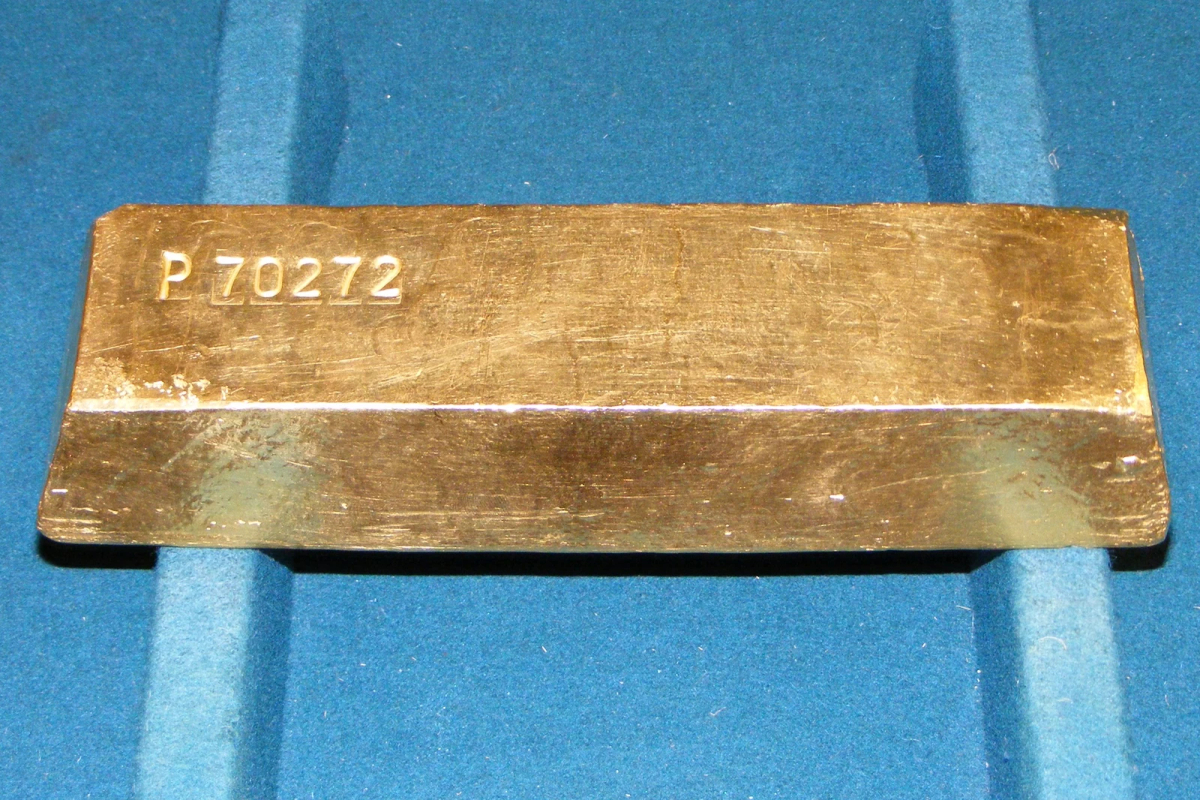
As international gold prices continue to weaken, Wall Street banks are sharply divided on where the metal goes next. Goldman Sachs cut its gold price forecast for the second time in less than a month, lowering its end-2027 target to $4,650 an ounce from $4,800. Morgan Stanley has an end-2027 target of $5,250 an ounce — a $600 gap between the two. Meanwhile, the Bank of Korea, which restarted gold investment 13 years later, kept adding to its position, raising its stake in the U.S.-listed SPDR Gold Trust (GLD) by more than 40% in the third quarter.
During Asian trading hours on Nov. 18, spot gold briefly fell to $3,810 an ounce, down more than 1% on the day and its lowest since September 2025; COMEX gold futures lost the $3,820 mark. Since Nov. 10, spot gold has fallen nearly 7%, or about $290 an ounce, breaking through the key psychological support level of $4,000. Gold is now about 30% below its all-time high of $5,594.82 set in January this year.
In a report published Nov. 16, a team led by Goldman Sachs strategists Lina Thomas and Daan Struyven cut its end-2027 gold forecast by $150. Earlier this month, the bank had already cut its end-2026 target to $4,150 from $4,650 and its end-2027 target to $4,800 from $5,400 — reductions of about 11% and 3%, respectively. The report said the Federal Reserve's continued policy tightening is weighing on gold, a non-yielding asset, and that prices could weaken further and become more volatile in the near term. Once a rate-cutting cycle begins, demand for Western gold ETFs is expected to recover, pushing gold to $5,600 an ounce by the end of 2028.
Notably, the downside scenario in Goldman's previous report has now become its base case. The bank's economists had originally expected the Federal Reserve to raise rates by 25 basis points in December 2026, and now expect one more hike in March 2027. CME's FedWatch tool shows the market pricing a 96.6% probability of a 25-basis-point rate hike in December.
Goldman also warned that commodity trading advisor (CTA) funds and macro hedge funds could come under significant pressure over the next three to six months. Such institutions are bound by strict drawdown limits and may be forced to cut positions once price moves go against their strategies, amplifying short-term declines. The bank also noted that rising oil prices and a stock market selloff could both trigger gold selling — investors often sell profitable gold positions to raise cash to meet margin calls in other markets.
In contrast to Goldman's caution, Morgan Stanley's "2027 Global Strategy Outlook," published Nov. 15, listed gold as its most favored commodity, forecasting $5,000 an ounce in the second quarter of 2027 and $5,250 by year-end — about 35% above the spot price used in the report. The bank argued that based on the relationship between gold prices and the U.S. 10-year real yield from March to July this year, gold should currently be below $3,000, yet it is holding around $3,900 — suggesting central bank physical purchases and ETF inflows have partly offset the pressure from high rates and a strong dollar.
However, Morgan Stanley's cross-asset strategy team did not add to positions in tandem. The report shows the bank maintained its maximum overweight on global equities, cut overall commodities to a 3-percentage-point underweight, and kept gold at a neutral allocation, citing a desire to wait for more stable pricing of the policy rate path before deciding. The bank expects the U.S. 10-year Treasury yield to rise to 5% and the dollar index to reach 105 in 2027, an environment that would still weigh on gold in the near term.
Beyond the split among institutions, official-sector gold buying has become a market focus. A third-quarter 13F filing the Bank of Korea submitted to the U.S. Securities and Exchange Commission on Nov. 15 showed that, as of the end of September, the bank held 956,869 shares of the SPDR Gold Trust, with a position value of $364.41 million (about 488.3 billion won), up 277,104 shares, or 40.8%, from 679,765 shares at the end of the second quarter, while the position's market value rose 45.5%. This marks the second consecutive quarter of increases since the bank restarted gold investment in the second quarter of this year after a 13-year hiatus, with preparations for physical gold purchases also progressing in parallel.
A report published by the World Gold Council on Nov. 3 showed that global central banks and other official institutions added a net 321 tons to their gold reserves in the third quarter of 2026, up 42% year on year and the highest quarterly total since the fourth quarter of 2024; cumulative purchases since the start of the year reached 675 tons, up 6% year on year. Over the same period, global physical gold ETFs saw net inflows of 211 tons, with total holdings rising to a record 4,256 tons.
Over a longer horizon, central bank gold buying has become a medium-term trend. From 2010 to 2021, global central banks bought a net average of about 473 tons of gold a year; from 2022 to 2024, that average rose to 1,072 tons, exceeding 1,000 tons for three consecutive years; in 2025, it fell back to 850 tons. China Securities noted that central bank gold demand is expected to remain high, with continued buying projected in 2027 that would steadily lift the center of gravity for gold prices. The institution argued that after the Russia-Ukraine conflict in 2022, the U.S. removed Russia from the SWIFT settlement system, strengthening non-U.S. economies' desire to diversify reserve assets; because gold does not depend on any single country's credit, it has become an important tool for reserve diversification and hedging geopolitical risk.
Data show that 43 countries and regions increased their gold holdings in the first three quarters of 2026, with Poland buying the most. The People's Bank of China has raised its holdings for 23 consecutive months, adding a cumulative 103.26 tons in the first three quarters. Goldman Sachs estimates that gold now accounts for about 11.8% of China's foreign exchange reserves, compared with about 80% for major developed economies such as the U.S., Germany, France and Italy; if China maintains a buying pace of about 20 tons a month, it could raise gold's share of reserves to around 20% in about three years.
Holdings reductions by some central banks have also drawn attention. Russia reduced its holdings to meet fiscal needs for military spending, Turkey adjusted liquidity to stabilize its currency, and Azerbaijan's sovereign wealth fund rebalanced after reaching its allocation cap. China Securities argued that the reasons for these reductions are clear and relatively predictable, and will only disturb monthly data in the short term; the overall direction of net central bank gold buying globally remains unchanged.
Major institutions' gold price forecasts diverge markedly:
Note: Target prices are forecasts given in the institutions' reports at the time of publication and correspond to the spot price benchmarks used in different reports.
For investors, the core of the two banks' disagreement lies in their judgments on the Federal Reserve's policy path. Goldman Sachs expects another rate hike in March 2027, while Morgan Stanley is betting that easing Middle East tensions will pull oil prices lower and in turn reduce rate-hike expectations. Before a clear signal that rates have peaked, short-term gold volatility may intensify, and whether structural central bank buying can continue to absorb selling pressure from private funds will be the key variable determining the center of gravity for gold prices.
Once added, BigGo Finance appears first in Google Search Top Stories, so you get the broadest, most up-to-the-minute, and most comprehensive global financial news first.