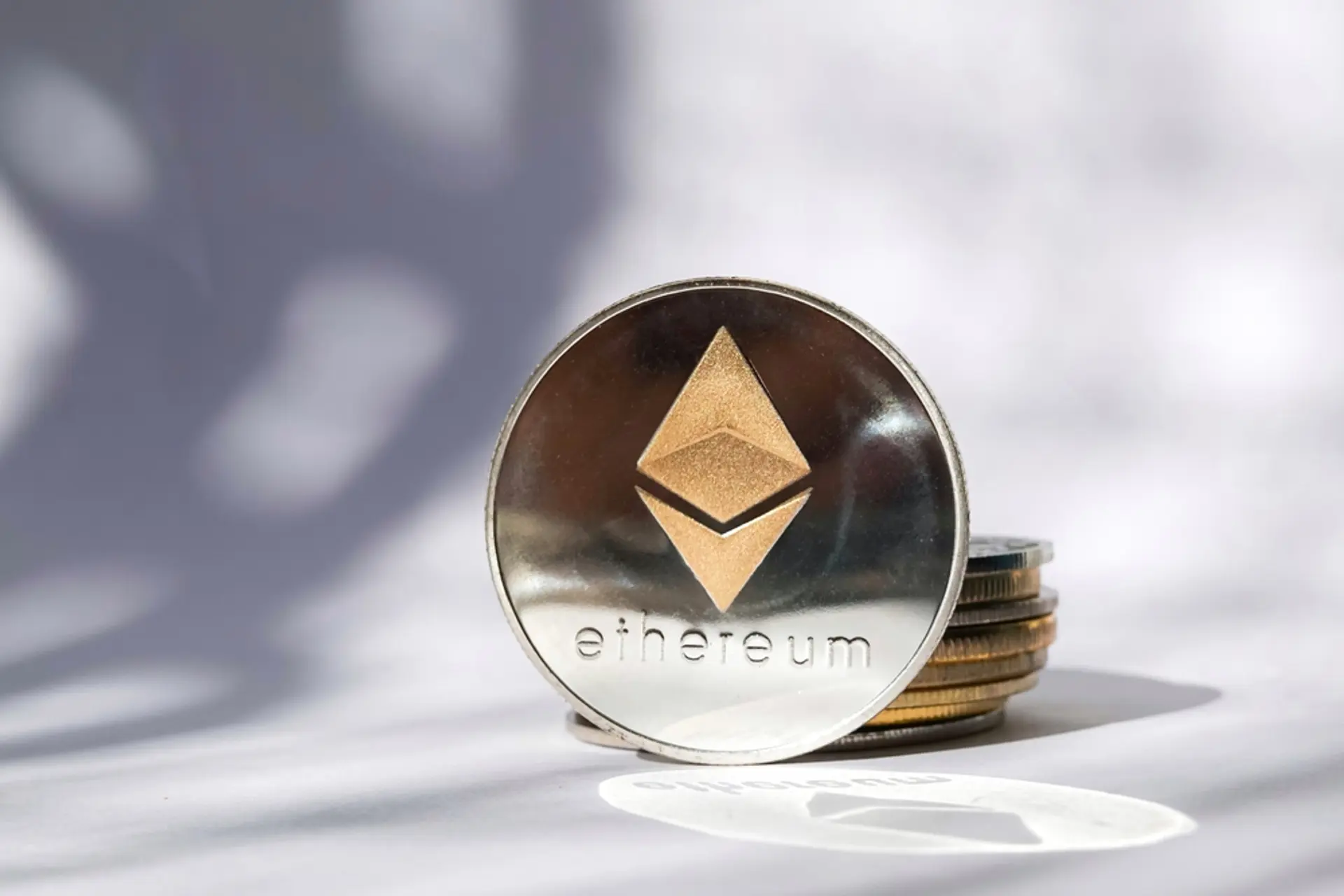
BitMEX co-founder Arthur Hayes has once again floated a dramatic scenario. In a November 17 post on social platform X, he named four tokens — Ethereum (ETH), Zcash (ZEC), NEAR Protocol (NEAR) and Venice Token (VVV) — as the "Four Horsemen," predicting the group will first stage a small-to-mid-sized rally before becoming the fuse that pops the artificial intelligence (AI) credit bubble.
Hayes set explicit price levels for the move: Ethereum at $2,800 (about NT$92,000), Zcash at $1,800 (about NT$59,000), NEAR at $6 (about NT$200) and Venice Token at $40 (about NT$1,300). He gave no timeline, however, and conceded his conviction in the trade is only average. "Sized small because conviction is meh, but the music is playing, and one must dance," he wrote, describing his trading mindset.
The comments come as sentiment in crypto markets sours. Bitcoin dipped to nearly $62,000 on November 15, its lowest level since July, dragging down overall market capitalization and investor mood. Hayes's four targets remain a considerable distance from current prices: Ethereum needs to rise about 53%, Zcash about 95%, NEAR about 85% and VVV about 89% to reach them — no small feat.
Four Very Different Setups, With Heavy Technical Pressure
Ethereum traded around $1,830 (about NT$60,000) on November 17, down roughly 14% over the past week and touching $1,712 (about NT$56,000) over the weekend. U.S. spot Ethereum ETFs saw net outflows of $398.9 million (about NT$13 billion) between November 9 and 13, a sign institutional money is retreating. On the technical front, the daily MACD remains negative, but the weekly Chaikin Money Flow indicator is holding at 0.05, suggesting buyers have not fully exited. Analysts say Ethereum must first reclaim the $2,000 (about NT$66,000) level before it has any shot at Hayes's target.
Zcash traded around $922 (about NT$30,000) on November 17, having broken above $1,300 (about NT$43,000) earlier this month before sliding under dual pressure from ETF redemptions and derivatives liquidations, with roughly $18 million (about NT$590 million) liquidated around November 12. Even after Grayscale announced it would direct $1 million (about NT$33 million) from sponsorship fees on its ZCSH ETF into the Zcash ecosystem, the decline continued. Zcash completed its NU7 network upgrade on November 6, cutting block times from 75 seconds to 25 seconds and adjusting limits and fee allocation for shielded transactions. The development team has since proposed compressing block times further to 20 seconds, pending community approval.
NEAR Protocol traded around $3.24 (about NT$110) on November 17, down 9.3% over seven days and 33.5% over a month, with technical signals clearly bearish. Of 22 technical indicators, 12 flash sell signals, just 3 are buy signals and 7 are neutral — with moving averages alone accounting for 10 sell signals. The 14-day Relative Strength Index sits in neutral territory, the Bollinger Bands show price hugging the lower band, and overhead resistance stands at $3.80 and $4.78, with support at $2.91. NEAR's AI infrastructure unit only just recovered its cloud services after an attack on November 10 exploiting a vulnerability in SGLang software, which exposed information on about 100 users and data on 18 AI agents; the company stressed that the underlying blockchain protocol was unaffected.
Venice Token is the only one of the four directly tied to an AI platform. It traded around $21.15 (about NT$700) on November 17, up about 5% in 24 hours, with a market capitalization of about $1.04 billion (about NT$34 billion) and daily volume near $48 million (about NT$1.6 billion). If Hayes's $40 target is reached, it would blow past the all-time high of $34.53 (about NT$1,100) set on September 21.
$1.5 Trillion in AI Debt Is the Core of the Thesis
Hayes's framework rests on $1.5 trillion in AI-related debt. He argues this highly leveraged debt has drained dollar liquidity from the market, and that once the pressure blows, it will trigger a financial crisis, forcing central banks to restart massive money printing — at which point Bitcoin, after an initial selloff, will surge. Back in August he characterized the current AI boom as a credit bubble and even predicted Bitcoin could eventually reach $1 million (about NT$33 million).
Notably, Hayes's pessimism on the AI bubble coexists with long-term bullishness on Bitcoin, reflecting his differentiated assessment of the risk-reward profiles of different assets. He currently holds only Bitcoin and Ethereum as core positions, having previously dubbed Hyperliquid, NEAR and Zcash a "holy trinity" before withdrawing from them one by one; after reports of a security flaw in Zcash's Orchard shielded wallet, he also sold off his ZEC holdings.
The thesis is not without its critics. On-chain analyst ZachXBT has publicly accused Hayes of deliberately pumping prices before pitching tokens such as Zcash and Worldcoin to investors, questioning whether there is a conflict of interest between his commentary and his holdings.
Market Impact and What to Watch
Hayes's targets this time are markedly below the $5,000 year-end Ethereum call he made in August — a downgrade of expectations in its own right. His trigger conditions are quite specific: if the $1.5 trillion in AI debt does not ultimately spark a crisis, the rally he envisions lacks a liquidity endgame, and the move has no pre-set conclusion.
Note: Implied upside calculated from November 17 reference prices and target prices.
For investors, the thesis ties high-leverage AI debt and crypto market liquidity to the same thread — effectively wagering the short-term direction of crypto assets on overall financial stability. Hayes also flags rising energy costs and the listings of heavyweights such as SpaceX, Anthropic and OpenAI as variables that could shift the mood around AI trades.
Technically, all four names are broadly weak at present. Ethereum and NEAR still need to reclaim key moving averages and round-number levels before Hayes's price targets are even worth discussing. What the market watches next is not only whether the "Four Horsemen" rally actually gets going, but also whether cracks appear in the AI-related debt market — because that is the real fuse for the entire scenario.
Once added, BigGo Finance appears first in Google Search Top Stories, so you get the broadest, most up-to-the-minute, and most comprehensive global financial news first.