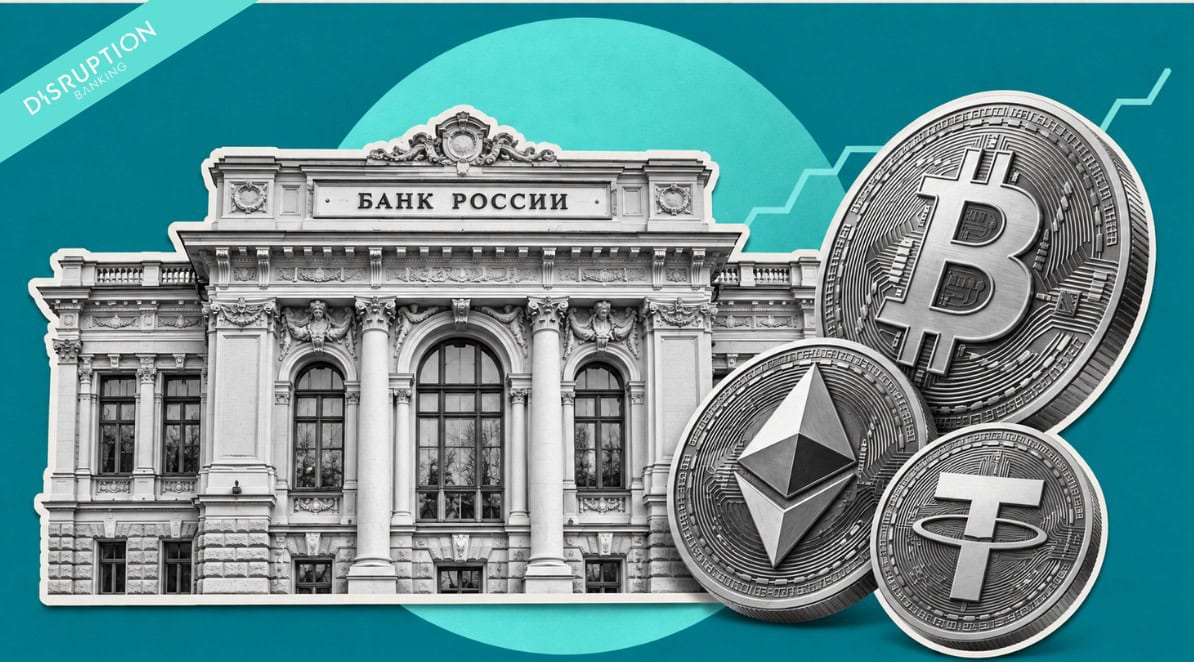
Russian exchanges can begin organized trading in digital currencies from Nov. 22, 10 days after the Bank of Russia published an ordinance amending its organized trading rules on Nov. 11.
Russian exchanges can begin organized trading in digital currencies from Nov. 22, 10 days after the Bank of Russia published an ordinance amending its organized trading rules on Nov. 11.
The regulator has made the start conditional, saying exchanges must first agree their crypto trading rules with it before opening a market.
Bitcoin, Ether and USDT have been approved for non-qualified investors in a separate decision on Nov. 6. This allows exchanges to admit the three assets to public trading from Nov. 17. The Moscow Exchange has said it plans to start trading all three on Dec. 1, beginning with pilot transactions.
Federal Law 282-FZ Has Set the Rules Since Sept. 1
The new trading rules implement Federal Law No. 282-FZ, “On Digital Currencies and Digital Rights,” which President Vladimir Putin signed on Aug. 4 and whose main provisions took effect on Sept. 1. The law recognizes digital currency as property and requires digital depositories, crypto exchange organizations, and operators to be entered in registers kept by the Bank of Russia.
It still prohibits using digital currencies as a means of payment inside Russia, law firm ALRUD noted, with exceptions that include foreign trade settlements and mining rewards.
Non-Qualified Investors Face a 300,000-Ruble Annual Cap
Non-qualified investors can buy only the currencies the Bank of Russia admits to public trading, and their purchases are capped at 300,000 rubles a year through a single broker, according to the Moscow Exchange’s Nov. 2 notice.
Qualified investors face no limits on amount or composition. Every resident individual, qualified or not, must pass a risk-knowledge test that stays valid for a year and must acknowledge a risk disclosure before trading.
Ownership Passes When a Depository Account Is Credited
The framework does not convert cryptocurrencies into securities. Investors acquire the digital currency itself, and licensed digital depositories record holdings in specific types of digital account, including owner, trustee, nominee holder, trading and transit accounts. Ownership passes “at the moment a credit entry is made” to the buyer’s account.
Depositories are liable for unlawful write-offs and for losses caused by their own actions, although liability for third-party attacks may be limited by contract. Transfers above 100,000 rubles to wallets that no depository administers are subject to a mandatory 48-hour waiting period.
Securities-style exposure exists only in a separate market. The Moscow Exchange already lists crypto-linked perpetual futures for qualified investors, and none of those contracts provides ownership or delivery of cryptocurrency.
Moscow Exchange Will Settle Trades on T+0 and T+1
The Moscow Exchange will run crypto trading on its stock-market systems from 6:50 a.m. to 11:50 p.m. Moscow time, with deals cleared by its National Clearing Centre and settled the same day or the next day, according to its launch notice.
Clients will be able to use swaps to manage liquidity. Boris Blokhin, a senior managing director at the exchange, said that it would work through a partner settlement digital depository and would not need additional licenses to start. Rival SPB Exchange is building its own settlement digital depository and aims to launch organized crypto trading by the end of the year.
The Moscow Exchange and the National Clearing Centre have been under U.S. blocking sanctions since the Treasury Department designated them on June 12, 2024.
Capital Raising Remains With Digital Rights, Not Crypto Listings
The November 22 rules cover secondary trading and do not give companies a route to raise money by listing cryptocurrencies.
On-chain capital raising runs through digital rights issued by operators on the Bank of Russia register, including debt digital financial assets and digital shares. Each issue requires a signed decision setting out the type of rights, volume, acquisition price, and performance procedure. The 2020 law that governed digital financial assets will fully lose effect on September 1, 2028.
The law allows crypto to be used to pay for securities only through a licensed intermediary under an individual agreement, while public offers to acquire digital currencies in exchange for securities are not permitted, ALRUD said. Capital requirements for digital depositories are also still pending, with Bank of Russia drafts on their own funds not yet adopted.
From July 1, 2027, residents must transact only through authorized market participants, which will push most Russian crypto activity onto the licensed venues now preparing to open.
Author: Ayanfe Fakunle
The editorial team at #DisruptionBanking has taken all precautions to ensure that no persons or organizations have been adversely affected or offered any sort of financial advice in this article. This article is most definitely not financial advice.
See Also:
The Rise in Popularity of Cryptocurrency in Russia | Disruption Banking
Why Putin Is Turning to XRP as Russia’s Gold Reserves Hit a Four-Year Low | Disruption Banking
Ayanfe Fakunle
Contributing author at Disruption Banking, covering banking.
Leave a Reply Cancel reply
Related stories
What are the Top 10 Utility Tokens to Watch ahead of 2027?
Crypto enters the final weeks of 2026 weaker than many January forecasts expected. In early November, Bitcoin defended…
SEC Moves on Crypto Rules Without Waiting for the Clarity Act
The Clarity Act sat still this month. The Securities and Exchange Commission did not. Senate Majority Leader John Thune…
Why Is Barclays Holding Bitcoin ETFs While Restricting Customer Transfers to Coinbase?
Barclays has increased its stake in BlackRock’s Bitcoin ETF to roughly $187 million. At the same time, retail…