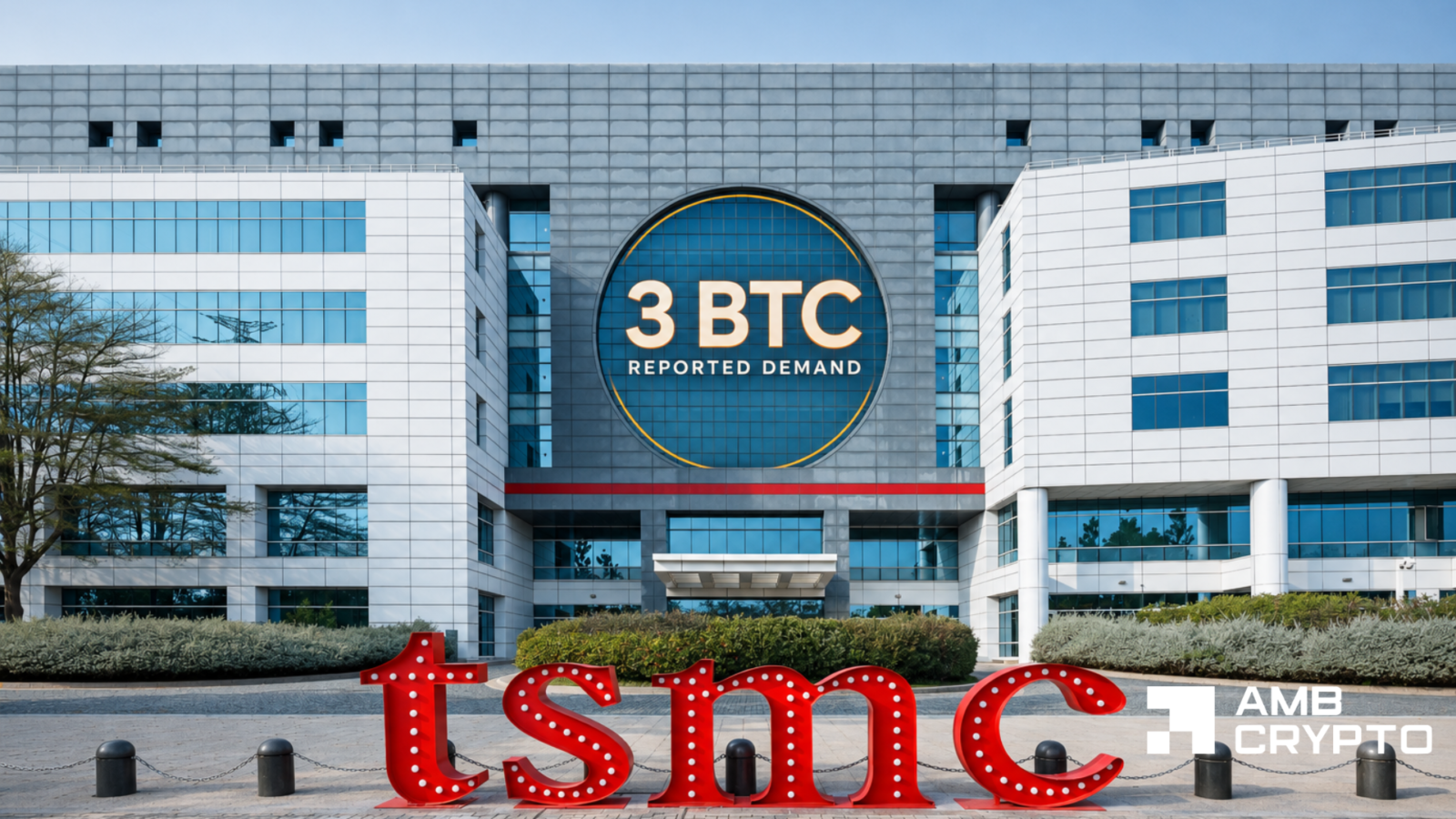
Taiwan Semiconductor Manufacturing Company (TSMC) confirmed on the 12th of November that some current and former employees’ personal information had appeared online without authorization.
As per reports, the hacker has asked for 3 BTC, which is worth about $220K, for a database they claimed held 46,000 employee records. The hackers claimed to have 6.9 GB of data and threatened to publish it within a week without a buyer. However, no payment has been publicly verified, as of press time.
What data did the TSMC leak expose?
For the unaware, TSMC makes chips for other companies. They said that the leaked records matched data held by a cloud provider. Notably, these records included names, national ID numbers, and banking details, according to Taiwan News.
The company’s own review found no evidence of a break in its systems. As of the latest update from the company, they were notifying affected staff and working with the cloud provider and investigators.
Looking at the impact this news had, TSMC’s U.S. listed shares opened 4.53% lower at $394.62 on the 12th of November. They recovered some ground to close at $405.49, down 1.90% on the day. By the way, the VanEck Semiconductor ETF (SMH) followed a similar path, opening 4.33% lower and ending the session down 1.03%.
With chip stocks also under pressure, it was difficult to tell how much of TSMC’s drop was due to the leak.
Needless to say, this leak surfaced before a volatile session for chipmakers and AI cloud providers. The semiconductor ETF recovered much of its early loss, even though the individual chip stocks went in different directions.
Notably, Nvidia fell 4.34% after announcing CEO Jensen Huang’s resignation. On the other hand, AMD and Broadcom both gained, rising 5.86% and 5.54%, respectively.
Furthermore, the Kobeissi Letter identified intraday losses in Nebius, CoreWeave, and IREN.
Who was responsible for protecting the records?
TSMC’s annual filing says it sets security or confidentiality requirements for outside providers. Going back to 2023, it cut off data exchange with supplier Kinmax after a breach exposed server setup information.
On X, a user wrote,
That vendor connection actually raises liability questions that don’t get enough attention in breach discussions
That vendor connection actually raises liability questions that don’t get enough attention in breach discussions
Another user shared a different perspective,
Your employer picked the vendor. you just get the breach notice
Your employer picked the vendor. you just get the breach notice
The type of employee data matters for a different reason. Binance said its October theft followed a campaign that targeted engineers before reaching its wallet signing service.
Furthermore, the ransom of 3 Bitcoin [BTC] puts the listing in the context of a wider trade in stolen data. Moreover, Chainalysis tracked $87.5 million in on-chain volume at fraud shops in 2025.
Final Summary
- TSMC has confirmed an employee data leak involving records that matched data held by a cloud provider.
- The hacker asked for 3 BTC. The claim of 46,000 records remains unverified by TSMC.