- live LIVE: Crypto extends crash with global tech stocks amid Nvidia Jensen Huang uncertainty 5 hours ago Live Updates
- Hyperliquid Policy Center urges CFTC to lock in event contract rule as courts split 33 seconds ago Regulation
- Strategy buys 485 BTC in first purchase since MSCI exit as Strive adds 251 60 minutes ago News
- Ofcom tightens CSAM rules before UK under-16 social media ban 2 hours ago Tech
- CFTC’s Selig says states are trying to jail prediction-market founders November 14, 2026 Regulation
- White House nominates four to SEC and CFTC as CLARITY Act stalls November 13, 2026 Regulation
- Operation TorNado nets 354 arrests, $234M in cash and crypto seized November 13, 2026 News
- The Hyperliquid Policy Center has filed comments urging the CFTC to finalize rules that treat event contracts as federally regulated swaps and casino-style betting as state-regulated gambling.
- Hyperliquid Policy Center was funded with 1 million of Hyperliquid’s HYPE tokens.
- Federal appeals courts have split, and New Jersey has asked the Supreme Court to decide.
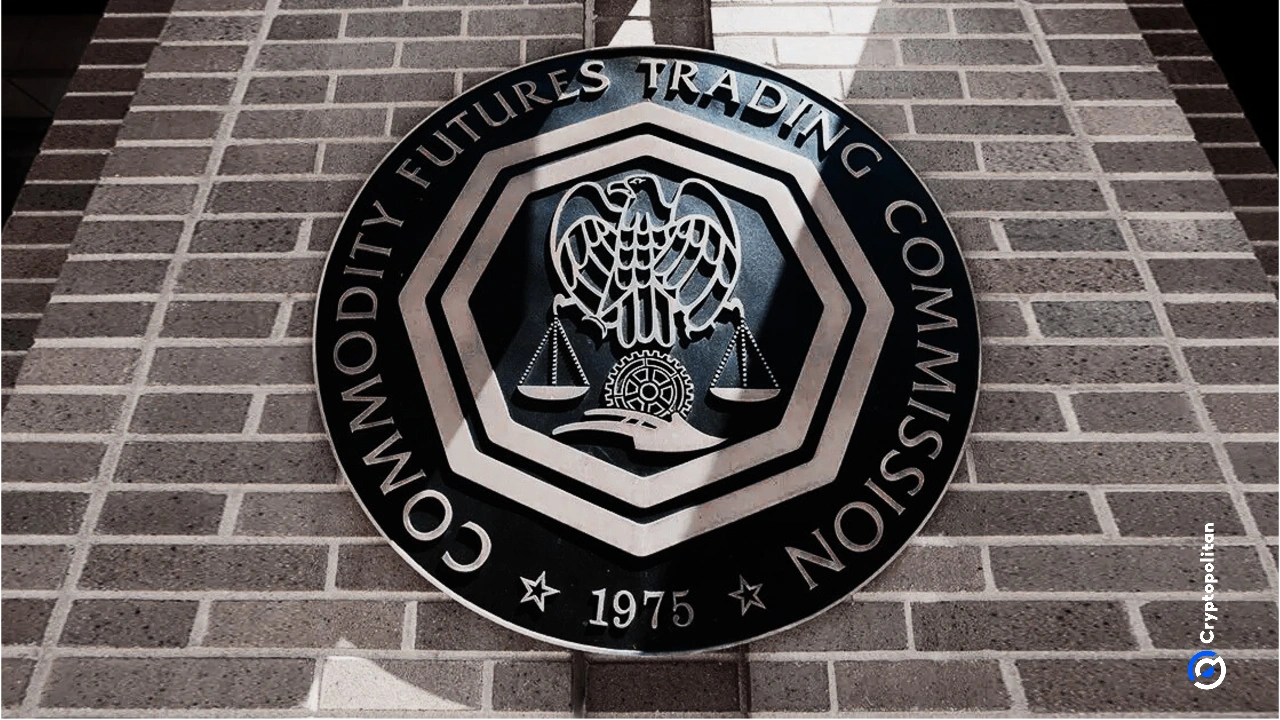
Hyperliquid Policy Center (HPC), a Washington group funded by Hyperliquid’s founding body, has asked U.S. regulators to make permanent a rule that separates event contracts from gambling.
Meanwhile, U.S. courts disagree on whether states can regulate prediction markets and the Supreme Court has been asked to step in.
What is the Hyperliquid Policy Center asking the CFTC to do?
The Hyperliquid Policy Center (HPC) has asked the Commodity Futures Trading Commission (CFTC) to finalize rules that draw a clear line between event contracts and gambling. Event contracts pay out when a set outcome happens, such as a hurricane hitting land or GDP rising above a certain rate. They trade on CFTC-registered exchanges, which the agency has overseen since the early 1990s.
On October 19, the CFTC released an interim final rule, which keeps casino-style gambling products, such as sportsbook bets and casino games, out of the legal definition of a “swap.” It took effect as soon as it appeared in the Federal Register. CFTC Chairman Michael Selig said casino-style gambling products are not derivatives.
On the same day, a second proposed rule that would bring event contracts on sports, politics, culture and weather into the swap definition was introduced.
The Hyperliquid Policy Center sent its comments asking the CFTC to keep the gambling rule exactly as written on November 16. It wants the CFTC to explain how the rule works and also confirm that “applicable State or Tribal law” specifically means the law of the state or tribe that gave the operator its license.
It also wants the CFTC to say that a state cannot pull a contract on a federally registered market into the exclusion just by calling it a bet.
In addition, it asked for a definition of “event contract” taken from the Commodity Exchange Act, plus a short list of traits that mark a product as gambling.
Finally, it wants the CFTC to restate that it had “good cause” to skip public comment before the interim rule took effect.
The Hyperliquid Policy Center calls itself independent. Notably, the Hyper Foundation, which backs Hyperliquid, backed its launch with 1 million of Hyperliquid’s HYPE tokens.
Hyperliquid runs its own prediction markets on a blockchain, where its network of computers that process and confirm transactions, known as validators, operates them under an upgrade called HIP-4.
These markets are not listed on an exchange registered with the CFTC, and the Hyperliquid group says it wants to help Americans reach these markets legally. Because of this, its letters to the CFTC could be a first step toward Hyperliquid entering the U.S. market.
Why is the rule controversial?
The CFTC gave the public 30 days to respond after publication, but the gambling exclusion took legal effect on the first day. Asking the agency to lock in the rule now means setting a boundary while the courts are still arguing over it.
Those court fights are far from settled. Kalshi, a prediction market platform, has won one of its three federal appeals so far. The Third Circuit sided with Kalshi 2-1 against New Jersey in April. The Ninth Circuit ruled against the company in a Nevada case on August 28. In September, the Sixth Circuit ruled that Ohio and Tennessee can enforce their sports-betting laws against Kalshi. A Maryland appeal is still pending before the Fourth Circuit.
New Jersey Attorney General Jennifer Davenport asked the U.S. Supreme Court on September 2 to review the Third Circuit decision.
The CFTC, where Michael Selig is the only sitting commissioner, claims exclusive authority over prediction markets. In May, it filed a brief backing Kalshi in the Ohio appeal. More than a dozen states have taken enforcement action against Kalshi or sued it over its sports contracts.
The Hyperliquid Policy Center acknowledged that the courts disagree in its blog. It warned that the states’ approach could let any state treat a contract on crops, energy or currencies as gambling, based only on what the contract refers to.
The smartest crypto minds already read our newsletter. Want in? Join them.
FAQs
Who funds the Hyperliquid Policy Center?
The Hyper Foundation, which backs Hyperliquid, contributed 1 million HYPE tokens to launch the group, which is led by veteran crypto lawyer Jake Chervinsky, former policy chief at the Blockchain Association.
What did the CFTC's two October rules do?
One interim final rule excluded casino-style gambling such as sportsbook wagers and casino games from the "swap" definition, effective immediately, while a companion proposed rule would include event contracts tied to sports, politics, culture and weather.
Why might the issue reach the Supreme Court?
Federal appeals courts have split on whether sports event contracts count as CFTC-regulated swaps, leaving Kalshi 1-for-3, and New Jersey's attorney general asked the Supreme Court on September 2 to review the Third Circuit decision.
Disclaimer. The information provided is not trading advice. Cryptopolitan.com holds no liability for any investments made based on the information provided on this page. We strongly recommend independent research and/or consultation with a qualified professional before making any investment decisions.
Hannah Collymore
Hannah is a writer and editor with nearly a decade of blog writing and event reporting experience in the crypto space. At Cryptopolitan, Hannah contributes to the news page, reporting and analyzing the latest developments in DeFi, RWA, crypto regulation, AI and frontier tech industries. She graduated from Arcadia university with a degree in Business Administration.
5 Ingenious Applications of ChatGPT And What You Should Do About Them
93% Business Leaders Favor AI-Powered Solutions for Brand Sustainability Management, Reuters
Here’s How Macron Supports France’s Vibrant and Productive AI Ecosystem
Bloomberg Estimates the Generative AI Market to Reach $1.3 Trillion by 2032
- Bitcoin ETF vs. Ethereum ETF: What’s the Difference? November 5, 2025 Learn Crypto: Beginner Guides
- What Is Base? The Ethereum Layer-2 Network Launched by Coinbase October 21, 2025 Learn Crypto: Beginner Guides
- Dogecoin vs. Bitcoin: Key Technical Differences October 20, 2025 Learn Crypto: Beginner Guides
- What Is TVL (Total Value Locked) in Crypto? October 14, 2025 Learn Crypto: Beginner Guides
- How to Read a Crypto Whitepaper? October 13, 2025 Learn Crypto: Beginner Guides
- Ripple vs. XRP vs. XRP Ledger: What’s the Difference? October 13, 2025 Learn Crypto: Beginner Guides