PiCK
Summary
- Jang Dong-hyuk, leader of the People Power Party, said discord between the government and the ruling party over a delay in virtual-asset taxation is increasing market uncertainty.
- Jang cited $115.9 billion in virtual assets moved overseas and $3.62 billion in fees paid to offshore exchanges, saying legislation on a Digital Asset Basic Act and won-denominated stablecoins should be expedited.
- He also said the Democratic Party is moving toward a two-year additional delay of virtual-asset taxation, which is currently scheduled to take effect next January.
Forecast Trend Report by Period
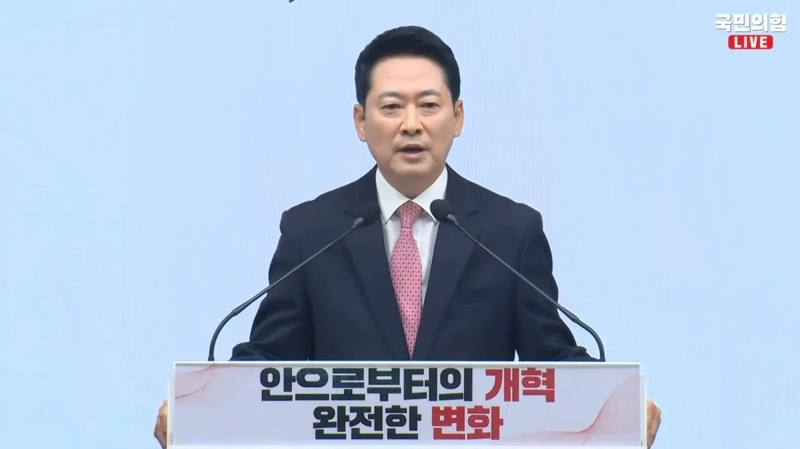
Jang Dong-hyuk, leader of the People Power Party, said policy discord between the government and the ruling party over delaying virtual-asset taxation is fueling market uncertainty and called for faster progress on digital-asset legislation.
Newsis reported on November 4 that Jang made the remarks at the National Assembly during the “Good Morning Wednesday Policy Academy,” hosted by the Yeouido Institute. He criticized the government and the ruling party for failing to present a consistent stance on virtual-asset taxation.
Jang said the government had until recently been preparing to implement the tax as scheduled, but the Democratic Party began considering an additional delay as opposition from young investors grew. “The government and ruling party can’t even get in sync and are only increasing uncertainty in the market as they waver,” he said.
He also cited delays in overhauling the digital-asset framework as a problem. While the US is set to implement the GENIUS Act, a stablecoin regulation law, in January next year, South Korea has yet to establish even a concrete government-level direction for introducing a won-denominated stablecoin, he said.
Jang underscored the need for an institutional response, citing estimates that more than $115.9 billion in virtual assets moved overseas last year and that domestic investors paid about $3.62 billion in fees to offshore exchanges. He said the People Power Party has proposed legislation related to won-denominated stablecoins and has opposed imposing taxes without adequate preparation. He added that the party would lead discussions on a Digital Asset Basic Act.
At the event, People Power Party Policy Committee Chair Lim I-ja said authorities should examine both consumer protection and capital outflow risks in the process of introducing stablecoins. She said there is a need to clarify the issuer, whether they can be redeemed for cash at all times, and the powers and responsibilities tied to interoperability across platforms.
Meanwhile, the Democratic Party is coalescing around a plan to delay virtual-asset taxation, currently set to take effect in January next year, by an additional two years. Democratic Party lawmakers on the National Assembly committee handling economic and fiscal planning issues plan to recommend the tax-delay proposal to the party leadership after related discussions.
Suehyeon Lee