Kaspa users now have a way to trade the network's native coin against a dollar-pegged token without routing funds through a centralized exchange, after Trestly opened a bridge and trading pool tied to its kUSDT stablecoin. The project launched the token on Nov. 15 and confirmed in a Nov. 18 update that both the bridge and the pool were live.
The design comes with a structural wrinkle that has drawn scrutiny: kUSDT circulates on Kaspa, but the assets backing it never leave Ethereum or BNB Chain. That split between where a token moves and where its collateral sits is the crux of the debate over whether the arrangement gives Kaspa a genuine stablecoin market or merely a claim on one.
How the Mint-and-Redeem Cycle Works
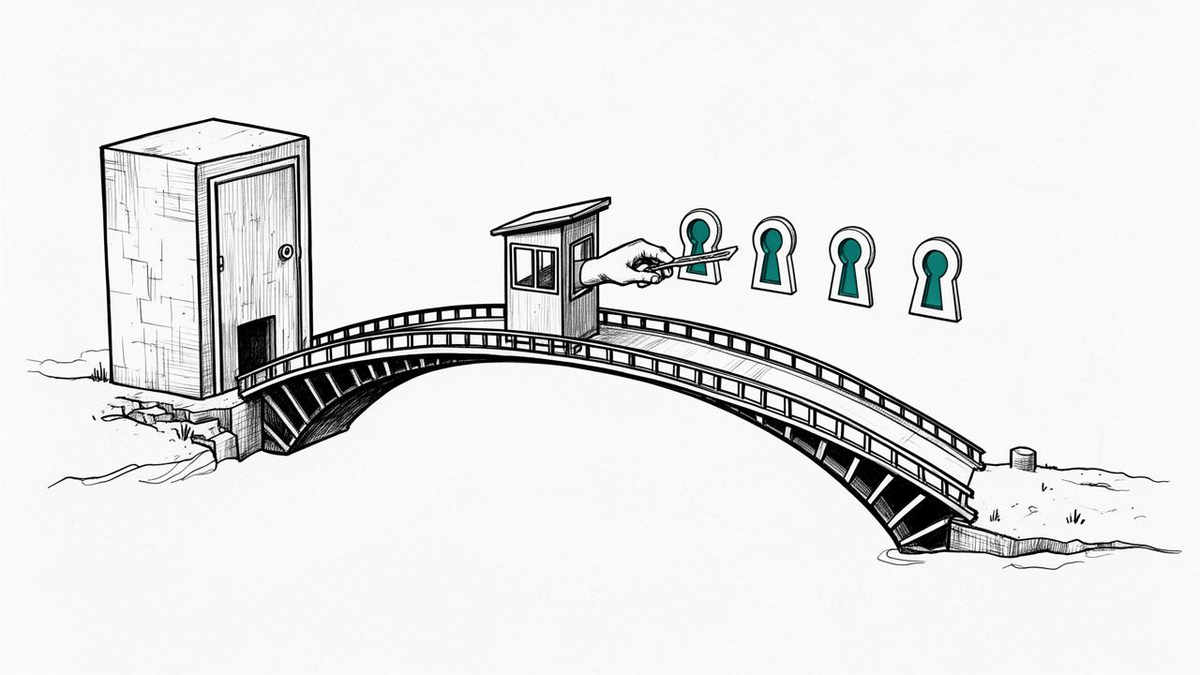
A user who wants kUSDT deposits USDT into Trestly's Ethereum vault. Once that deposit settles, any three of the bridge's five signers can authorize the creation of an equal amount of kUSDT on Kaspa. The holder can then move those tokens to another wallet or swap them for KAS in KasPool, the project's decentralized trading pool, with Kaspa nodes verifying the spending rules directly on the proof-of-work chain.
The signers' role is narrower than it first appears. Ordinary wallet-to-wallet transfers on Kaspa require no approval from them at all; their signatures matter at the bridge, and again when a holder burns kUSDT and asks a vault to release the underlying asset. Changing the rules themselves, such as swapping out the signer group or adjusting minting limits, takes four of the five.
That structure is what Kaspa commentator Coinathlete defended in a Nov. 21 post, arguing that complaints about "locked stablecoins" ignore how other networks bootstrapped their own trading markets. The post pointed to BNB Chain, Arbitrum, Polygon and Avalanche as chains that ran billions of dollars on the same lock-and-mint model, in several cases for years, before native Tether issuance arrived or without it ever arriving.
"Every big chain ran billions on the exact same lock and mint model," the post said, adding that Trestly's version is secured by "5 independent, known Kaspa signers" and is open source, with reserves checkable on chain at any time.
The Fee That Bites Small Balances
For anyone holding kUSDT, the more consequential number may be the exit cost rather than the block speed. Trestly lists a minimum Ethereum redemption fee of 5 USDT, which means redeeming 100 kUSDT on Ethereum returns 95 USDT. For a holder moving a small balance, that 5% haircut can outweigh the appeal of Kaspa's throughput.
The comparison with other chains also carries caveats. Tether announced a USDT launch on Polygon in May 2022, a detail absent from the precedent list. And the size of a bridge's historical holdings says little about how reliably a particular vault will process a withdrawal on any given day.
Trestly has published its code and vault addresses, allowing users to verify that backing exists. The project has also said it has not yet completed an independent audit, leaving holders to weigh verifiable reserves against their dependence on three signers being available to release funds.
What to Watch Next
A week after launch, the metrics that matter are how much KAS a trader can swap near the quoted price and whether redemptions hold up when several holders want out at once. Those results will tell Kaspa users more about kUSDT's durability than any comparison with the billions that have moved through older bridges.
For Kaspa, the launch marks a first attempt at native on-chain dollar liquidity, a step that could deepen trading activity on KasPool if redemption proves smooth. For the broader stablecoin market, it is another test of whether signer-gated bridges on proof-of-work chains can earn the trust that centralized issuers have long held, particularly at a moment when audit status and exit costs are drawing more attention from users.
Once added, BigGo Finance appears first in Google Search Top Stories, so you get the broadest, most up-to-the-minute, and most comprehensive global financial news first.