Summary
- Brokerages said the risk of weaker investment in semiconductor companies stemming from concerns over data-center construction regulation would likely remain a short-term issue.
- Analysts said regulation would likely converge on reduced tax incentives, higher cost burdens, and changes to power-grid and water-resource design, rather than an outright construction ban, and would not alter the direction of AI infrastructure demand.
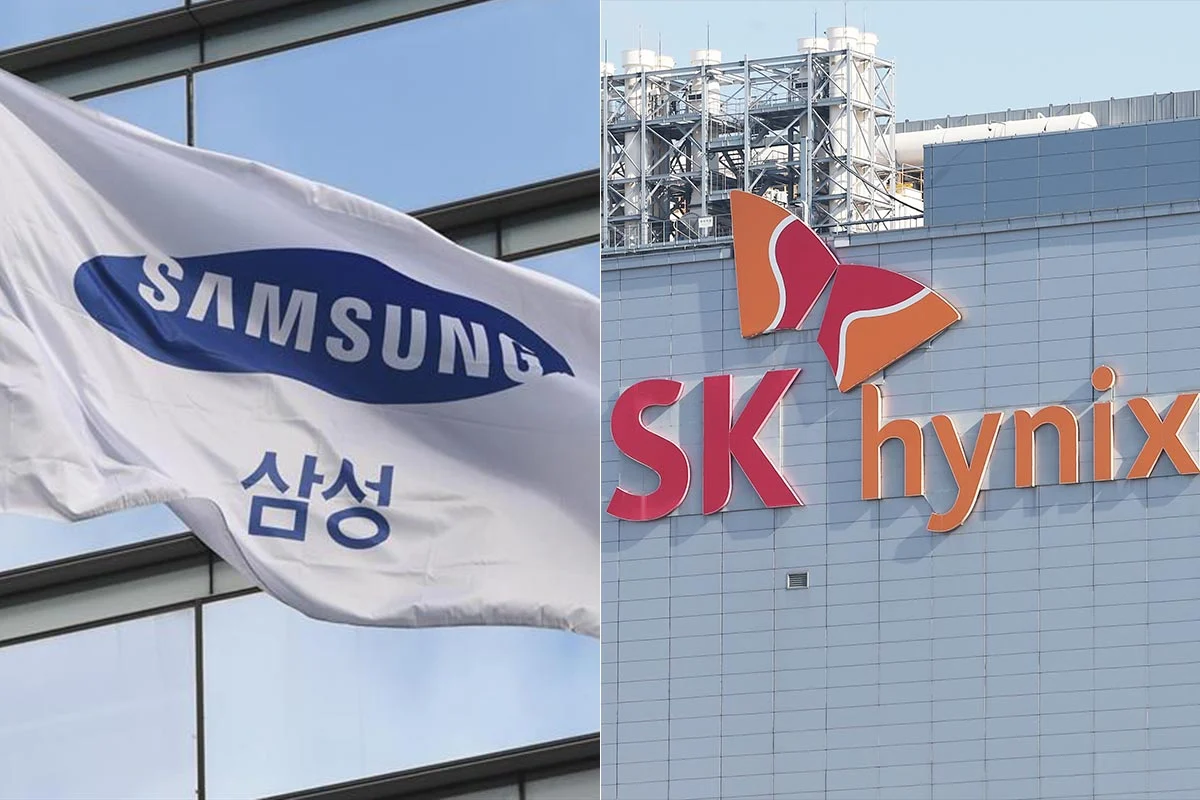
- For South Korea's memory-chip companies, analysts said delays in data-center investment would amount to a temporary shock, not a major risk, given HBM, long-term agreements (LTAs) and share prices trading at around three times earnings.
Forecast Trend Report by Period
'Semiconductor shock' hits after U.S. election
'Data-center curbs to have only a short-term impact'
'Likely to shift toward grid- and water-friendly designs, not outright construction bans'
'Temporary blow... not a risk to memory makers with long-term contracts'
South Korea's Kospi and Kosdaq tumbled on Nov. 5 as concerns flared after the U.S. midterm elections over possible restrictions on artificial intelligence data-center construction. The selloff reflected worries that such measures would hurt semiconductor companies, which account for a large share of the domestic market. Still, brokerage analysts said fears of delayed data-center investment would likely prove short-lived.
Yang Il-woo, an analyst at Samsung Securities, wrote on Nov. 5 that data-center construction is not only a national growth engine but also a driver of growth for the regions where the facilities are built. Rather than delaying projects, policymakers are more likely to cut tax incentives for developers or raise their cost burden.
That could weigh somewhat on AI infrastructure demand, but not enough to change the broader trajectory of AI-led growth.
Yang also argued it would be difficult to stop financial-market liquidity from continuing to flow into AI infrastructure.
He said the sharp gains in hyperscaler shares in New York after the election showed liquidity remained ample, and that lower oil prices and interest rates would add to that. If hyperscalers' cash flow improves, they would likely look to build data centers in other regions or countries.
Once the data-center issue fades in the stock market, AI growth shares could quickly resume their rally.
With no change in the U.S. presidency, major policy directions such as tariffs are unlikely to shift dramatically based on a change in congressional leadership alone, Yang said. Despite market hopes for sweeping change, actual policy shifts will take time. If concerns about delays in data-center construction ease, AI-related growth stocks could start rising again.
Analysts also said any actual regulation would more likely be limited to design changes than construction curbs, and that companies are already preparing for that scenario.
Kwon Young-bae, an analyst at Mirae Asset Securities, said federal technology regulation, audits and permit reviews had already been underway before the election, limiting the shock. The maximum affected capacity would be 13 gigawatts, or about 8% of the 150 gigawatts of additional capacity projected by 2035.
He added that future regulation would likely converge on designs that do not strain the grid, rather than outright construction bans. Since the push for data-center restrictions stems from environmental pressures such as local grid constraints and water shortages, the key will be addressing those issues.
Major AI infrastructure companies had already prepared technical alternatives before the election to respond to tighter rules. Microsoft and Google are preparing ways to supply electricity directly to data centers through self-generation. To reduce pressure on the grid, Google has signed a 1-gigawatt contract, while Nvidia is pursuing power-supply systems for small server-rack units.
Some analysts also said the earnings outlook for South Korean memory-chip makers should be viewed as a matter of sequential delays in investment rather than a reduction in spending.
Kim Young-geon, an analyst at Mirae Asset Securities, said that even if the Texas project is partially delayed, the impact would be temporary and limited to 2028. Demand for high-bandwidth memory tied to long-term agreements, or LTAs, remains stable. General-purpose DRAM and solid-state drives, which move in line with CPU demand, may be more sensitive to delays. Even so, he said, that is not a major concern because the shift toward HBM is tightening DRAM supply further.
Hyperscalers could even benefit because construction delays would postpone capital spending, improve cash-flow flexibility and increase the value of data centers they already own or are building, Kim added. Shares of South Korean memory makers, trading at about three times price-to-earnings, already reflect the delay issue.
Noh Jeong-dong, Hankyung.com reporter [email protected]
Korea Economic Daily